
Hiking Trail Etiquette: Essential Rules, Manners & Leave No Trace Tips
Hiking trail etiquette refers to the basic rules, manners, and respectful behaviors that help hikers share trails safely and protect nature. Whether you’re a beginner stepping onto a dirt path for the first time or a seasoned trekker logging hundreds of miles each year, understanding proper hiking etiquette is what separates a frustrating trail experience from a genuinely great one. Poor trail manners cause conflicts, damage ecosystems, and ruin the outdoor experience for everyone including you.
In this guide, you’ll learn the most important hiking trail etiquette rules, right-of-way principles, noise control tips, and Leave No Trace practices to follow on any hike from a quick weekend walk to a multi-day backcountry trek.

What Is Hiking Trail Etiquette?
Hiking trail etiquette is a set of simple trail rules and courtesy practices that guide how hikers behave outdoors. It includes yielding to others, staying on marked paths, managing noise, packing out trash, and respecting wildlife and fellow hikers. Good hiking trail etiquette isn’t about rigid rule-following it’s about shared respect for the environment and the people who use it. When everyone follows these basic trail manners, the experience becomes safer, quieter, and more rewarding for all.
Hiking Trail Etiquette Rules at a Glance
If you remember only a few rules before hitting the trail, start with these. They cover the most common real-life situations hikers encounter and represent the core of responsible outdoor hiking etiquette.
- Yield to uphill hikers
- Hike single file on narrow trails
- Let faster hikers pass safely
- Pack out all trash and food waste
- Keep noise low and use headphones
- Stay on marked trails to protect nature
- Respect wildlife, other hikers, and local rules

Right of Way on the Trail
One of the most misunderstood aspects of hiking trail etiquette is knowing who yields to whom. Proper right-of-way awareness prevents awkward trail encounters and keeps foot traffic flowing smoothly on shared paths.
Uphill Hikers Have Priority
Hikers going uphill generally have the right of way over those descending. This is a foundational trail etiquette rule backed by good reason: climbing requires more physical effort, and breaking your uphill rhythm is far harder than pausing a downhill stride. Uphill hikers also have more limited visibility of the trail ahead, making it harder to anticipate oncoming hikers in time to step aside safely. Downhill hikers typically have better footing and a clearer line of sight, making it easier for them to step to the side. That said, this rule is flexible if you’re the one climbing and you want to catch your breath, simply wave descending hikers through. The goal is communication and consideration, not strict enforcement.
Yielding to Faster Hikers
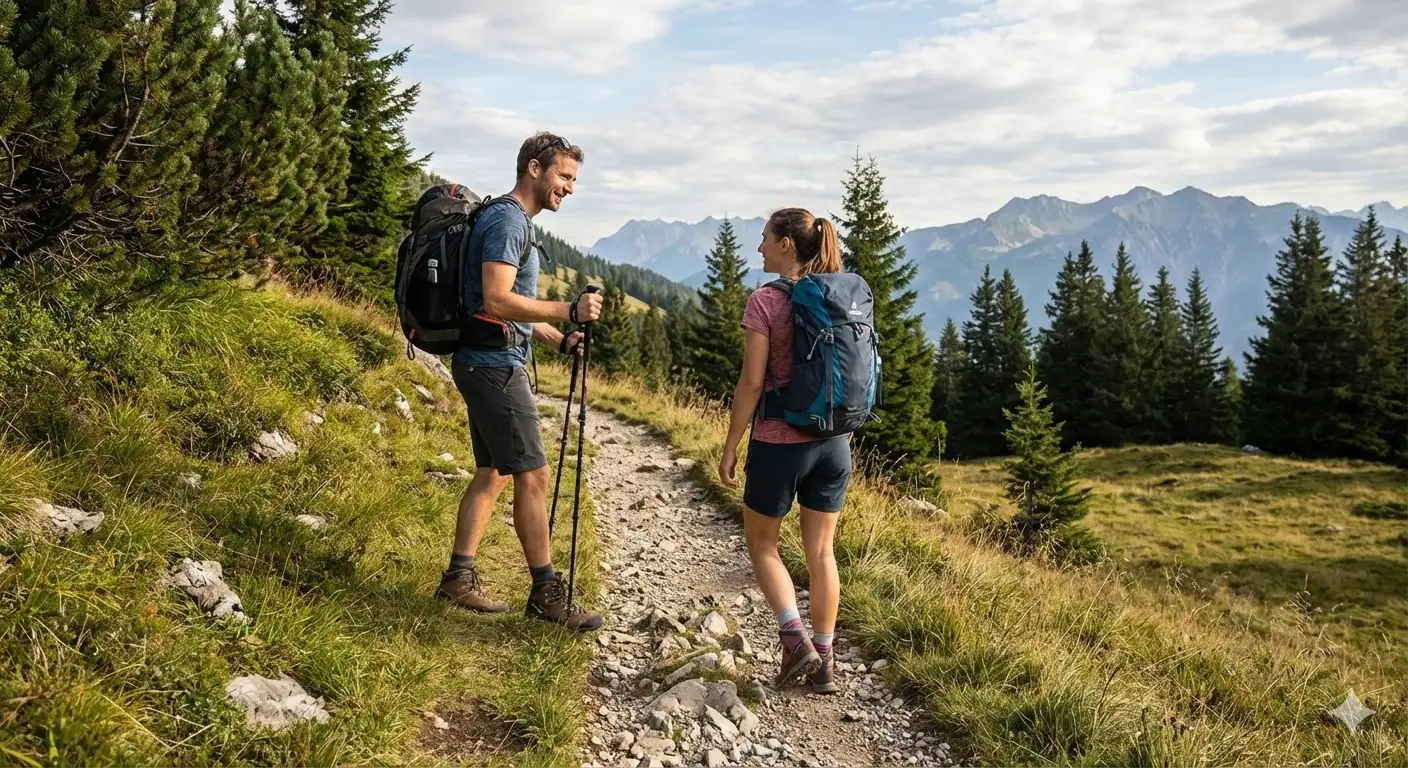
If someone behind you is moving faster, step to the side of the trail and allow them through when it’s safe to do so. Faster hikers should politely announce themselves rather than rushing up silently a simple “Passing on your left” is all it takes. This small act of trail courtesy keeps everyone moving comfortably and prevents unnecessary frustration.
Encountering Horses and Bikes
On multi-use trails, hikers typically yield to horses, and mountain bikes usually yield to hikers though local regulations may vary. When you encounter horses, step off the trail on the downhill side and speak calmly so the animal recognizes you as a human, not a threat. For mountain bikers, listen for a bell or a call from behind and step aside to let them pass safely. Always check trail-specific rules before you go, as some parks have their own right-of-way policies.
Managing Trail Width and Groups
How you position yourself on the trail has a bigger impact on others than most hikers realize. Small adjustments in group behavior make a significant difference in shared outdoor spaces.
Hike Single File on Narrow Trails
Walk single file when trails are narrow or when other hikers need to pass. Spreading out across the full width of a path even unintentionally blocks two-way traffic and forces others off the trail entirely. Return to single file the moment you hear approaching hikers, even on wider trails.
Group Hiking Considerations
Hiking in groups requires extra awareness of your footprint on the trail. Keep your group compact rather than spreading across long distances. Step aside together when others need to pass, and avoid blocking the trail during breaks or photo stops. Lowering your conversation volume in quiet natural areas is part of good trail manners it lets other hikers enjoy the sounds of nature they came for. Solo hikers and smaller groups should be allowed to pass easily.
For more group hiking guidance, read our article on hiking with friends: simple rules.
At Scenic Viewpoints
Popular viewpoints get crowded quickly, especially on weekends. Practice fair hiking trail etiquette by taking your photos and then moving aside so others can enjoy the view. Don’t monopolize the best spots, keep your voice down, and avoid elaborate photography setups that block access for other visitors who’ve hiked just as far to get there.
Quick Do and Don’t Guide
| Do | Don’t |
|---|---|
| Step aside to let others pass | Block the trail while resting or talking |
| Use headphones for music | Play music on speakers |
| Pack out all trash | Leave food scraps or tissues behind |
| Stay on marked trails | Cut switchbacks or walk off-trail |
| Keep dogs leashed and controlled | Let dogs run up to strangers |
Common Hiking Trail Etiquette Mistakes Beginners Make
Most trail conflicts don’t happen because people are rude they happen because hikers simply don’t know proper hiking trail etiquette. The good news is that these mistakes are easy to correct once you’re aware of them. Walking side-by-side on narrow trails blocks two-way traffic entirely. Playing music through speakers disturbs both wildlife and other hikers who came for natural quiet. Leaving fruit peels or food scraps behind even biodegradable ones attracts wildlife and disrupts ecosystems. Stopping in the middle of the trail for photos or breaks creates dangerous bottlenecks, especially on busy weekend trails. Letting dogs approach strangers without permission causes anxiety for hikers with fears or allergies. Cutting switchbacks to save time causes serious erosion damage that costs thousands of dollars to repair. And ignoring faster hikers trying to pass creates frustration and unsafe passing attempts. Knowing these mistakes in advance puts you ahead of most trail users from your very first hike.
Leave No Trace Hiking Trail Etiquette Principles
Leave No Trace is the ethical foundation of responsible hiking trail etiquette. These seven principles guide every decision you make outdoors from where you step to how you handle your waste and minimizing your environmental impact is just as important as being courteous to fellow hikers.
Pack Out Everything You Pack In
This is the single most important Leave No Trace hiking rule. Carry out all trash, including food wrappers, tissues, and fruit peels. Nothing should be left behind on trails. Bring a small trash bag for your waste, and pick up litter you find even if it isn’t yours. Many hikers don’t realize that orange peels can take up to two years to decompose, and banana peels can last months. Burying or hiding garbage doesn’t solve the problem either animals dig it up and it becomes litter anyway.
Stay on Designated Trails
Walking off-trail even by a few feet damages fragile vegetation and causes soil erosion that worsens with each passing hiker. Stick to established paths even when they’re muddy or crowded. Cutting switchbacks is one of the most damaging things a hiker can do, creating erosion scars that are expensive and sometimes impossible to repair. Walk the full zigzag, always. According to the National Park Service, staying on trail is one of the most impactful ways visitors can protect natural landscapes.
Respect Wildlife and Plants
Observe wildlife from a distance and never feed wild animals, even if they approach you. Feeding wildlife disrupts their natural foraging patterns and creates dangerous dependencies on human food. Don’t pick wildflowers or disturb plants they’re protected in most hiking areas. Keep dogs under control near wildlife, and avoid making loud noises that stress or displace animals from their habitat.

Noise Etiquette and Sound Rules on Hiking Trails
Sound travels surprisingly far in natural settings. Your noise choices affect the experience of every hiker within earshot sometimes for a quarter mile or more.
Music and Speakers
The majority of hikers prefer natural sounds over amplified music. If you want audio entertainment on the trail, use headphones it’s a basic part of respectful hiking trail etiquette. Speakers broadcasting music disturb wildlife and disrupt the peaceful experience other hikers came for. This is consistently ranked as one of the most annoying trail behaviors in hiker surveys.
Phone Conversations
When cell service exists, keep phone calls brief and at low volume. Step off the trail for longer conversations. Many hikers value the mental break from constant connectivity, and loud phone conversations shatter that experience for everyone nearby.
Making Noise for Bear Safety
In bear country, making periodic noise is appropriate safety behavior and other hikers understand this. Talk at normal volume with your group, clap or call out in areas with limited visibility, and use bear bells if you prefer. Near streams where water masks sound, increase your noise level to avoid surprising wildlife. Safety-related noise is always acceptable trail behavior.
Trail Intersection Etiquette
Trail junctions are natural decision points where hikers pause, and this can quickly create bottlenecks on busy trails. Step completely off the trail before stopping to check maps or discuss routes this single habit keeps traffic flowing and prevents unnecessary pile-ups. If you’re waiting for group members or meeting someone at a junction, move well away from the intersection itself so others can read the signage and pass through freely.
- Don’t leave gear blocking trail entrances
- Position yourself where others can easily get by
- Watch for hikers approaching from all directions
- Resume hiking promptly after your navigation check
Bathroom Etiquette in the Outdoors
Nature calls happen on every hike. Handling this properly protects the environment and preserves the experience for hikers who come after you.
When you need to go, move at least 200 feet from trails, campsites, and water sources. Choose a spot not visible from the trail, and avoid areas where others might camp or rest. For solid waste, dig a cathole 6–8 inches deep, then cover and disguise it completely. Pack out all toilet paper and hygiene products in sealed bags these items don’t decompose quickly and create serious litter problems on high-traffic trails.

Weather and Emergency Situations
Trail etiquette shifts during challenging conditions. When safety is at stake, mutual support becomes the first priority.
Helping Others in Distress
If you encounter someone who appears injured, lost, or in distress, stop and offer assistance. Ask if they need help, share water or supplies if genuinely needed, and assist with navigation if someone is uncertain of their route. If the situation is serious and beyond your ability to help, report it to trail authorities as soon as you reach cell service. Helping others is an unwritten but universally understood rule of hiking trail etiquette.
Bad Weather Considerations
During storms or extreme conditions, normal right-of-way conventions may not apply. Focus on everyone getting to safety first. Share weather information freely with hikers you encounter going in the opposite direction your knowledge of what’s ahead might help someone make a safer decision.
For weather preparation tips, visit our guide on hiking in cold weather: what to know.
Photography Etiquette on the Trail
Photography is part of modern hiking culture, but it shouldn’t come at the expense of others’ experience or the natural environment. Don’t ask fellow hikers to wait while you set up elaborate shots. Offer to take photos for other hikers at scenic spots it’s a universally appreciated gesture. Never climb on, damage, or disturb natural features to get a better angle. Wait your turn at popular photo locations, and be aware of what’s in your background before you shoot. For drones: many areas prohibit them due to noise and wildlife disturbance always check regulations before bringing one, and use drones sparingly even where permitted.
Dogs on Hiking Trails
Hiking with dogs is a joy, but it comes with additional responsibility on shared trails. Keep dogs leashed unless the area specifically permits off-leash hiking, and maintain control around other hikers and animals at all times. Never let your dog approach strangers without permission even friendly dogs can cause fear or anxiety in some hikers. Pick up and pack out all dog waste, and yield extra space to hikers who appear uncomfortable around dogs. Some hikers fear dogs, and some have allergies their comfort matters too. Know where dogs aren’t allowed and respect those regulations, which typically exist to protect wildlife and fragile ecosystems.
Camping and Overnight Hiking Etiquette
When your hike extends into an overnight trip, additional etiquette rules apply. Always use established campsites rather than creating new clearing damage. Camp at least 200 feet from water sources and trails, keep your campsite small and contained, and don’t camp too close to other groups. Leave your site cleaner than you found it. After dark, respect quiet hours typically after 10 PM since sound travels remarkably far in quiet wilderness at night.
Cultural and Regional Variations in Trail Etiquette
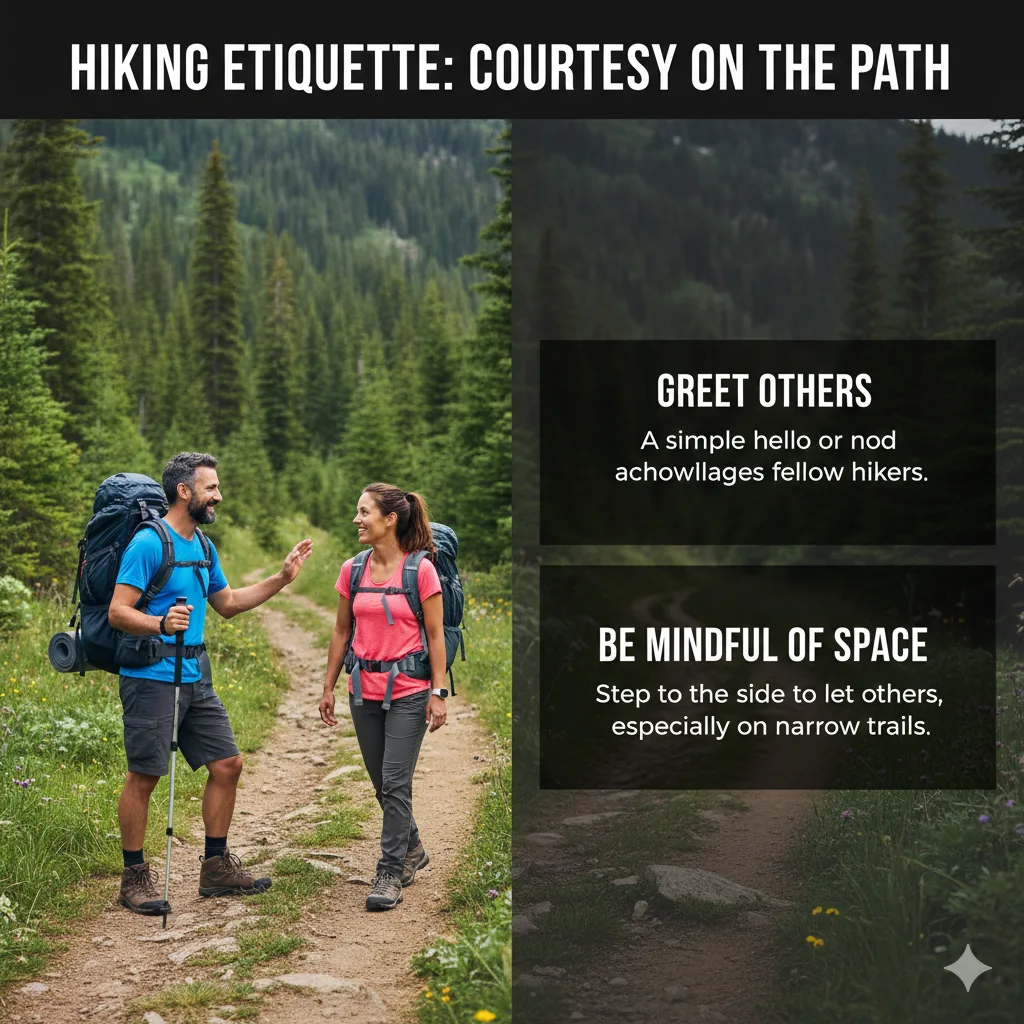
Hiking trail etiquette can vary by region and local culture. In some areas, hikers greet every person they pass with a wave or a “hello.” In more urban trail systems, minimal interaction is the norm. A simple nod works universally just match the friendliness level of the area you’re hiking. Research specific regulations for your trail before you go, since some areas have unique right-of-way customs, and wilderness zones often have stricter Leave No Trace requirements than popular day-use trails near cities.
Teaching Hiking Trail Etiquette to New Hikers
If you’re hiking with someone new to the outdoors, help them learn proper trail etiquette gently and by example. Demonstrate good trail behavior naturally step aside for other hikers without making a big deal of it, pick up trash casually as you encounter it, speak at appropriate volumes, and stay on trail even when tempted to shortcut. When someone doesn’t understand why a certain behavior matters, explain the reasoning briefly. Most new hikers respond well to understanding the “why” behind the rules, not just the rules themselves.
When Hiking Trail Etiquette Rules Conflict
Sometimes proper behaviors seem to contradict each other, and that’s where judgment matters. Safety always takes priority over etiquette guidelines if following a trail rule creates actual physical risk, choose the safer option every time. For example, stepping off-trail is normally discouraged, but it’s perfectly acceptable when yielding to horses on a narrow mountain path. When in doubt between social norms and environmental protection, prioritize the environment. The natural landscape is the reason the trail exists in the first place.
Trail Etiquette Checklist Before You Go
Use this quick checklist before every hike to make sure you’re prepared to be a respectful and responsible trail user following proper hiking trail etiquette.
- ☑ Know local trail rules and regulations
- ☑ Carry a small trash bag
- ☑ Keep dogs leashed if required
- ☑ Bring headphones instead of speakers
- ☑ Plan rest stops away from the main trail
- ☑ Learn right-of-way rules for hikers, bikes, and horses
- ☑ Follow Leave No Trace principles at all times
Tip: Save or screenshot this checklist before your next hike.

Conclusion
Good hiking trail etiquette is your personal code of conduct every time you head outdoors. Simple habits — yielding politely on uphill climbs, keeping noise to a minimum, staying on marked paths, packing out every piece of waste, and following Leave No Trace principles — collectively protect both the natural environment and the experience of every person who shares the trail with you. Trail manners aren’t complicated, but they make a profound difference. The more consistently every hiker practices them, the better trails become for everyone who uses them today and for the generations who will hike them in the future.
Ready to practice excellent hiking trail etiquette? On your next hike, choose one or two principles from this guide, make them automatic habits, and carry them into every adventure after that.
Frequently Asked Questions About Hiking Trail Etiquette
Do I really need to pack out orange peels and apple cores since they’re natural?
Yes pack out all food waste including fruit peels and cores. They take months or even years to decompose and attract wildlife to trails, disrupting natural foraging patterns. Orange peels can take up to 2 years to break down completely, and introducing non-native food sources to a trail ecosystem causes real ecological harm. The rule is simple: if you carried it in, carry it out.
What should I do if someone is playing loud music on the trail?
You can politely ask them to lower the volume or switch to headphones. Most people don’t realize they’re bothering others and respond well to a friendly, non-confrontational request. If they refuse or react negatively, don’t escalate simply hike past them. You can report persistent issues to trail management authorities. In bear country, remember that some level of noise is actually appropriate for safety.
If I’m going uphill and someone descending is clearly struggling, should I still expect right of way?
No right-of-way rules are guidelines, not absolute laws. If you’re climbing comfortably and a descending hiker is clearly struggling with difficult terrain, offer to step aside. Hiking trail etiquette is about genuine consideration, not rigid rule-following. If you’re going uphill but want a rest break anyway, use that moment to let descending hikers pass. Flexibility and communication always produce better trail interactions than strict enforcement.
How should I handle off-leash dogs when I’m uncomfortable around them?
You have every right to ask owners to control their dogs, even in designated off-leash areas. Politely say “Could you please call your dog?” most responsible owners will comply immediately. If a dog makes you genuinely fearful, stop moving and calmly ask the owner to leash or control their pet. You shouldn’t have to endure anxiety on the trail. Note that well-behaved dogs under voice control are permitted in many trail areas, so your request may not always be granted, but asking is always appropriate.
Is it okay to play music out loud if the trail is empty?
Even on an apparently empty trail, playing music through speakers is generally poor hiking trail etiquette. Trails change quickly what’s empty now may have other hikers around the next bend. Music also disturbs wildlife even when no other hikers are present. Headphones are the respectful default choice regardless of how crowded the trail appears.



No comments yet. Be the first to share your thoughts.