
Lightweight Hiking Tips: How to Reduce Pack Weight Without Sacrificing Safety
Most hikers carry at least 10 pounds more than they actually need. That extra weight slows you down, strains your knees, and turns an enjoyable trail into a grueling endurance test. The good news? You don’t need expensive ultralight gear to fix this. These lightweight hiking tips will show you how to cut significant weight using smart decisions, better gear choices, and a shift in mindset all without compromising your safety on the trail.
Mastering these lightweight hiking tips early will help you hike farther, faster, and with significantly less fatigue on every trip. Whether you’re a weekend warrior or planning your first multi-day adventure, the principles are the same: carry only what you need, choose gear that earns its weight, and question every item before it goes in your pack.
Quick Answer: Lightweight hiking means reducing your backpack weight by choosing lighter gear, carrying only essentials, and using multi-purpose items. Most hikers aim for a base weight under 20 pounds to reduce fatigue and hike more comfortably.
Quick Lightweight Hiking Tips for Beginners
- Carry only essentials if you’re unsure, leave it out
- Choose lighter gear when replacing old equipment
- Use multi-purpose items that serve two or more functions
- Track your base weight before and after each gear update
- Avoid “just in case” packing it’s the #1 cause of heavy packs

Understanding the Lightweight Hiking Philosophy
One of the most important lightweight hiking tips is understanding what the philosophy actually means. It’s not about suffering on the trail or leaving behind essentials that keep you safe. It’s about making deliberate, informed decisions so that every item in your pack genuinely earns its place. The hikers who go lightest aren’t reckless they’re the most experienced and thoughtful packers on the trail.
What Lightweight Actually Means
In the hiking world, “base weight” refers to your pack’s weight excluding consumables like food, water, and fuel. Most lightweight hikers target a base weight under 20 pounds, while ultralight enthusiasts push below 10 pounds. The distinction matters because it gives you a consistent metric to track your progress independent of how much food or water you’re carrying on a given day.
The real focus of any lightweight strategy is the “Big Three”: your pack, your shelter, and your sleeping system. These three categories account for the majority of most hikers’ base weight, and meaningful reductions here will have a bigger impact than obsessing over cutting your toothbrush handle. Every ounce you remove adds up, but prioritizing the heaviest items first gets you results fastest.
You can learn more about trail safety essentials from the National Park Service’s official Ten Essentials guide.
Benefits of Carrying Less Weight
The benefits of a lighter pack go far beyond simply feeling less tired. When you reduce your load, you cover more distance with the same energy output, your knees and ankles absorb less cumulative impact over miles of trail, and you can move faster when weather or daylight requires it. After full-day hikes, lighter-pack hikers recover noticeably faster often feeling ready for another day on the trail when heavier-pack hikers are nursing sore legs and joints.
Perhaps most importantly, hiking enjoyment increases dramatically. When you’re not fighting your pack, you can actually pay attention to your surroundings the views, the wildlife, the simple pleasure of moving through wild places.
Traditional vs Lightweight vs Ultralight Comparison
| Style | Base Weight | Comfort Level | Best For |
|---|---|---|---|
| Traditional | 25–40 lbs | High comfort, heavy load | Beginners |
| Lightweight | 15–20 lbs | Balanced | Most hikers |
| Ultralight | Under 10 lbs | Minimal | Experienced hikers |
Lightweight Hiking Tips: Start with Your Pack First
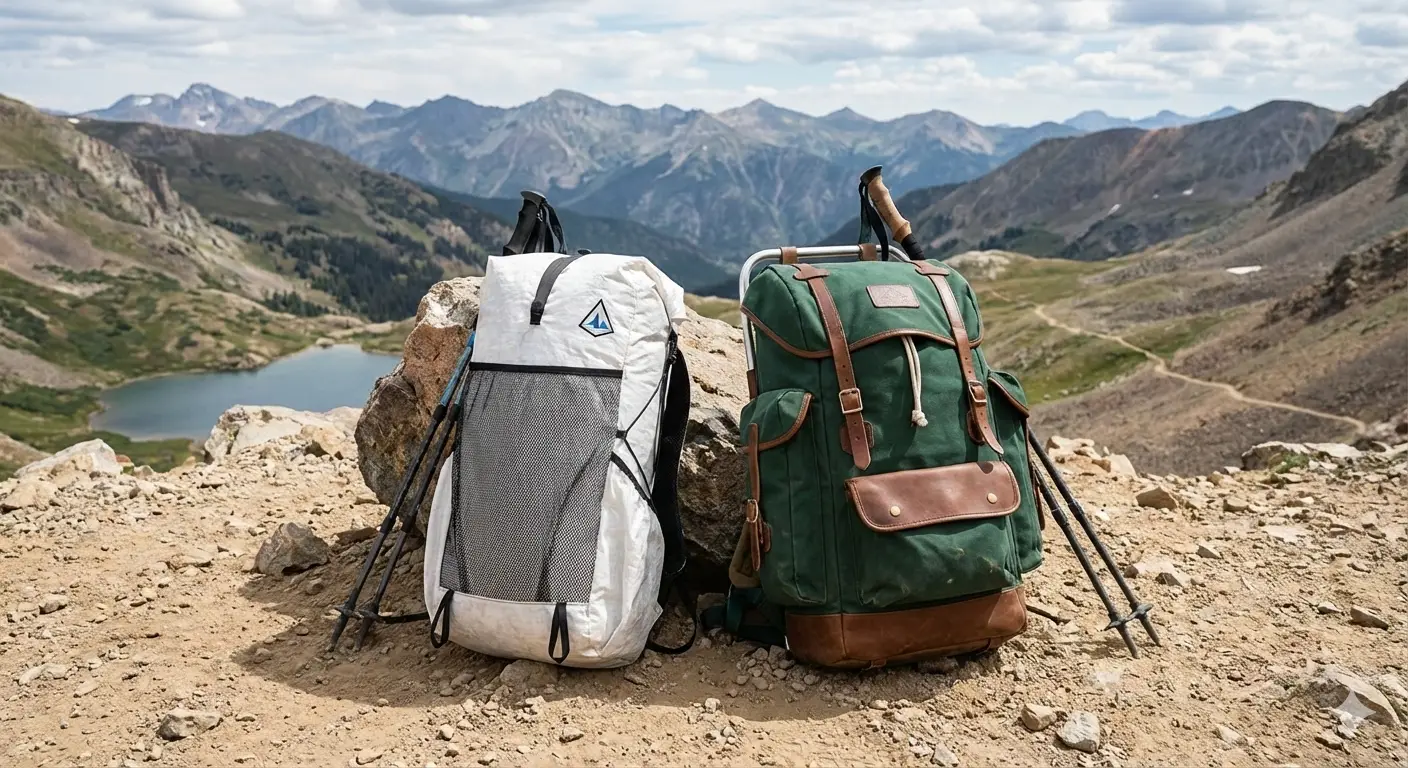
Your backpack itself is the first place to look when applying lightweight hiking tips. Traditional packs weigh 4–6 pounds when completely empty. A quality lightweight pack cuts that to 2–3 pounds, and ultralight frameless options come in under 1 pound. That single swap before you put anything inside instantly removes 2–4 pounds from your load. If you’re unsure what size or type to choose, read our complete hiking backpack size and fit guide.
Pack Weight Considerations
Lighter packs typically trade some features and padding for weight savings, which is a reasonable tradeoff for most hikers. The key is matching your pack’s capacity to what you actually carry, not what you might someday want to bring. A smaller pack also forces better discipline you can’t fill space you don’t have. Use our essential hiking gear checklist to avoid packing unnecessary items.
- Traditional packs: 4–6 pounds empty
- Lightweight packs: 2–3 pounds empty
- Ultralight packs: under 1 pound empty
- Match capacity to your actual needs 40–50 liters works for most hikers
Choosing the Right Size
A smaller pack is one of the most underrated lightweight hiking tips available. When you buy a 70-liter pack for weekend trips, you create space you’ll feel compelled to fill. A well-fitted 40–50 liter pack handles most hiking scenarios comfortably while naturally limiting how much you can overpack. Always test packs loaded with weight before purchasing fit and carry comfort vary significantly between brands and body types.
For comprehensive gear planning, read our guide on essential hiking gear for beginners.
Reduce Clothing Weight with Smart Layering
Clothing is one of the biggest weight offenders in most hikers’ packs, primarily because people overpack “just in case” scenarios that rarely materialize. The solution isn’t to carry less clothing it’s to carry smarter clothing. A proper three-layer system handles almost every trail condition without redundancy. A proper layering system is key see our beginner-friendly layering guide for exact clothing recommendations.
The Layering System
The most effective lightweight hiking tips for clothing center on a simple three-layer approach: a moisture-wicking base layer you wear while moving, an insulating mid-layer for breaks and cold snaps, and a waterproof shell for rain and wind. For multi-day trips, add an extra pair of socks and underwear that’s genuinely all most hikers need. The items to cut are duplicates: the second fleece, the backup pants, the “town clothes” you pack for after the hike.
Smart Clothing Choices
Fabric choice matters enormously for both performance and weight. Synthetic and merino wool fabrics dry significantly faster than cotton a critical advantage when you’re sweating on uphills and stopping in the cold. Lightweight down or synthetic insulation compresses smaller and weighs less than traditional fleece while providing equivalent or better warmth. One pro tip: wear your heaviest layer on the trail rather than packing it, which immediately reduces your carry weight without sacrificing warmth when you need it.
What to Leave Behind
- Extra “town clothes” for after your hike change when you get to the car
- Bulky fleece jackets when a lightweight down puffer offers more warmth per ounce
- Multiple pairs of pants when one technical hiking pair handles all conditions
- Any cotton clothing it holds moisture and becomes dangerously cold when wet
Minimize Food and Water Weight Without Risk
Food and water are unique among pack contents because they get lighter as you hike but poor planning can leave you carrying far more than necessary at the start, or dangerously little when you need it most. These lightweight hiking tips help you plan smart rather than just pack less.
Food Strategy
The key metric for hiking food isn’t calories it’s calories per ounce. Nuts, nut butters, jerky, hard cheeses, dried fruit, and energy bars pack the most energy into the least weight. Removing excess packaging before you leave home can cut surprising amounts of weight and bulk, and repackaging into lightweight zip-lock bags keeps things organized. For day hikes, skip canned goods and fresh produce entirely bring only what you’ll realistically eat plus a small safety margin. For ideas, check our best hiking food list for day hikes.
Water Management
Water weighs 2.2 pounds per liter one of the heaviest items in your pack by volume. The most effective water strategy is researching reliable water sources along your route and carrying a filter or purification tablets instead of all your water. If a water source is two miles ahead, you only need to carry enough to get there comfortably. Proper planning matters our full day hike planning guide explains how to estimate water needs for different trail conditions.
Always verify current trail conditions using resources like AllTrails community reports before heading out.
Evaluate Every Item Before It Goes in Your Pack
The most powerful mindset shift in these lightweight hiking tips is learning to question every item before it earns a spot in your pack. Most heavy packs aren’t the result of one or two big mistakes they’re the accumulation of dozens of small “just in case” additions that individually seem reasonable but collectively add up to 10 extra pounds.
The Essential vs. Nice-to-Have Test
Before each item goes in your pack, ask yourself: Will I definitely use this on this specific hike? What’s the consequence if I don’t bring it? Can something else already in my pack serve this purpose? Does it provide genuine safety value, or just convenience? If you can’t answer clearly, the item probably doesn’t make the cut. This honest self-assessment is one of the most valuable lightweight hiking tips for reducing pack weight consistently across every trip.
Multi-Use Items
Gear that serves multiple purposes is the lightweight hiker’s best friend. Trekking poles can support emergency tarps and shelters, eliminating the need for tent poles. A bandana functions as a sun cover, emergency bandage, sweat towel, and pot holder. Your smartphone replaces a camera, GPS, paper maps, guidebooks, and flashlight in one device. Wrapping duct tape around your pole handles gives you a repair kit that weighs almost nothing. Learn when trekking poles are helpful in our are hiking poles worth it guide.

Lightweight Hiking Gear Tips That Save the Most Weight
When you’re ready to invest in gear upgrades, prioritizing strategically delivers the best results. Not all lightweight hiking tips require spending money, but targeted gear purchases in the right categories can transform your pack weight.
High-Impact Upgrades
Switching to a lightweight backpack saves 2–4 pounds before you’ve packed a single item. A high-quality quilt or lightweight sleeping bag cuts another 1–2 pounds from your sleeping system. A trekking pole tent eliminates the weight of a traditional freestanding tent while providing reliable shelter. Titanium cookware and a canister stove combo weighs a fraction of heavier alternatives for overnight trips. A compressible down jacket provides warmth at a fraction of the weight of a synthetic fleece of equivalent rating.
Budget-Friendly Weight Reduction
You can reduce pack weight by 5–7 pounds without spending a dollar. Start by going through everything you packed on your last hike and identifying what you never touched. Leave those items home next time. Repackage food from bulky retail containers into simple zip-lock bags. Use your phone’s downloaded offline maps instead of carrying paper maps or a separate GPS device. If hiking with partners, share gear like first aid kits, stoves, and water filters rather than each carrying a full set. These no-cost lightweight hiking tips often produce the biggest initial results.
When Not to Go Lighter
Some gear categories should never be sacrificed for weight savings. Navigation tools whether a map, compass, or GPS remain essential regardless of trail difficulty. Your first aid kit should be appropriate to your trip length and group size. Adequate clothing layers for the forecasted weather are non-negotiable, as is emergency shelter. Cutting weight from safety systems creates genuine risk; cutting it from comfort items is where the real savings live. For weather-appropriate gear planning, check our article on hiking in cold weather: what to know.
How to Pack Efficiently for Better Weight Distribution
Even with lightweight gear, poor packing technique undermines your effort. How you organize and distribute weight affects how your pack feels and carries a well-packed lightweight pack outperforms a carelessly-packed ultralight one on every trail.
Weight Distribution Principles
Heavy items belong close to your back and positioned between your shoulder blades this keeps the weight centered over your hips where your body carries it most efficiently. Medium-weight items fill the lower and outer sections of the pack, while lightweight and compressible items like your sleeping bag or puffy jacket go at the bottom. Frequently accessed items snacks, rain jacket, first aid stay in exterior pockets. Balance left and right sides equally to prevent the uneven strain that causes back and shoulder fatigue on long days.
Compression and Organization
- Use stuff sacks to compress clothing and sleeping bags
- Remove air from partially empty water bottles and soft flasks
- Fill dead space inside your pack with small items like socks or gloves
- Use compression straps to stabilize and tighten your load
- Keep your pack as compact as possible a half-empty pack shifts and swings
Gradual Transition to Lighter Hiking
One of the most practical lightweight hiking tips is to transition gradually rather than overhauling your kit all at once. Eliminating too much too quickly can leave you underprepared and uncomfortable, which causes many hikers to abandon lightweight principles altogether after one bad experience.
Start with Easy Changes
Begin by intentionally leaving one unnecessary item home on your next hike. After the hike, note what you never touched those are your next cuts. Over several hikes, you’ll develop a clear picture of what your specific hiking style actually requires versus what you packed out of habit or anxiety. Test every weight reduction on shorter, lower-consequence hikes before implementing it on a full multi-day trip.
Learn from Experience
Your personal essential list becomes clearer with every trip. Items that seemed critical become obvious cuts, while others you almost left home prove their worth. Weather forecasts become a key input to your packing decisions you’ll carry different layers for a clear summer day versus an unstable autumn forecast. Your fitness level also factors in: as you become stronger and more experienced, you’ll find you can carry slightly less support gear because your body requires less recovery assistance.
For comprehensive trip planning that includes gear decisions, visit our guide on how to plan a full day hike.

Common Lightweight Hiking Mistakes to Avoid
Knowing what not to do is just as important as knowing what to do. These lightweight hiking tips on common mistakes help you go light safely rather than creating problems on the trail. New hikers should also read our list of common hiking mistakes beginners make.
Safety Compromises to Avoid
The most dangerous lightweight hiking mistake is cutting safety essentials to save weight. Skipping a first aid kit, leaving navigation tools behind, under-insulating for the conditions, carrying too little water, or omitting emergency shelter are not acceptable weight savings they’re genuine hazards. These items exist because things go wrong on trails, and going lighter doesn’t make trails safer. According to REI’s expert advice on the Ten Essentials, every hiker should carry these core safety items regardless of trip length.
Gear Failures from Going Too Light
- Ultralight packs with insufficient structure can fail under normal loads
- Minimal footwear without adequate support causes avoidable injuries
- Inadequate insulation leads to cold nights and potential hypothermia risk
- Flimsy gear that breaks under normal trail conditions creates dangerous situations
Comfort vs. Weight Balance
Some comfort items genuinely earn their weight. Adequate padding in your sleeping system affects sleep quality, which affects how you perform the next day. Small personal luxury items a paperback book, a camp chair for base camping, your favorite coffee can dramatically improve morale on multi-day trips. Pain relief medication weighs almost nothing but delivers major benefit when your knees ache at mile 15. Finding your personal balance between efficiency and comfort is one of the most nuanced of all lightweight hiking tips.
Seasonal Lightweight Strategies
Your approach to reducing pack weight shifts significantly with the season. Summer offers the most opportunities for going light, while winter demands more mandatory gear regardless of your lightweight philosophy.
Summer Lightweight Hiking
Warm temperatures allow for lighter sleeping systems, minimal insulation layers, and shorter clothing lists. Sun protection adds some weight hat, sunglasses, sunscreen but remains essential and relatively light. The main offset in summer is increased water needs: hot temperatures require more hydration, which adds weight you can’t easily cut. Focus your summer lightweight hiking tips on gear and clothing rather than water reduction.
Winter Considerations
Cold conditions require warmer sleeping systems, additional insulation layers, and potentially specialized gear like microspikes or gaiters that add necessary weight. In winter, the focus shifts from extreme minimalism to efficient layering getting the most warmth-per-ounce from your clothing system rather than cutting layers that keep you safe. Some lightweight summer gear simply isn’t suitable for winter conditions and should never be substituted.
Track Your Progress
You can’t improve what you don’t measure. Tracking your pack weight across trips is one of the most underused lightweight hiking tips it reveals patterns, identifies your heaviest items for future upgrades, and gives you concrete evidence of your progress.
Weigh Your Gear
- Use a kitchen scale to weigh individual items before packing
- Record weights in a spreadsheet or use an app like Lighterpack
- Identify your heaviest items those are your highest-priority upgrade targets
- Track total pack weight for different trip types to understand your baseline
- Note how different pack weights affect your energy and comfort on the trail
Set Realistic Goals
Start by targeting a 2–3 pound reduction from your current pack weight an achievable goal for almost every hiker without buying anything new. From there, work toward a base weight under 20 pounds over several hikes. Avoid comparing yourself to extreme ultralight hikers whose setups cost thousands of dollars and reflect years of experience. Find a weight that balances comfort, safety, and sustainability for your specific hiking style and fitness level.
Lightweight Hiking for Different Trip Types
Applying lightweight hiking tips looks different depending on whether you’re out for a few hours or several days. Adjusting your strategy to the trip type helps you go as light as safely possible for each scenario.
Day Hiking Lightweight Strategy
Day hiking is the easiest context for going very light. Without shelter, sleeping gear, or extra clothing, even a moderately careful packer can achieve a total pack weight under 10 pounds. Focus your attention on water, food, and the safety essentials: first aid, navigation, layers, and emergency items. Many experienced day hikers get their packs down to 8–10 pounds total by ruthlessly eliminating anything that doesn’t directly serve safety or energy needs.
Multi-Day Considerations
Overnight and multi-day trips introduce mandatory weight from your sleeping system, shelter, extra food, and hygiene items. Even so, a base weight under 20 pounds remains achievable with thoughtful planning and quality gear. Focus on the Big Three pack, shelter, and sleeping system since those categories account for most of the mandatory weight difference between single-day and multi-day kits.
Lightweight Hiking Tips Checklist
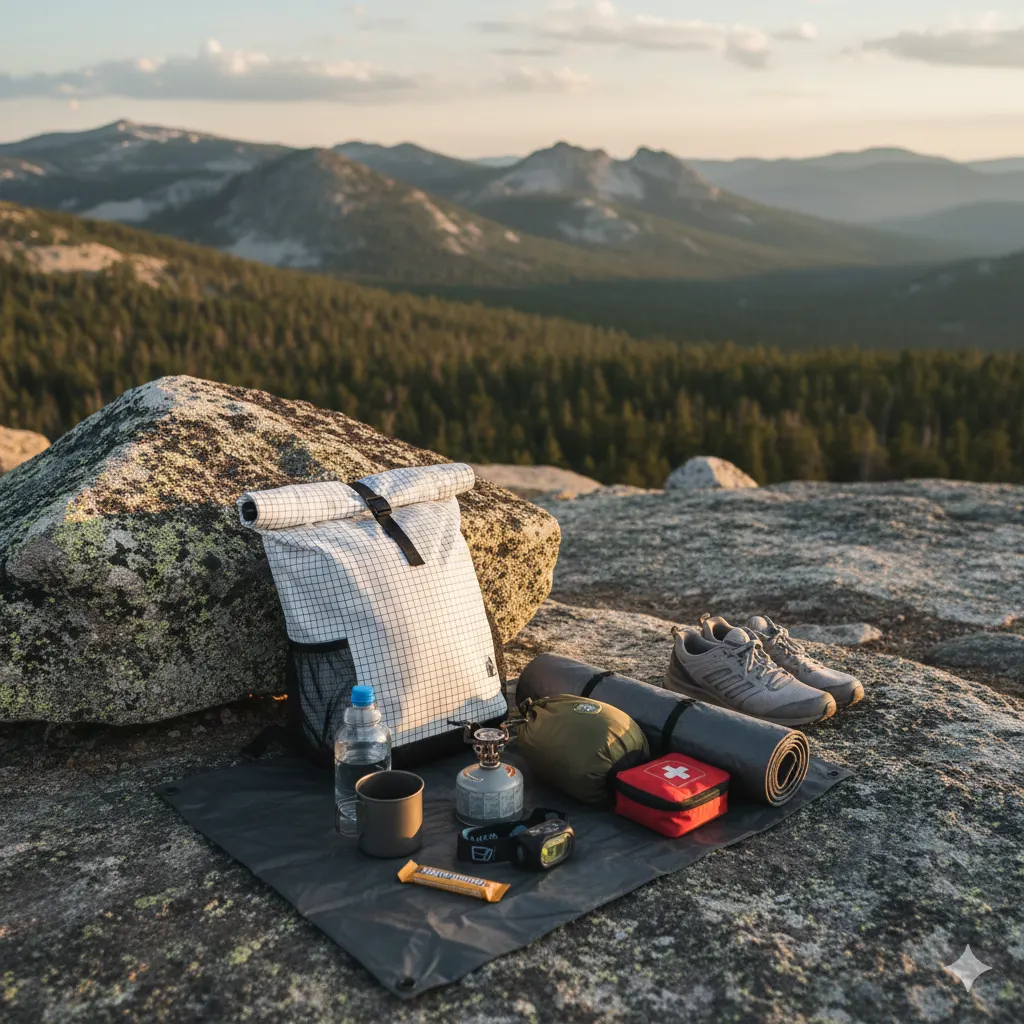
- Lightweight backpack (2–3 lbs or less when empty)
- Minimal, purpose-built clothing layers only
- Calorie-dense food nuts, jerky, energy bars
- Water filter instead of carrying extra bottles
- Multi-use gear that serves two or more functions
- First aid and navigation essentials never cut these
- Total base weight target: under 20 lbs
By applying these lightweight hiking tips consistently across your gear choices, packing habits, and trip planning, you’ll hike farther with less fatigue and enjoy every mile more than the last.
Conclusion: Start Lighter on Your Next Hike
Reducing your pack weight doesn’t require a complete gear overhaul or a significant budget. The most effective lightweight hiking tips start with mindset: question every item, cut duplicates, and let your actual experience on the trail not anxiety guide what you carry. Start today by weighing your current pack, identifying the three heaviest non-essential items, and leaving them home on your next outing. That single exercise often cuts 3–5 pounds instantly.
From there, apply these lightweight hiking tips progressively smarter clothing choices, a water filter instead of extra bottles, a lighter pack when you’re ready to upgrade. Each small decision compounds into a dramatically more enjoyable hiking experience over time. The trail feels different when you’re not fighting your gear every step of the way.
Frequently Asked Questions About Lightweight Hiking Tips
How much should my backpack weigh for day hiking?
For day hiking, aim for 10–15 pounds including water and food. Your base weight excluding consumables can easily stay under 8 pounds with thoughtful packing. If your day pack exceeds 20 pounds, you’re likely carrying unnecessary items. Many experienced day hikers reach 8–10 pounds total by carrying only water, food, layers, first aid, navigation tools, and emergency items. Start by weighing your current pack and systematically removing anything you didn’t use on your last three hikes.
Is expensive ultralight gear necessary to hike with less weight?
No you can significantly reduce pack weight without buying expensive ultralight gear. Start with free changes: leave home unnecessary items, repackage food into lighter zip-lock bags, use your smartphone instead of separate devices, and share gear like first aid kits and water filters with hiking partners. Most hikers reduce pack weight by 5–7 pounds just by being more selective. Premium ultralight gear helps, but smart packing decisions matter far more than expensive equipment.
What should I never leave behind to save weight?
Never compromise on these essentials: navigation tools (map, compass, or GPS), a first aid kit, sun protection, an insulation layer, rain protection, a fire starter, a headlamp, and emergency shelter. Carry adequate water and food for your trip length plus a safety margin. You can choose lighter versions of these items, but eliminating them creates genuine danger. Everything else in your pack is negotiable these core safety items are not.
How do I know if I’ve gone too light with my gear?
Warning signs include feeling genuinely cold despite wearing all your layers, running out of food or water before finishing your route, lacking tools to handle minor emergencies, or experiencing equipment failures in normal conditions. If you’re uncomfortable in expected conditions not extreme or unforecast weather you’ve likely cut too much. Start conservative, learn what you actually need across multiple hikes, and reduce gradually. The goal of lightweight hiking tips is efficiency and enjoyment, not deprivation.
What is base weight in hiking and why does it matter?
Base weight is your pack’s total weight excluding consumables food, water, and fuel. It’s the most useful metric for comparing your pack efficiency across different trips because it removes variables you can’t control (like how much water a route requires). Tracking base weight helps you identify exactly which gear categories are heaviest and prioritize upgrades where they’ll have the most impact. Most experienced lightweight hikers target a base weight under 20 pounds, with ultralight hikers aiming below 10 pounds.
Ready to hit the trail lighter? Share your current pack weight in the comments and tell us which of these lightweight hiking tips made the biggest difference for you. And if you found this guide helpful, check out our essential hiking gear for beginners guide for a complete breakdown of what every hiker actually needs to carry.



No comments yet. Be the first to share your thoughts.