
Hiking Shoes vs Trail Running Shoes: Which One Is Right for You?
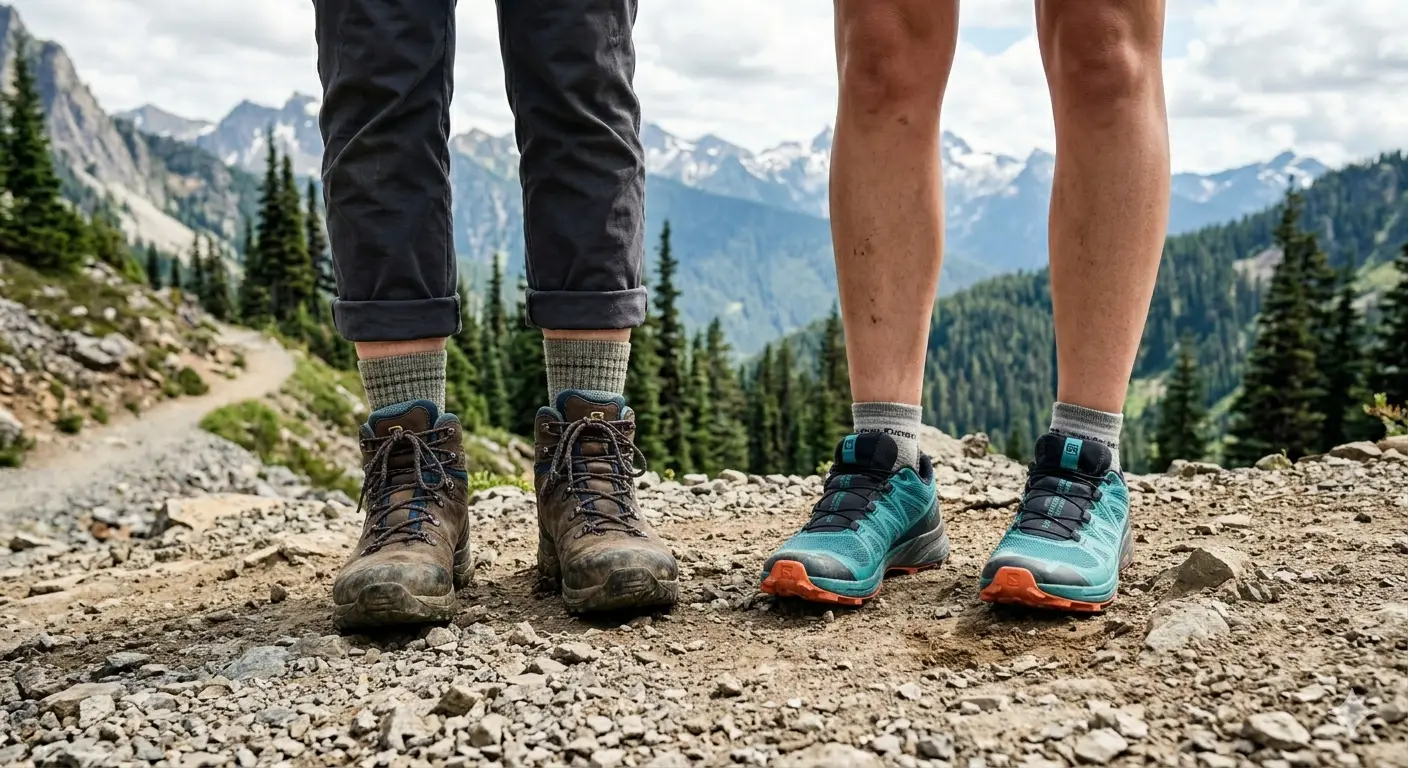
Choosing the right footwear can make or break your time on the trail. Hiking shoes and trail running shoes may look similar, but they are built for different purposes. Knowing the key differences helps you pick the best option for your next adventure.
Quick Answer: What Is the Main Difference?
Hiking shoes are built for stability, support, and durability on slow, heavy-load walks. Trail running shoes are built for speed, light weight, and flexibility on fast-moving runs.
Your best choice depends on your pace, pack weight, and terrain type.
What Are Hiking Shoes?
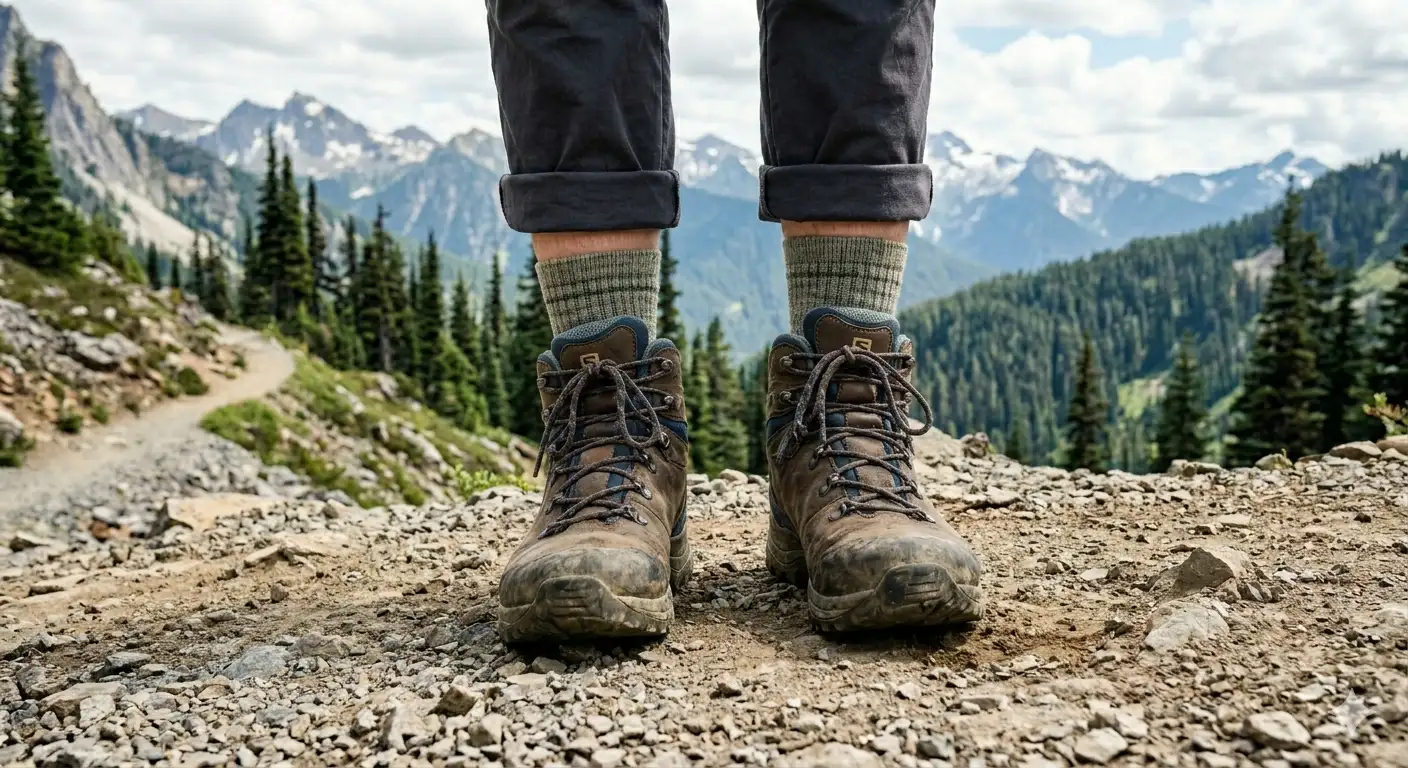
Hiking shoes are designed for walking on uneven terrain at a steady pace. They offer extra ankle support and durable soles. They work well when you carry a backpack or walk long distances.
Key Features of Hiking Shoes
- Stiffer midsole for support under heavy loads
- Thicker, more durable outsole
- Reinforced toe cap and heel
- Often waterproof (e.g., Gore-Tex lining)
- Higher ankle collar for stability
- Heavier than trail running shoes
Pros and Cons of Hiking Shoes
- Pro: Great support for rough, rocky terrain
- Pro: More durable over long distances
- Pro: Better waterproofing options
- Con: Heavier and less flexible
- Con: Can feel stiff on easy trails
- Con: Takes longer to break in
What Are Trail Running Shoes?
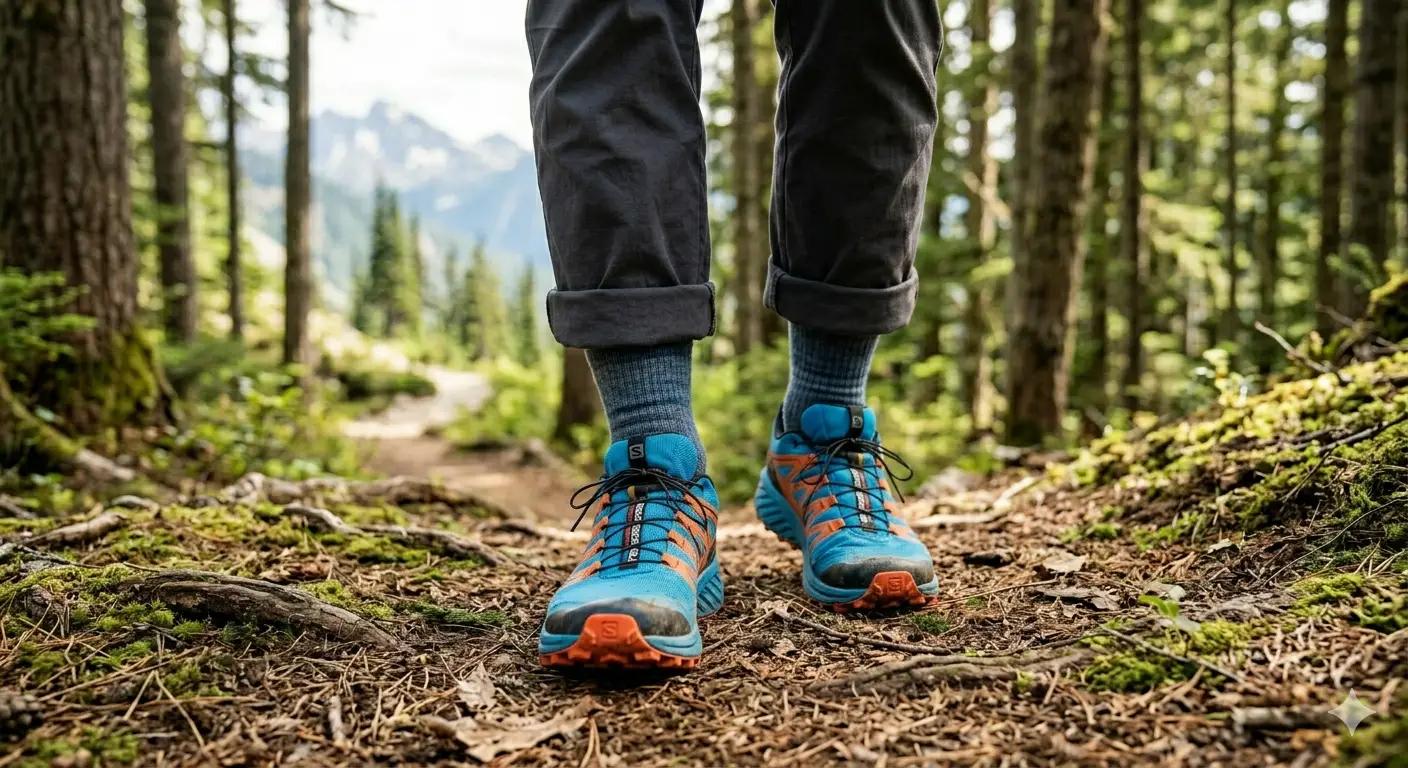
Trail running shoes are designed for speed and agility on natural terrain. They are lighter and more flexible than hiking shoes. They suit fast hikers, ultralight backpackers, and trail runners.
Key Features of Trail Running Shoes
- Lightweight and flexible construction
- Aggressive lugs for grip on soft or muddy ground
- Low-profile design for a natural foot feel
- Breathable mesh upper
- Minimal ankle collar height
- Quick-drying materials
Pros and Cons of Trail Running Shoes
- Pro: Lightweight and comfortable from day one
- Pro: Better for fast hiking and running
- Pro: More breathable in warm weather
- Con: Less support under heavy backpacks
- Con: Wear out faster on abrasive terrain
- Con: Often less waterproof
Hiking Shoes vs Trail Running Shoes: Side-by-Side Comparison
| Feature | Hiking Shoes | Trail Running Shoes |
|---|---|---|
| Weight | Heavier (400–700g per shoe) | Lighter (250–400g per shoe) |
| Support | High | Low to Medium |
| Flexibility | Stiff | Flexible |
| Waterproofing | Often available | Rarely available |
| Durability | Very durable | Moderate |
| Best for | Heavy packs, rocky terrain | Fast hiking, running, light packs |
| Break-in time | Longer | Little to none |
How to Choose: 5 Questions to Ask Yourself
Use these questions to guide your decision before buying.
- How heavy is your pack? Over 10 kg? Go for hiking shoes.
- How fast do you move? Fast hiker or trail runner? Choose trail running shoes.
- What terrain are you covering? Rocky and technical? Hiking shoes offer more protection.
- What is the weather like? Wet or cold? Waterproof hiking shoes are a safer choice.
- How far are you going? Multi-day trek? Hiking shoes tend to last longer.
Who Should Choose Hiking Shoes?
- Beginners new to hiking
- Hikers carrying heavy backpacks
- People walking on rocky or wet trails
- Anyone prone to ankle sprains
- Hikers going on multi-day trips
Who Should Choose Trail Running Shoes?
- Trail runners and fast hikers
- Ultralight backpackers
- Hikers on well-maintained or gentle trails
- Warm-weather and summer hikers
- Experienced hikers who prefer a natural foot feel
Related Articles You May Find Helpful
- Best Hiking Shoes for Beginners: A Simple Buying Guide
- How to Break In Hiking Boots Without Pain
- The Best Hiking Socks: What to Wear on the Trail
Conclusion
Both hiking shoes and trail running shoes have real strengths. Your best choice depends on how you hike, what you carry, and where you go. There is no single right answer for everyone.
If you hike slowly with a heavy pack on rough trails, hiking shoes are a strong choice. If you move fast with a light load on easier paths, trail running shoes may suit you better.
Ready to gear up? Browse our hiking shoe reviews to find the right pair for your next adventure.
Frequently Asked Questions
Can I use trail running shoes for hiking?
Yes, you can use trail running shoes for hiking. They work well on moderate trails with a light pack. They may not offer enough support for heavy loads or very rough terrain.
Are hiking shoes heavier than trail running shoes?
Yes, hiking shoes are typically heavier. A hiking shoe can weigh between 400g and 700g per shoe. Most trail running shoes weigh between 250g and 400g per shoe.
Do I need waterproof hiking shoes?
Waterproof shoes are helpful in wet or cold weather. However, they can make your feet hot in warm conditions. Choose waterproof options if you hike in rain or cross streams often.
How long do trail running shoes last on hiking trails?
Trail running shoes typically last between 500 and 800 kilometres. On abrasive terrain, they may wear out faster. Hiking shoes tend to last longer under similar conditions.




No comments yet. Be the first to share your thoughts.