
Essential Trekking Gear: The Complete Guide for Multi-Day Adventures
Standing at the trailhead with everything you need on your back is one of the most empowering feelings in the outdoors but only if you’ve packed the right trekking gear. Unlike a casual day hike, multi-day trekking demands that you carry shelter, food, water, and safety equipment for days at a time in remote terrain. One missing item or poorly chosen piece of gear can turn an epic adventure into a dangerous ordeal. This guide covers every essential piece of trekking gear you need, from the big four items down to personal hygiene, so you arrive at camp confident, comfortable, and prepared for whatever the mountains throw at you.

The Big Four: Core Trekking Gear Items
Every experienced trekker organizes their trekking gear around four foundational items: the backpack, tent, sleeping bag, and sleeping pad. These represent your largest investment in weight, money, and comfort. Getting them right makes everything else easier. Getting them wrong makes every mile miserable.
Backpack
Your backpack is the single most important piece of trekking gear because it touches your body for every hour of every day on the trail. For multi-day treks, choose a pack with 50–70 liters of capacity and an adjustable suspension system sized to your torso length not your height. The padded hip belt should carry roughly 80% of the load, transferring weight from your shoulders to your hips. Look for multiple compartments for organization, external attachment points for poles and wet gear, and either a built-in rain cover or compatibility with a waterproof liner. Always try on a pack loaded with weight before purchasing. A pack that feels fine empty can become a torture device under 40 pounds.
Shelter (Tent)
A reliable shelter is non-negotiable trekking gear for any overnight wilderness trip. For most conditions, a three-season tent weighing between 2–4 pounds for solo use (or 3–6 pounds for two people) strikes the right balance of protection and packability. Freestanding designs are easier to pitch on rocky or uneven ground, and a vestibule gives you covered space to store muddy boots and damp gear. Good ventilation through mesh inner panels dramatically reduces condensation inside the tent a common frustration on cold nights. Always practice pitching your tent at home before heading into the backcountry.
Sleeping Bag
Choose a sleeping bag rated 10–15°F below the coldest temperature you realistically expect. Down insulation offers the best warmth-to-weight ratio and compresses tightly, but loses insulating power when wet. Synthetic fill costs less and performs better in damp conditions a smart choice for rainy climates. A mummy-shaped bag provides the best thermal efficiency for its weight, and a compression sack keeps it manageable inside your pack. Match the bag length to your height; extra space at the foot just means more air your body has to warm.
Sleeping Pad
A sleeping pad does two jobs: it cushions you from hard ground and more critically insulates you from cold soil that would otherwise drain your body heat throughout the night. Foam pads are durable and never fail, but bulkier. Inflatable pads are far more comfortable and pack smaller, but they can puncture, so always carry a patch kit. Look for an R-value of at least 2 for summer conditions and 4+ for cold-weather trekking. Skimping on a sleeping pad is one of the most common mistakes new trekkers make.
Learn more about choosing the right equipment in our hiking vs trekking comparison guide.

Clothing: The Layering System for Trekking Gear
No single piece of clothing handles all conditions on a multi-day trek. Temperature swings 30–40°F between morning, midday, and evening are common in mountain environments. The layering system base, insulation, and outer shell lets you add and remove clothing to stay comfortable without overheating or getting soaked. Choose moisture-wicking, quick-drying fabrics for all layers, and leave cotton at home. Cotton absorbs moisture and stays wet, making it genuinely dangerous in cold or windy conditions.
Base Layers
Bring 2–3 moisture-wicking shirts (both short and long sleeve), 1–2 pairs of synthetic or merino wool underwear, and long underwear bottoms for cold conditions. Merino wool is excellent for multi-day use because it resists odor far longer than synthetic fabrics a genuine quality-of-life upgrade on longer treks.
Insulation and Outer Layers
A fleece or synthetic insulated jacket handles cool mornings and high-altitude afternoons, while a packable down jacket provides warmth at camp after the sun drops. For your outer shell, a waterproof breathable rain jacket with a helmet-compatible hood and underarm zippers for ventilation is essential trekking gear in any climate. Pair it with rain pants for full coverage in heavy downpours. For lower body, two pairs of convertible hiking pants give you flexibility across changing temperatures. Add 3–4 pairs of moisture-wicking trekking socks, a warm hat, a wide-brim sun hat, gloves, and a neck gaiter to complete your clothing system.
Footwear: The Foundation of Your Trekking Gear
Your feet carry you for 6–10 hours a day over rough terrain. Poorly chosen or unbroken footwear is the leading cause of trip-ending blisters and injuries on multi-day treks. Invest seriously in this piece of trekking gear.
Hiking Boots or Trail Shoes
Select boots or trail shoes that are completely broken in before your trek never debut new footwear in the backcountry. Look for ankle support appropriate to your terrain and pack weight, waterproofing for wet conditions, aggressive tread for mixed surfaces, and a toe box with enough room to prevent black toenails on descents. Have your feet professionally measured in the afternoon (when feet swell) and wear your trekking socks during the fitting. According to REI’s footwear experts, most hiking injuries are directly related to improper footwear fit.
Camp Footwear
Lightweight sandals or camp shoes weighing just 6–12 ounces are worth every gram. Giving your feet freedom at camp after a long day on trail speeds recovery, reduces hotspot formation, and doubles as footwear for stream crossings where you don’t want wet boots.
Cooking System
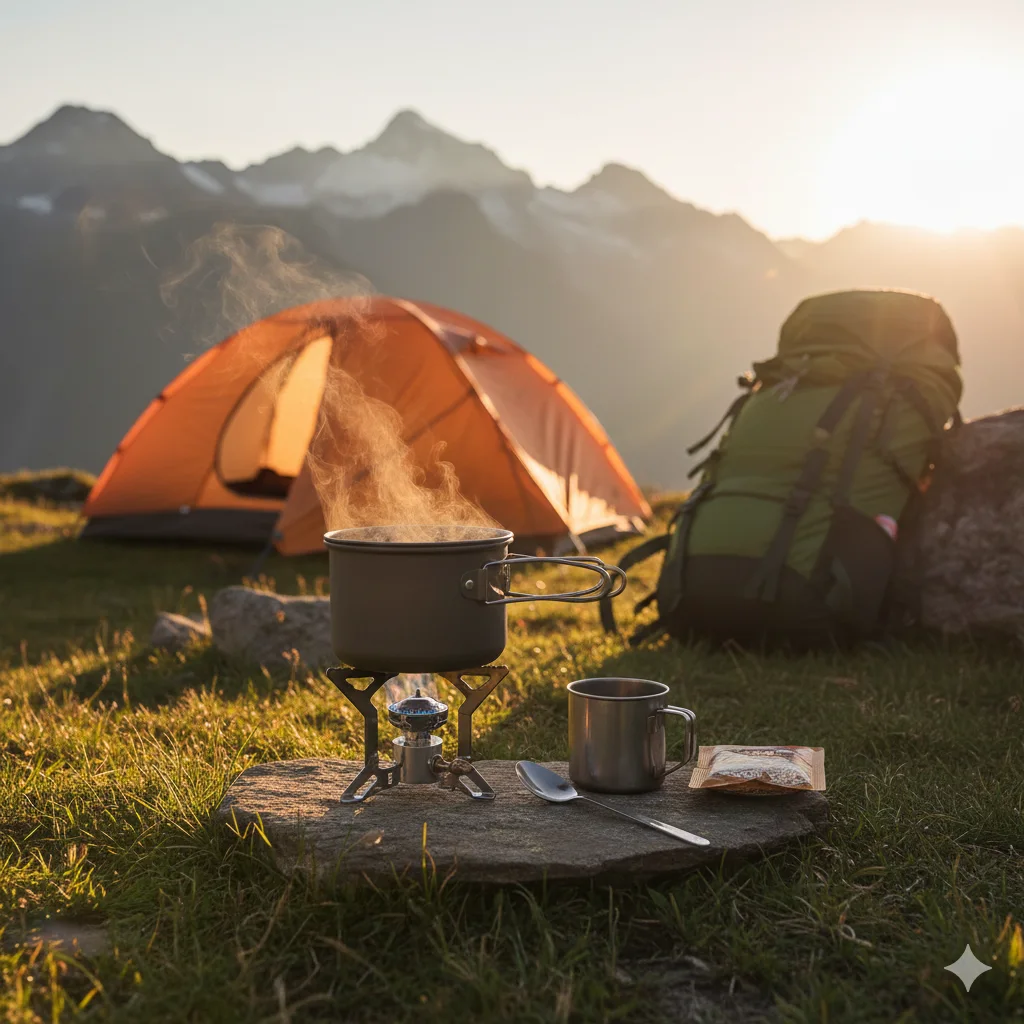
Hot food and warm drinks dramatically improve morale on cold nights and long trekking days. Your cooking trekking gear doesn’t need to be complicated, but it does need to be reliable and weight-efficient.
Stove and Fuel
Canister stoves are the most popular choice for trekking they’re simple to operate, pack small, and deliver consistent heat. Liquid fuel stoves perform better in extreme cold (below 20°F) and at very high altitude, and the fuel is refillable rather than single-use. Calculate fuel needs at roughly 15–20g per person per day for boiling water and simple cooking. Always bring a windscreen; even a light breeze can double your fuel consumption. Carry two ignition sources (lighter plus waterproof matches or ferro rod) as backup.
Cookware
A single 1.5–2 liter titanium or aluminum pot handles most solo and duo cooking needs. Add a lightweight spork, a collapsible cup, a pot grabber, and a small scrubber with biodegradable soap, and your kitchen is complete. Keep it minimal every extra utensil is weight you carry over every pass.
Water System: Critical Trekking Gear for Survival
Dehydration degrades judgment and physical performance faster than almost any other factor in the backcountry. Plan for a minimum of 3–4 liters of daily water capacity as part of your core trekking gear system.
Water Containers and Treatment
Carry two or three one-liter wide-mouth bottles, or combine a two-liter hydration reservoir with one hard-sided bottle as backup. Wide-mouth bottles are far easier to fill from shallow streams and to clean in camp. For treatment, a pump or squeeze filter mechanically removes bacteria and protozoa from virtually any water source. If you’re trekking in regions with potential viral contamination, upgrade to a purifier or add chemical tablets (iodine or chlorine dioxide) as backup. UV light pens are fast and effective but require batteries keep them as a secondary option rather than your primary system. According to the CDC’s backcountry water treatment guidelines, untreated water from natural sources carries significant health risks even in remote wilderness areas.
Navigation and Safety Gear
Getting lost in a remote mountain environment is not merely inconvenient it can be life-threatening. Redundant navigation tools and emergency supplies are non-negotiable trekking gear for any serious multi-day route.
Navigation Tools
Always carry a detailed topographic map of your area and a compass with adjustable declination, even if you rely on a GPS device or smartphone with offline maps downloaded. Electronics fail; paper and compass do not. A portable battery pack keeps your devices charged through multi-day trips. More importantly, know how to use every tool before you need it under pressure.
Emergency and First Aid
A comprehensive wilderness first aid kit should include blister treatment, wound care, pain relief, and any personal medications. Beyond that, your emergency trekking gear should include a space blanket or emergency bivy for unexpected nights out, a headlamp with extra batteries, an emergency whistle audible from long distances, at least two fire-starting methods, and a satellite messenger or personal locator beacon (PLB) for areas outside cell coverage. A small repair kit with duct tape, gear patches, and paracord rounds out your safety system.
Food, Nutrition, and Hygiene
Multi-day trekking burns 2,500–3,500 calories per person daily depending on terrain, pack weight, and temperature. Plan calorie-dense, lightweight foods that require minimal fuel to prepare. Dehydrated meals work well for dinners; instant oatmeal or granola handles breakfasts efficiently. Trail mix, energy bars, and jerky keep energy levels steady throughout hiking days. Repackage food from bulky store packaging into zip-lock bags to reduce weight and waste, and store everything in a bear canister or hang it on a bear line in areas with wildlife activity.
For hygiene, keep toiletries minimal: biodegradable soap, toothbrush and toothpaste, toilet paper with a small trowel for cat holes, hand sanitizer, a quick-dry towel, sunscreen, lip balm with SPF, and insect repellent. Other personal essentials include UV-protection sunglasses, prescription medications, and permits or identification required for your route.
Optional Trekking Gear Worth Considering
Some items fall outside the essential category but add meaningful value depending on your route and preferences. Trekking poles reduce knee strain on descents by up to 25% according to biomechanical research cited on Wikipedia, improve balance on technical terrain, and can serve as tent poles for ultralight shelters. Gaiters protect lower legs from snow, brush, and debris on off-trail routes. A camera, journal, or small entertainment option maintains mental wellbeing on longer expeditions. A sit pad weighing just one ounce transforms rocky rest stops into comfortable breaks.
Gear Weight Management
Every pound of trekking gear you carry compounds in difficulty over miles and days. The general target is a total pack weight (including food and water) of 25–30 pounds, with a base weight (everything except consumables) under 20 pounds. Achieve this by choosing lighter versions of essential items where budget allows, sharing group gear like the tent and cooking system with a partner, repackaging food and toiletries to eliminate excess packaging, and ruthlessly eliminating duplicate or luxury items on your first few treks. Weigh every item before you pack it. The scale doesn’t lie, and neither does your back after 15 miles.
Testing Your Trekking Gear Before You Go
Never use untested trekking gear on a serious backcountry route. Pitch your tent in the backyard. Sleep in your sleeping bag at home on a cold night. Cook a full meal on your stove, filter water with your filter, and hike a local trail with your fully loaded pack. Test your rain jacket in actual rain. Confirm everything fits inside your pack with room for food and water. These simple steps reveal fit problems, missing items, and technique gaps that are easy to solve at home and potentially dangerous to discover at 12,000 feet.
Prepare with our complete trekking for beginners guide before heading out, and browse our hiking gear on a budget guide for cost-effective gear selection strategies.
Conclusion: Building Your Trekking Gear System
The right trekking gear is the difference between an adventure you remember with pride and one you barely survive. Start with the big four backpack, tent, sleeping bag, and sleeping pad and build outward from there. Invest most in items that touch your body all day: your pack, your boots, and your sleep system. Test everything before you commit it to the backcountry. Manage weight deliberately, layer your clothing smartly, and carry redundant navigation and safety tools. With a well-chosen and well-tested kit of trekking gear, you’ll be ready to take on multi-day wilderness routes with confidence, comfort, and the freedom that comes from true self-sufficiency on the trail.
Frequently Asked Questions About Trekking Gear
How much should I spend on trekking gear as a beginner?
A complete trekking gear setup typically costs $800–$2,500 depending on the brands you choose and whether you buy new or used. You don’t need to purchase everything at once. Prioritize the big four items backpack, shelter, sleeping bag, and sleeping pad and rent or borrow cooking and water gear for your first trek. Build your kit gradually and upgrade specific pieces as you gain experience and develop clear preferences.
Can I use my day hiking gear for trekking?
Some day hiking gear transfers well clothing, footwear, water bottles, and trekking poles all work for multi-day trips. However, day hiking gear lacks the sleeping system, shelter, cooking equipment, and larger backpack that trekking requires. Start with overnight backpacking trips of one or two nights to identify exactly what additional trekking gear you need before committing to a week-long expedition.
Should I buy expensive name-brand trekking gear or will budget options work?
For beginners, mid-range gear offers the best value. Invest more in items that directly affect comfort and safety your backpack, sleeping bag, and boots. Budget options perform adequately for lower-priority items like cookware and stuff sacks. Premium brands typically deliver lighter weight and better long-term durability, which matters more as your trekking ambitions grow. Start solid and upgrade selectively based on real-world experience.
What is the most important piece of trekking gear?
While every essential item matters, most experienced trekkers would argue your backpack is the single most important piece of trekking gear it carries everything else and contacts your body for every minute of every hiking day. A poorly fitting pack causes pain, fatigue, and injury even when all your other gear is perfect. Spend time getting a proper fit at an outdoor retailer, try the pack loaded with weight, and never buy a pack based on online reviews alone.


No comments yet. Be the first to share your thoughts.