
Solo Trekking vs Group Trekking: Which Is Right for You?
Choosing how to hike is just as important as choosing where to hike. Whether you go alone or with others shapes your entire experience on the trail. Both styles have real advantages, and both come with trade-offs you should understand before you pack your bag.
What Is Solo Trekking?
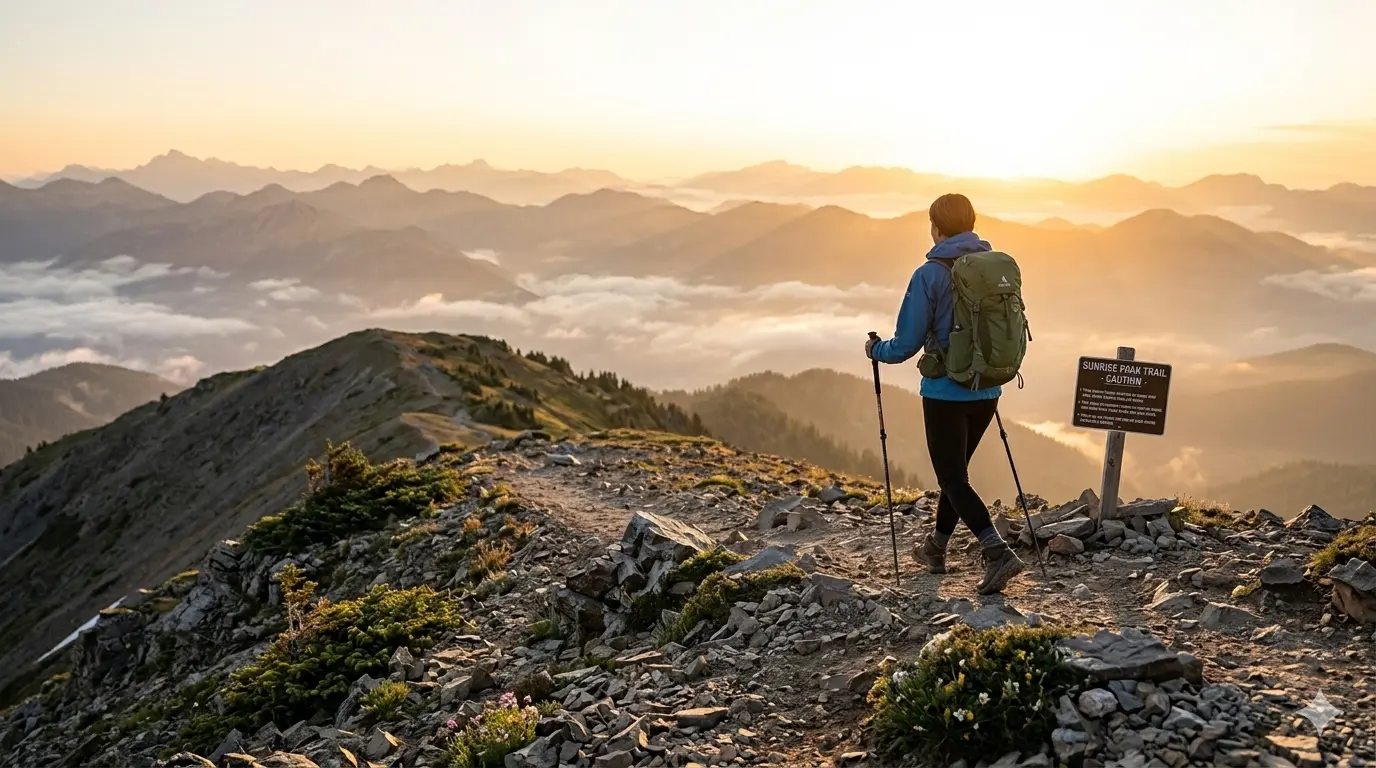
Solo trekking means hitting the trail on your own, with no group to coordinate. You plan your route, set your pace, and make every decision yourself. Many hikers find this deeply rewarding. Others find it challenging in ways they did not expect.
Hiking alone gives you complete freedom. You can stop when you want, change your plans mid-trail, and move at whatever speed feels right. There are no compromises and no waiting for slower members. Your experience belongs entirely to you.
The Real Benefits of Hiking Alone
When you hike alone, you stay more present on the trail. You notice sounds, smells, and small details that get lost in group conversations. Many solo hikers describe a deeper connection to nature that is hard to find in a group setting.
Solo trekking also builds real confidence. Navigating a difficult section on your own, solving a route problem, or managing unexpected weather teaches you skills that stay with you long after the hike ends.
The Honest Risks of Hiking Alone
Safety is the most serious concern with solo trekking. If you twist an ankle on a remote trail, there is no one nearby to help. Emergencies become much harder to manage without another person present. This is not a reason to avoid solo hiking, but it is a reason to prepare more carefully.
You also carry full responsibility for navigation, weather decisions, and gear. If you make a mistake, there is no one to catch it. Solo hiking rewards experienced and well-prepared hikers. It is less forgiving of careless planning.
- Always share your route and expected return time with someone at home
- Carry a personal locator beacon or satellite communicator on remote trails
- Know basic first aid before heading out alone
- Start with shorter, well-marked trails if you are new to solo hiking
What Is Group Trekking?
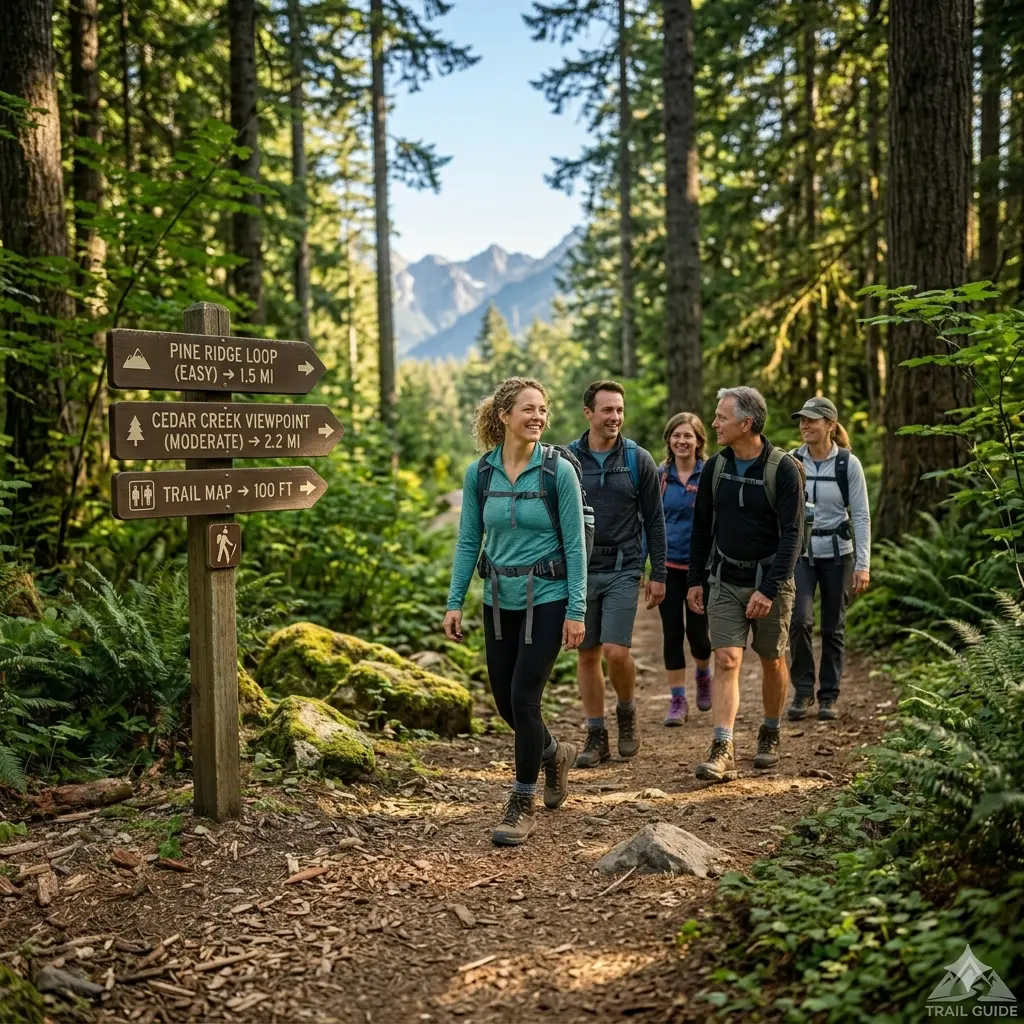
Group trekking means hiking with two or more people. This could be a small group of friends, a family, or an organized trekking tour. The social dynamic changes everything about how the hike unfolds. You share decisions, share effort, and share the experience.
The Real Benefits of Hiking with Others
Safety improves significantly in a group. If someone gets injured, others can go for help or provide immediate assistance. Having more eyes on the trail also helps with navigation and spotting hazards early. For beginners, this safety net is genuinely valuable.
Group hiking is often more social and encouraging. When the trail gets tough, having others around keeps motivation high. You can share gear weight, split costs on guided tours, and celebrate reaching a summit together. These shared moments often become lasting memories.
If you are new to trekking, joining a group led by an experienced hiker or a certified guide gives you hands-on learning in a safe environment. You pick up skills naturally by watching and asking questions along the way.
The Honest Trade-Offs of Group Trekking
Groups move at the pace of the slowest member. If you are a strong hiker, you may spend more time waiting than walking. This can be frustrating, especially on a trail you are excited about. Good communication within the group helps manage this before the hike starts.
Planning with others takes more time and effort. Aligning schedules, agreeing on a route, and coordinating gear can feel like a project before the first step is even taken. Larger groups also tend to have a bigger impact on the trail environment, which matters in sensitive areas.
Learn how to plan a group hiking trip without the stress
Solo vs Group: A Direct Comparison
Safety
Group trekking is safer in emergencies. Solo trekking requires stronger personal preparation and better gear. Neither is inherently dangerous when you plan properly for your chosen style.
Freedom and Flexibility
Solo trekking wins on flexibility. You can change plans, rest longer, or push harder without consulting anyone. Groups need agreement before adjusting plans, which slows down decision-making on the trail.
Cost
Solo hikers pay for everything themselves. In a group, you can split costs for transport, accommodation, guides, and shared gear. Group trekking is usually more affordable per person on multi-day routes.
Social Experience
If connection and shared adventure matter to you, group trekking delivers. If quiet, personal reflection is what you are after, solo hiking fits better. Neither is wrong. They simply serve different needs.
How to Choose the Right Style for You
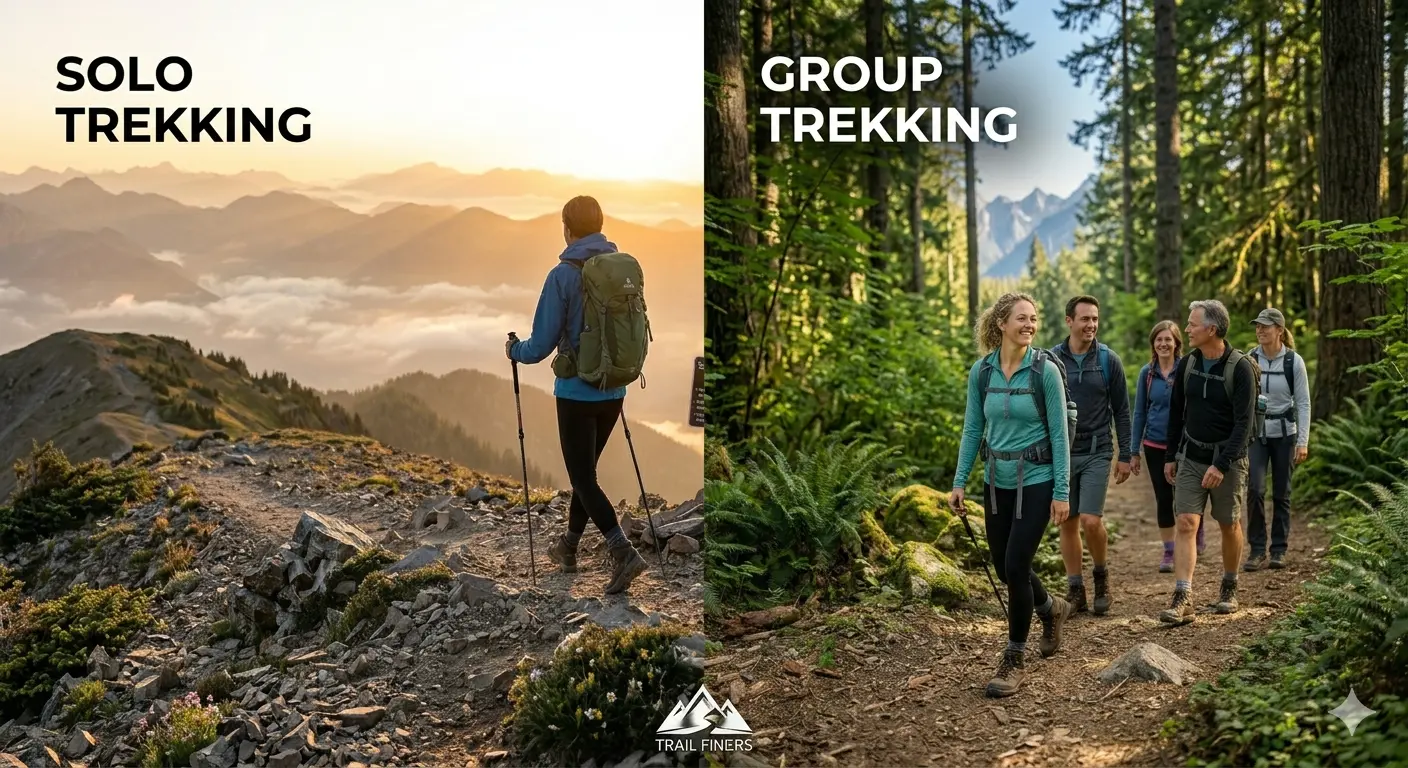
Think about your experience level first. If you are newer to hiking, starting with a group gives you a safer learning environment. As your skills grow, solo trips become more manageable and rewarding.
Consider the trail itself. Technical, remote, or high-altitude routes carry more risk. These conditions favor group hiking or at least a very well-equipped solo trekker with reliable communication gear. Well-marked, shorter trails are more forgiving for solo hikers.
Your personal goal matters too. Are you looking for challenge and independence? Solo trekking pushes you in ways a group rarely can. Are you looking for fun, company, and shared memories? A group trip delivers that in a way no solo hike can replace.
Read our beginner’s guide to choosing the right hiking trail
Conclusion
There is no universally better option between solo trekking and group trekking. Both offer something real and worth experiencing. Your best choice depends on your skills, your goals, and the specific trail you have in mind.
Try both styles if you can. Many hikers enjoy group trips for big adventures and solo walks for quieter, more personal outings. Start with what feels right for you now, and let your experience guide you from there.
Explore our top recommended trails for solo and group hikers
Frequently Asked Questions
Is solo trekking safe for beginners?
Solo trekking can be safe for beginners on short, well-marked, and popular trails. However, it requires solid preparation, including telling someone your plans, carrying a map, and knowing basic first aid. Starting with guided group hikes helps you build the skills and confidence you need before venturing out alone.
What is the ideal group size for trekking?
A group of three to six people is often considered ideal for most trails. It is large enough to provide safety support and share tasks, but small enough to move efficiently and minimize environmental impact. Very large groups can slow down significantly and are harder to manage on narrow or technical trails.
Can I switch between solo and group trekking?
Yes, and many experienced hikers do exactly that. Some trails and seasons are better suited to one style over the other. As your confidence and skills develop, you will naturally find the right balance between independent adventures and shared group experiences.
Do I need special gear for solo trekking?
Your core gear remains similar whether you hike alone or in a group. However, solo hikers should carry additional safety items like a personal locator beacon, a fully charged phone with offline maps, and a basic first aid kit. Since there is no one else to help in an emergency, your gear needs to cover what a group would otherwise provide.

No comments yet. Be the first to share your thoughts.