
Complete Hiking Guide for Beginners
Hiking is one of the most accessible outdoor activities you can start today. You don’t need special skills or expensive gear to begin. All you need is the right information and a good pair of shoes.
This beginner hiking guide walks you through everything you need to know. From choosing your first trail to staying safe outdoors, you’ll feel ready before you take your first step.
How to Choose Your First Trail
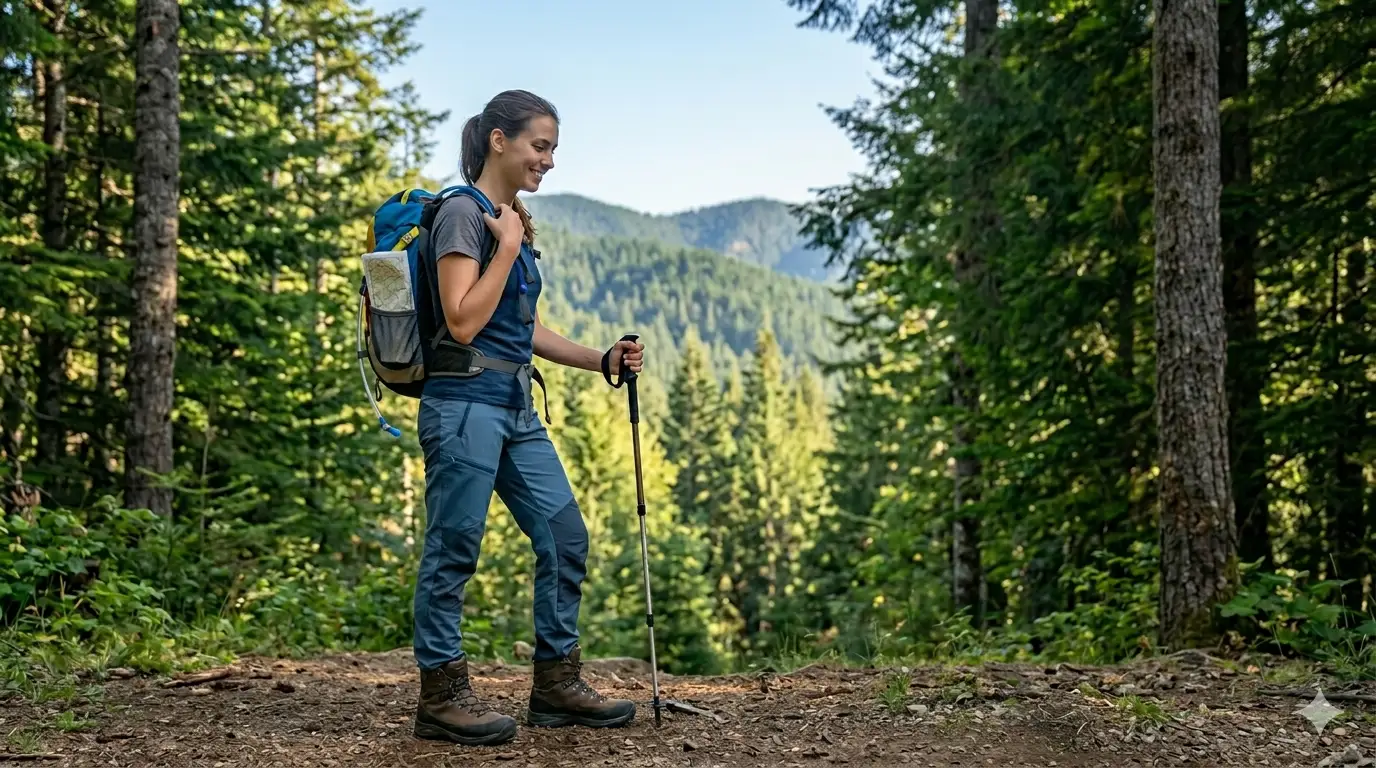
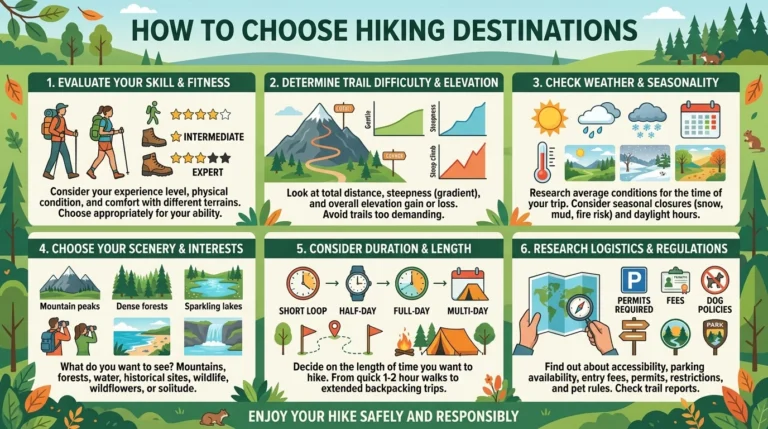
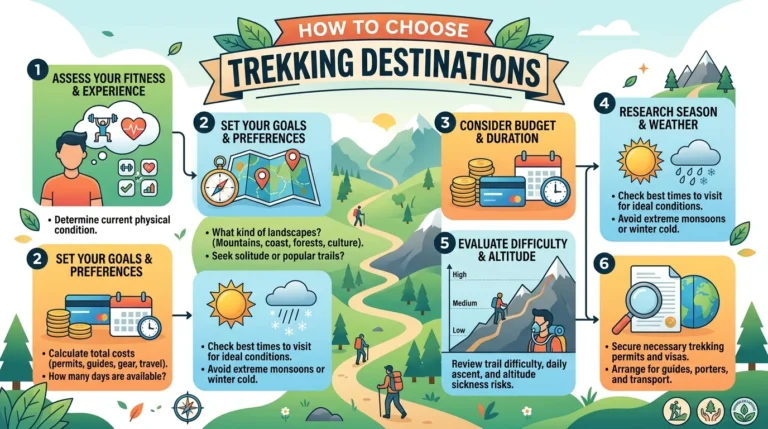
Your first hike should be simple and short. Look for trails labeled “easy” or “beginner-friendly” in your area. A good starting distance is 3 to 5 kilometers.
Pay attention to the elevation gain listed on trail maps. Flat or gently rolling trails are much easier on your legs and lungs. Avoid steep climbs until you build some experience.
Apps like AllTrails or local hiking club websites are great for finding beginner trails. You can read reviews from other hikers and check recent trail conditions before you go.
Understanding Trail Ratings
Most trails are rated as easy, moderate, or difficult. Easy trails have little elevation change and well-marked paths. Moderate trails may have steeper sections or longer distances.
As a beginner, stick to easy trails for your first few outings. Once you feel comfortable, you can slowly move to moderate terrain.
Essential Hiking Gear for Beginners
You don’t need to buy everything at once. Start with the basics and add gear over time as you hike more often.
- Hiking shoes or trail runners: Good grip and ankle support matter most on uneven ground.
- Moisture-wicking clothing: Avoid cotton, which stays wet and causes chafing.
- Daypack (15–25 liters): Enough space for water, snacks, and a light layer.
- Water bottle or hydration bladder: Bring at least 500ml per hour of hiking.
- Snacks: Energy bars, nuts, or fruit give you fuel on the trail.
- Sun protection: Sunscreen, sunglasses, and a hat are easy to overlook.
- Basic first aid kit: Bandages, blister pads, and antiseptic wipes cover most needs.
Your footwear is the most important investment. Blisters can end a hike early, so wear broken-in shoes before heading out. Never hike in brand-new footwear on your first trail.
How to Plan Your First Hike
Good planning makes the difference between a fun hike and a stressful one. Check the weather forecast the night before and the morning of your hike.
Start early in the day when trails are cooler and less crowded. Most beginner hikers underestimate how long a trail takes. A general rule is to plan for 2 kilometers per hour plus extra time for breaks and photos.
Checking Trail Conditions
Trail conditions change with the seasons. Mud, ice, fallen trees, or washed-out paths can make a trail harder than expected. Check recent trail reviews or park websites before you leave home.
If a trail is closed or conditions look dangerous, choose another route. There’s always another day and another trail.
Telling Someone Your Plans
Before you leave, tell a friend or family member where you’re hiking. Share the trail name, parking area, and your expected return time. This simple step is one of the most important hiking safety tips you can follow.
Hiking Safety Tips for Beginners
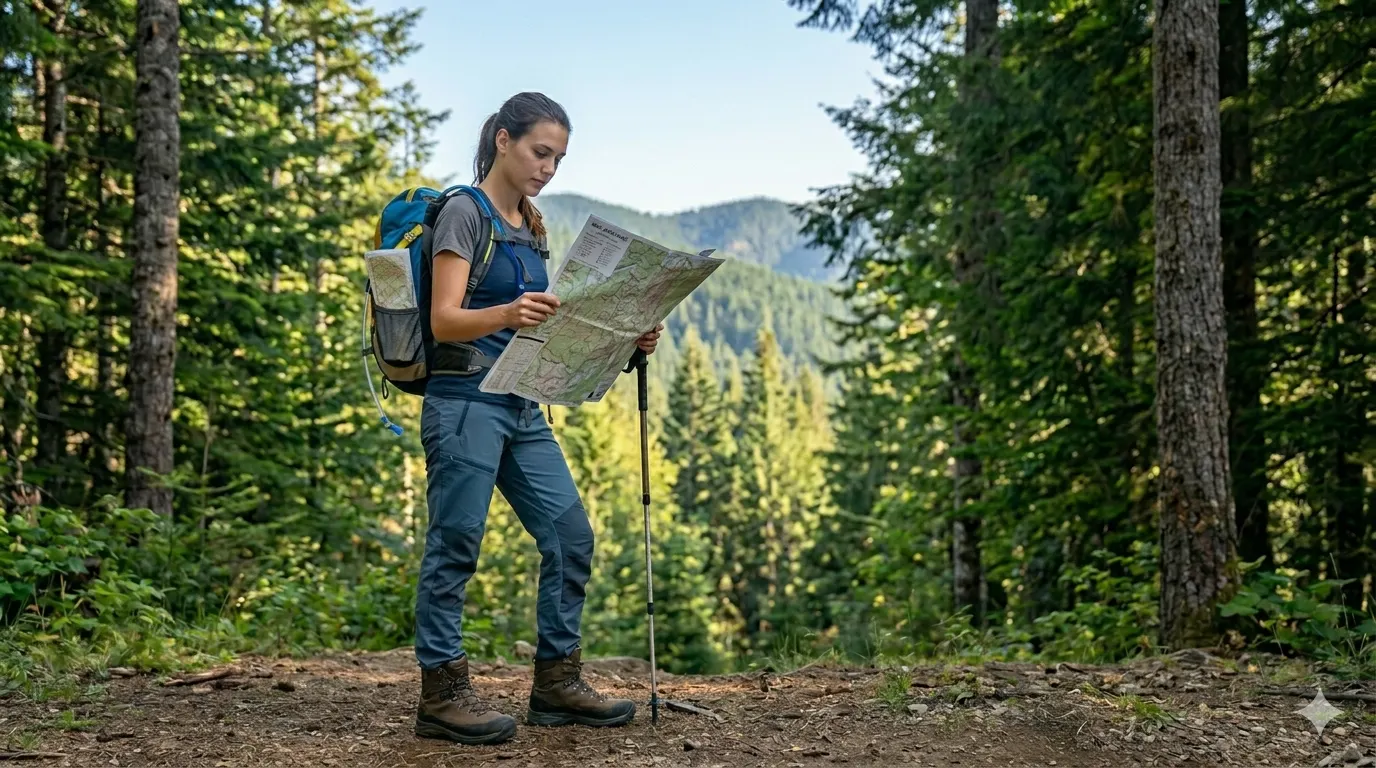
Safety on the trail starts with awareness. Stay on marked paths and avoid shortcuts through unmarked areas. Getting off-trail is one of the most common reasons hikers get lost.
Pay attention to the time as you hike. Turn back at the halfway point of your planned time, not the halfway point of the trail. This is called the turnaround rule and helps you avoid hiking in the dark.
If the weather changes suddenly, don’t push forward. Lightning, heavy rain, or strong wind can make trails dangerous quickly. Heading back early is always the right call.
What to Do If You Get Lost
If you lose the trail, stop walking and stay calm. Retrace your steps slowly to the last marker or junction you remember. Use a map app or downloaded offline map to check your location.
If you’re truly lost and have no signal, stay put in a visible location. Rescuers can find you faster when you’re not moving. Use a whistle to signal for help if you have one.
Beginner Hiking Tips for a Better Experience
A few small habits can make your hike much more enjoyable from the start.
- Start slow and keep a steady pace you can maintain for the whole hike.
- Take short breaks every 45–60 minutes to rest and hydrate.
- Pack out all your trash and leave the trail cleaner than you found it.
- Download an offline map before entering areas with poor phone signal.
- Hike with a friend on your first few outings for safety and confidence.
Your first hike doesn’t have to be long or hard to be rewarding. Even a short trail through local woods gives you fresh air, exercise, and a sense of accomplishment.
Building Your Hiking Fitness Over Time
Hiking gets easier as your body adapts. After a few easy hikes, your legs will feel stronger and your breathing will improve. Progress naturally by adding distance or elevation as you feel ready.
Cross-training activities like walking, cycling, or swimming help build the endurance you need for longer hikes. Stretching before and after a hike reduces soreness and keeps your muscles healthy.
Learn more about how to prepare your body for hiking and the best beginner hiking trails near cities to keep building your experience step by step.
Conclusion
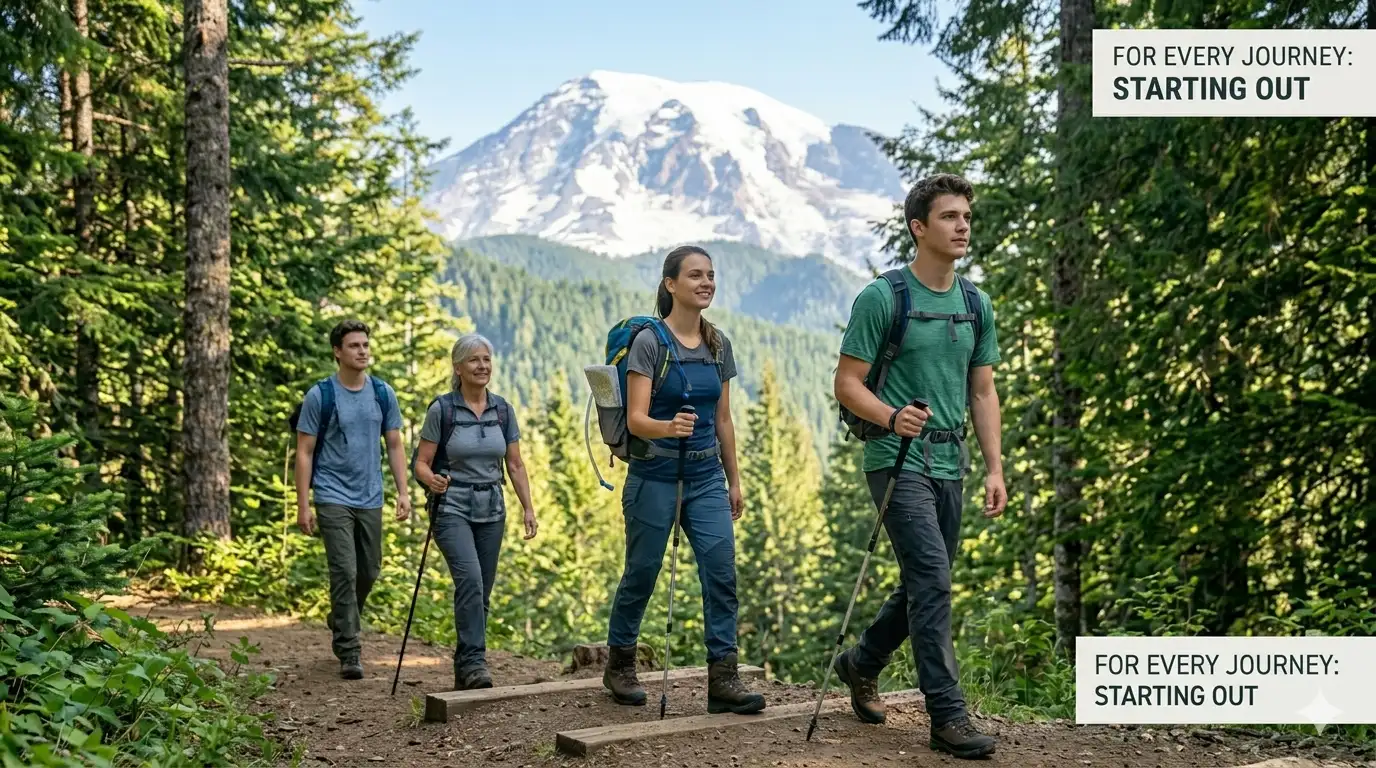
Starting your hiking journey doesn’t have to feel overwhelming. Choose an easy trail, pack the basics, plan ahead, and stay aware of your surroundings. Every experienced hiker started exactly where you are now.
Pick a local trail this weekend and take your first steps. You can also explore our beginner gear guides to help you prepare with confidence.
Frequently Asked Questions
What should a beginner bring on a hike?
A beginner should bring water, snacks, a small first aid kit, sun protection, and a fully charged phone with an offline map. Wear comfortable, broken-in shoes and dress in moisture-wicking layers. Keep your pack light so you can move comfortably on the trail.
How long should a beginner’s first hike be?
A good first hike is between 3 and 6 kilometers on a flat or gently rolling trail. This distance is long enough to feel like an achievement but short enough to avoid exhaustion. As you gain experience, you can gradually increase your distance and elevation.
Is hiking safe for complete beginners?
Hiking is very safe for beginners when you choose appropriate trails and plan carefully. Stick to well-marked, popular trails and check conditions before you go. Always tell someone your plans and carry basic safety items like water, a map, and a small first aid kit.
What time of day is best for beginner hikers?
Morning is the best time for beginner hikers. Trails are cooler, less crowded, and you have plenty of daylight ahead. Starting early also gives you time to rest or turn back if the hike takes longer than expected.

No comments yet. Be the first to share your thoughts.