
How to Choose Hiking Destinations
Picking the right hiking destination can transform your outdoor experience. The wrong choice leads to exhaustion, disappointment, or safety risks. The right one creates memories that last a lifetime.
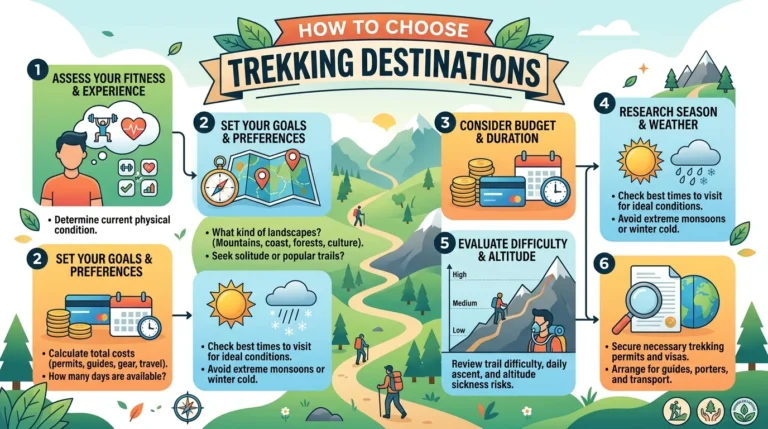
This guide helps you select hiking destinations that match your fitness level, experience, and goals. You’ll learn to evaluate trails, research conditions, and plan hikes for any season.
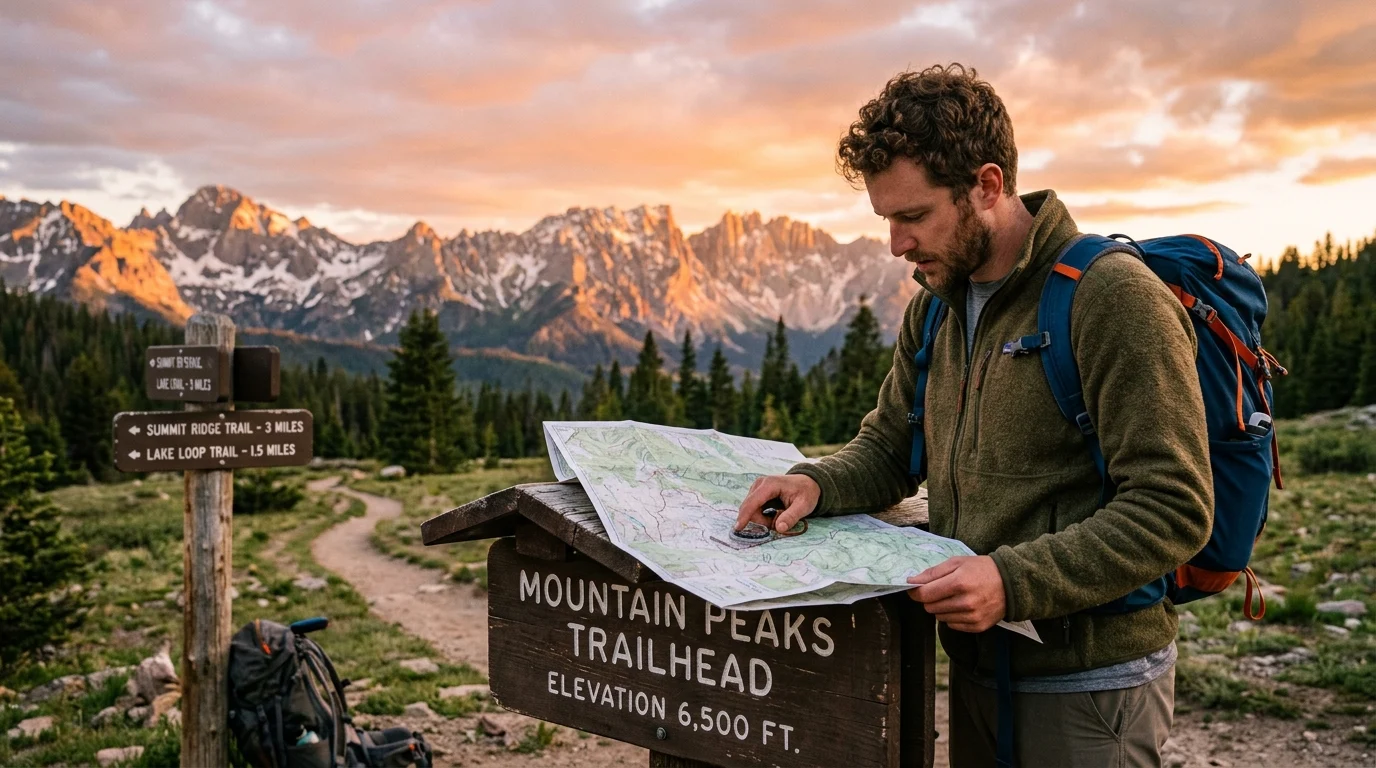
Assess Your Experience and Fitness Level
Your abilities determine which trails you can safely enjoy. Be honest about your current fitness and hiking experience.
Beginner Hikers
If you’re new to hiking, start with trails under 5 miles with less than 500 feet of elevation gain. Look for well-marked paths with good cell coverage. Popular trails near urban areas often provide these features.
Choose destinations with maintained trails and regular foot traffic. You want other hikers nearby if you need help or advice.
Intermediate Hikers
With several hikes under your belt, you can handle 5-10 mile trails with 500-1500 feet of elevation gain. You’re ready for less-maintained paths and moderate scrambling.
Consider destinations that require basic navigation skills. Trails with some solitude offer a new level of wilderness experience.
Advanced Hikers
Experienced hikers can tackle trails over 10 miles with 1500+ feet of elevation gain. You’re comfortable with route finding, weather changes, and self-rescue situations.
Remote backcountry destinations, multi-day treks, and technical terrain become accessible at this level.
Define Your Hiking Goals
Different destinations serve different purposes. Clarify what you want from your hike.
Fitness and Exercise
If you’re hiking for physical conditioning, seek trails with consistent elevation gain. Steep, shorter hikes provide intense workouts. Longer moderate trails build endurance.
Local trails you can repeat weekly work better than distant destinations for fitness goals.
Nature and Scenery
For beautiful views and photography, research trails known for scenic vistas. Mountain summits, lake destinations, and waterfall hikes deliver visual rewards.
Check recent photos from other hikers to verify current conditions and view quality.
Solitude and Peace
Popular trails get crowded, especially on weekends. For quiet experiences, choose less-known destinations or hike on weekdays.
Trails requiring longer drives or permits typically have fewer visitors.
Social Hiking
Group hikes work best on well-established trails with clear paths. Choose destinations that accommodate your group’s slowest member.
Popular trailheads often have amenities like restrooms and picnic areas for group gatherings.
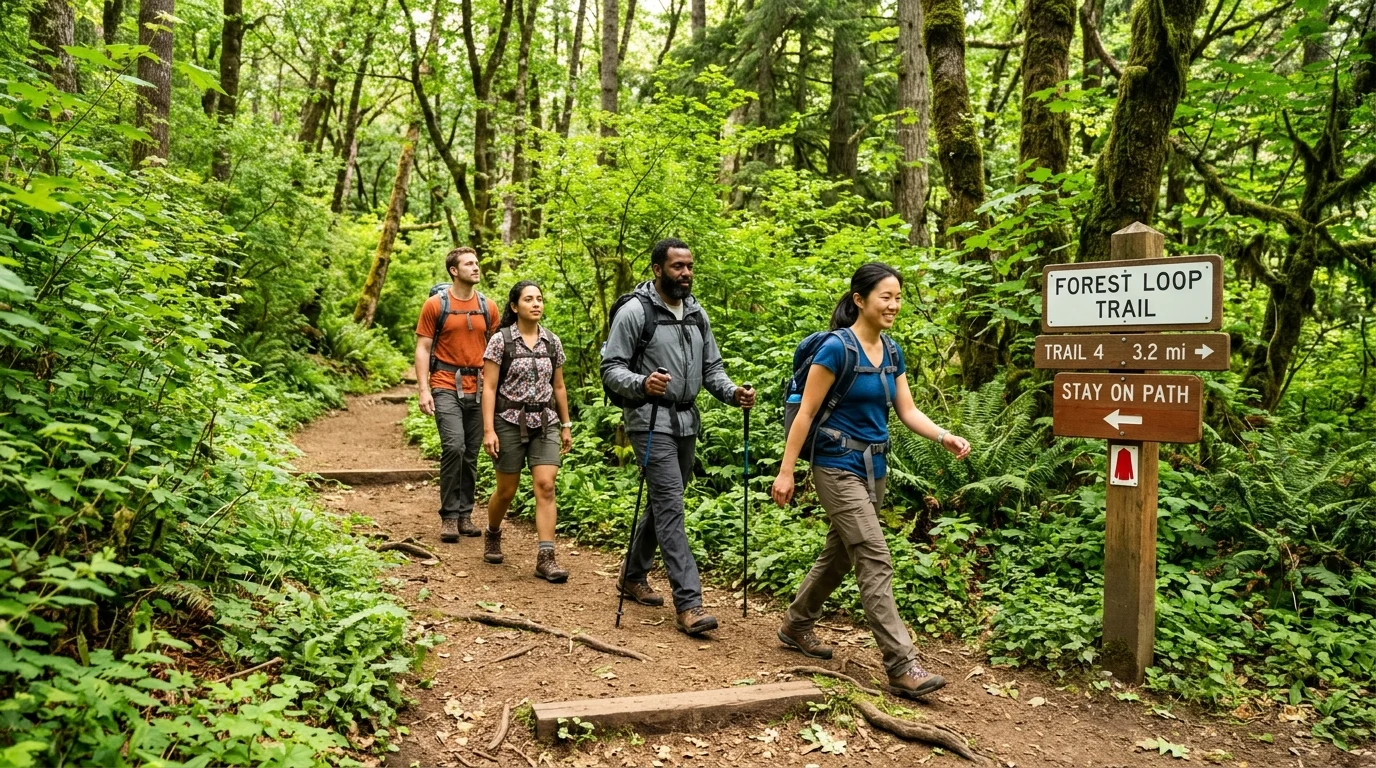
Research Trail Information
Thorough research prevents unpleasant surprises. Gather information from multiple sources before committing to a destination.
Use Multiple Resources
Check official park websites for current conditions and closures. Trail apps like AllTrails provide user reviews and recent trip reports. Local hiking groups on social media share real-time updates.
Compare information across sources. One outdated report can mislead you about trail conditions.
Key Information to Gather
- Total distance and elevation gain
- Trail surface type (dirt, rock, gravel)
- Technical difficulty (scrambling, exposure)
- Water availability along the route
- Permit or parking requirements
- Cell phone coverage areas
- Wildlife warnings or precautions
- Recent weather impacts or closures
Read Recent Trip Reports
Trip reports from the past two weeks reveal current conditions. Look for information about trail maintenance, water crossings, snow levels, and crowding.
Pay attention to reports from hikers with similar experience levels. An easy hike for an expert might challenge a beginner.
Evaluate Terrain and Environment
The landscape affects difficulty more than distance alone. Understanding terrain helps you choose appropriate destinations.
Elevation Gain vs. Distance
A steep 3-mile hike can feel harder than a flat 8-mile walk. Every 1000 feet of elevation gain roughly equals 2 miles of flat distance in terms of effort.
Calculate your total effort by adding distance plus elevation gain divided by 500. A 6-mile hike with 2000 feet of gain equals 10 miles of effort.
Trail Surface Matters
Smooth dirt trails allow faster, easier hiking than rocky or root-covered paths. Loose scree, boulder fields, and creek crossings slow progress and increase difficulty.
If trail descriptions mention technical sections, research what that means for that specific area.
Exposure and Drop-offs
Some trails follow cliff edges or narrow ridges with steep drop-offs. If you have height concerns, look for trails described as having minimal exposure.
Check photos and videos to see what exposed sections actually look like.
Water Crossings
Creek and river crossings vary by season. Spring snowmelt creates dangerous high water. Late summer often means dry crossings.
Research whether crossings require wading, rock hopping, or bridges. Plan accordingly with proper footwear.
Consider Seasonal Factors
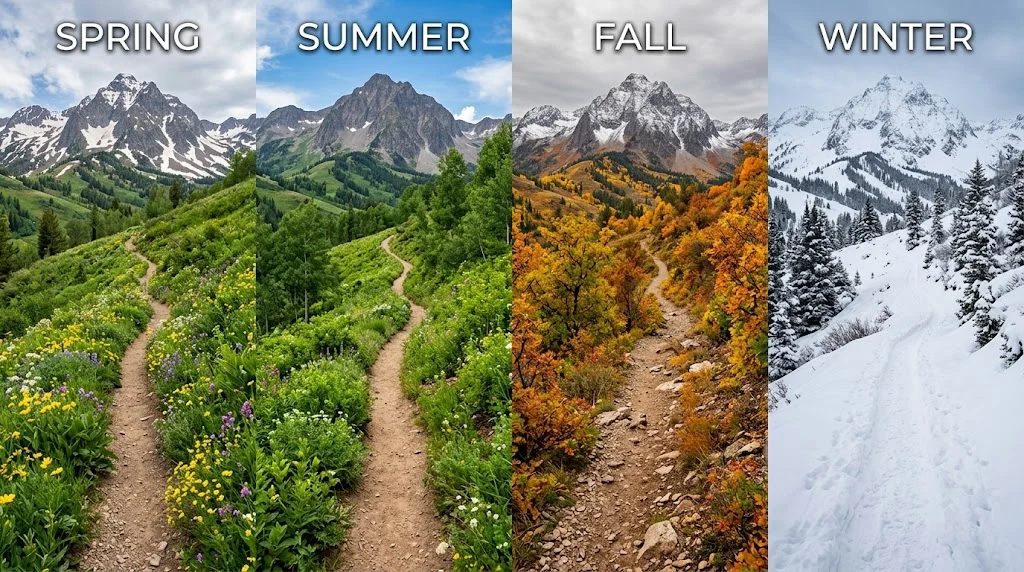
The same trail changes dramatically across seasons. Timing your hike properly ensures the best experience.
Spring Hiking
Spring brings wildflowers and flowing waterfalls. However, trails at higher elevations often remain snow-covered into June.
Lower elevation trails become accessible first. Research snowpack levels for mountain destinations. Muddy conditions are common as snow melts.
Summer Hiking
Summer opens most trails but brings crowds to popular destinations. High elevation hikes become accessible as snow melts.
Start early to avoid afternoon thunderstorms in mountainous areas. Bring sun protection and extra water for hot conditions.
Fall Hiking
Fall offers cooler temperatures and beautiful foliage colors. Trails become less crowded after summer ends.
Days grow shorter, so plan for earlier sunsets. Some mountain passes close after first snowfalls, typically in October or November.
Winter Hiking
Winter hiking requires different skills and gear. Snow and ice transform easy summer trails into challenging winter routes.
Choose lower elevation trails or those facing south for less snow. Research avalanche conditions for mountain hiking. Shorter daylight limits hiking time.
Factor in Logistics and Accessibility
Practical considerations affect which destinations work for your situation.
Drive Time and Access
Calculate total driving time including traffic. Remote trailheads might require high-clearance vehicles or 4WD access.
Check road conditions, especially for forest service roads. Some close seasonally or after storms.
Parking and Permits
Popular trailheads fill early on weekends. Some require parking reservations or arrival before 7 AM.
Many wilderness areas now require advance permits. Apply early for quota-limited trails.
Time Requirements
Estimate hiking time using the formula: distance divided by 2 mph, plus 30 minutes per 1000 feet of elevation gain. Add time for breaks, photos, and slower group members.
Include driving time to calculate your total time commitment. A 4-hour hike becomes an all-day event with travel.
Emergency Access
Remote destinations limit rescue options. Know where you’ll have cell coverage and how far you are from help.
For longer or more isolated hikes, carry emergency communication devices like satellite messengers.
Match Destination to Group Dynamics
Hiking with others requires compromise and planning around the group’s collective abilities.
Pace Compatibility
Groups move at the speed of their slowest member. Choose destinations everyone can complete comfortably.
Ask about recent hiking experience before selecting a trail. Someone who hasn’t hiked in months will struggle with aggressive elevation gain.
Interest Alignment
Some hikers want to reach the destination quickly. Others prefer stopping frequently for photos and nature observation.
Choose trails that satisfy your group’s priorities. A scenic lake destination works better than a viewless forest walk for photographers.
Age and Ability Considerations
Children need shorter distances with interesting features to maintain engagement. Older adults might prefer moderate terrain without technical sections.
Look for destinations with bailout options if someone needs to turn back early.
Build Your Destination Selection Checklist
Use this systematic approach every time you choose a hiking destination.
- Verify trail distance matches your fitness level
- Confirm elevation gain is appropriate for your experience
- Check recent trip reports for current conditions
- Research weather forecast for hiking day
- Verify permit or reservation requirements
- Calculate total time including drive and hiking
- Confirm trailhead access and parking availability
- Review terrain type and technical difficulty
- Check emergency exit options and cell coverage
- Ensure destination matches your hiking goals
Start Local and Expand Gradually
Building hiking experience works best through gradual progression. Start with nearby trails you can repeat easily.
Master local terrain before traveling to unfamiliar areas. You’ll develop fitness, navigation skills, and confidence close to home.
As abilities improve, gradually increase distance, elevation, and remoteness. This approach builds skills safely while discovering which destinations you enjoy most.
Keep a hiking journal noting what worked and what didn’t. These notes help you choose better destinations over time.
Trust Your Judgment
Sometimes a destination looks perfect on paper but feels wrong in person. Trust your instincts about safety and comfort.
Turn back if conditions exceed your abilities or comfort level. The trail will still be there for a future attempt.
Learning to assess trail difficulty accurately takes experience. Each hike teaches you more about your preferences and limits.
Conclusion
Choosing hiking destinations combines self-awareness, thorough research, and honest ability assessment. Start by understanding your fitness level and hiking goals. Research trail conditions using multiple current sources. Evaluate terrain difficulty beyond just distance. Consider seasonal factors and practical logistics.
The perfect destination matches your abilities while gently pushing your limits. It aligns with your goals whether seeking fitness, scenery, or solitude. With practice, selecting great hiking destinations becomes intuitive.
Start planning your next hike today. Use this guide to find a destination that challenges you appropriately and creates the outdoor experience you’re seeking. Check out our trail difficulty ratings guide for more detailed information on assessing hiking challenges.
Frequently Asked Questions
How do I know if a trail is too difficult for me?
A trail is likely too difficult if the elevation gain exceeds 1000 feet per 3 miles for beginners, or if trip reports mention technical sections like scrambling when you have no climbing experience. Start with trails rated easy or moderate, and gradually progress. If you’re questioning whether you can handle it, choose something less challenging for your first attempt in that area.
Should I hike popular trails or seek less-crowded destinations?
Popular trails offer advantages for beginners including well-maintained paths, clear markers, nearby hikers for safety, and abundant trip reports. As you gain experience, less-crowded trails provide solitude and a deeper wilderness experience. Balance your desire for peace with your comfort level in remote settings. Weekday hiking on popular trails offers a middle ground.
How far in advance should I research hiking destinations?
Research destinations at least one week before hiking to secure any required permits and check weather patterns. However, check conditions again 24-48 hours before your hike for recent changes like trail closures, weather warnings, or snow conditions. Last-minute research catches time-sensitive issues that earlier research might miss.
What’s the biggest mistake people make when choosing hiking destinations?
Overestimating fitness and underestimating terrain difficulty is the most common mistake. People see a 6-mile hike and assume it’s easy without considering 3000 feet of elevation gain or rocky technical sections. Always research elevation profiles and recent trip reports. Choose conservatively for unfamiliar areas, and remember that weather, altitude, and terrain type dramatically affect difficulty beyond simple distance.

No comments yet. Be the first to share your thoughts.