
GPS vs Map & Compass: Which to Use on Your Hike
Navigation is one of the most important skills for any hiker. Two main tools help you find your way on the trail: a GPS device and a traditional map with compass. Each one has real strengths and real limits and knowing the difference could keep you safe.
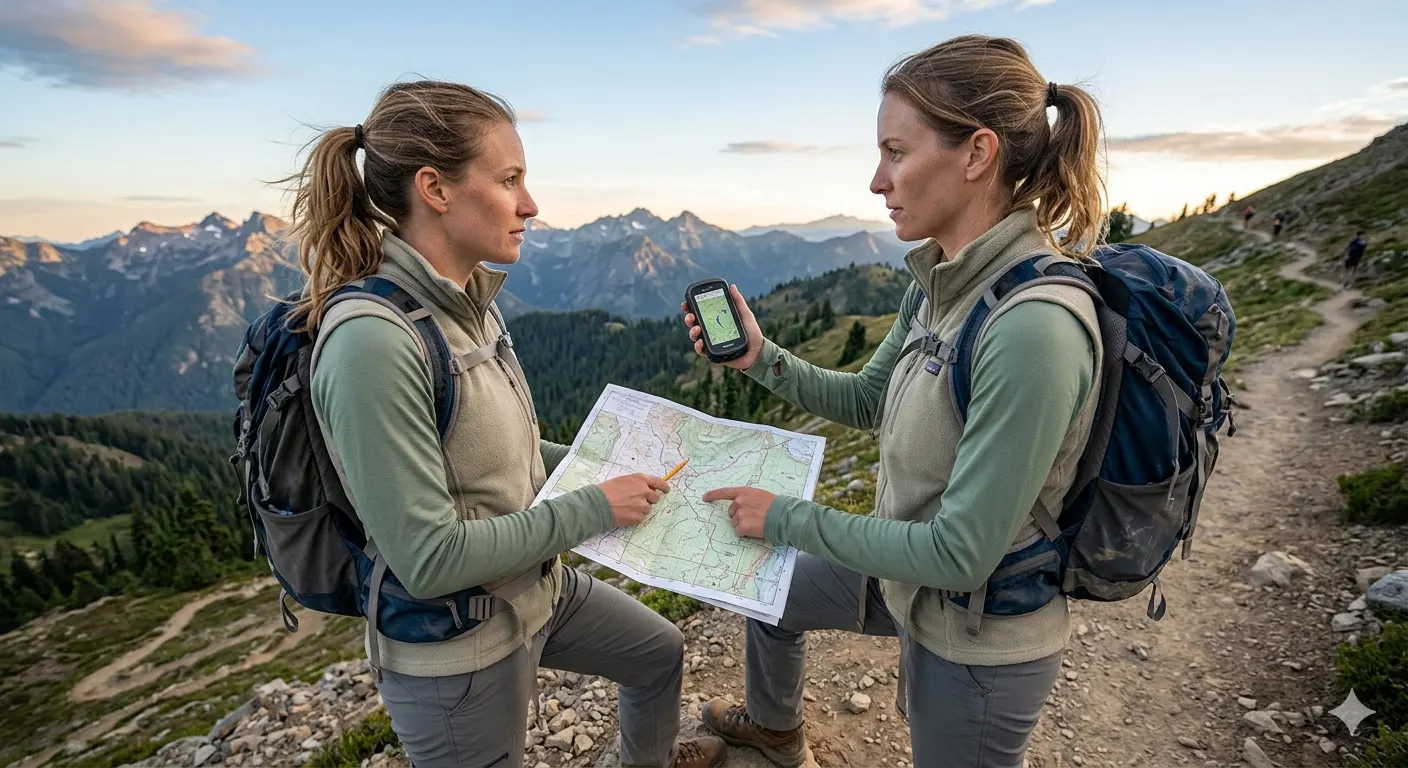
In this article, you will learn what each tool does, when to use it, and how to pick the right option for your hiking style and experience level.
Related: Hiking Navigation Basics: How to Stay on Track
What Is a GPS Device?
A GPS (Global Positioning System) device uses satellites to show your exact location on a digital map. It updates in real time as you move. Many hikers use dedicated GPS units or smartphone GPS apps.
Pros of Using GPS
- Shows your exact location instantly no guessing needed.
- Tracks your route and records your path automatically.
- Easy to use, even for beginners.
- Many devices allow you to download offline maps before your trip.
- Useful for measuring distance, elevation, and estimated arrival time.
Cons of Using GPS
- Batteries can die, especially in cold weather or long trips.
- Signal can be weak in deep canyons or dense forests.
- Screens can break, get wet, or freeze.
- Over-reliance on GPS can reduce your natural navigation skills.
- Quality GPS units can be expensive.
What Is Map and Compass Navigation?
A topographic map shows the physical features of the land hills, rivers, trails, and valleys. A compass tells you which direction you are facing. Together, they let you figure out your position and plan your route without any battery or signal.
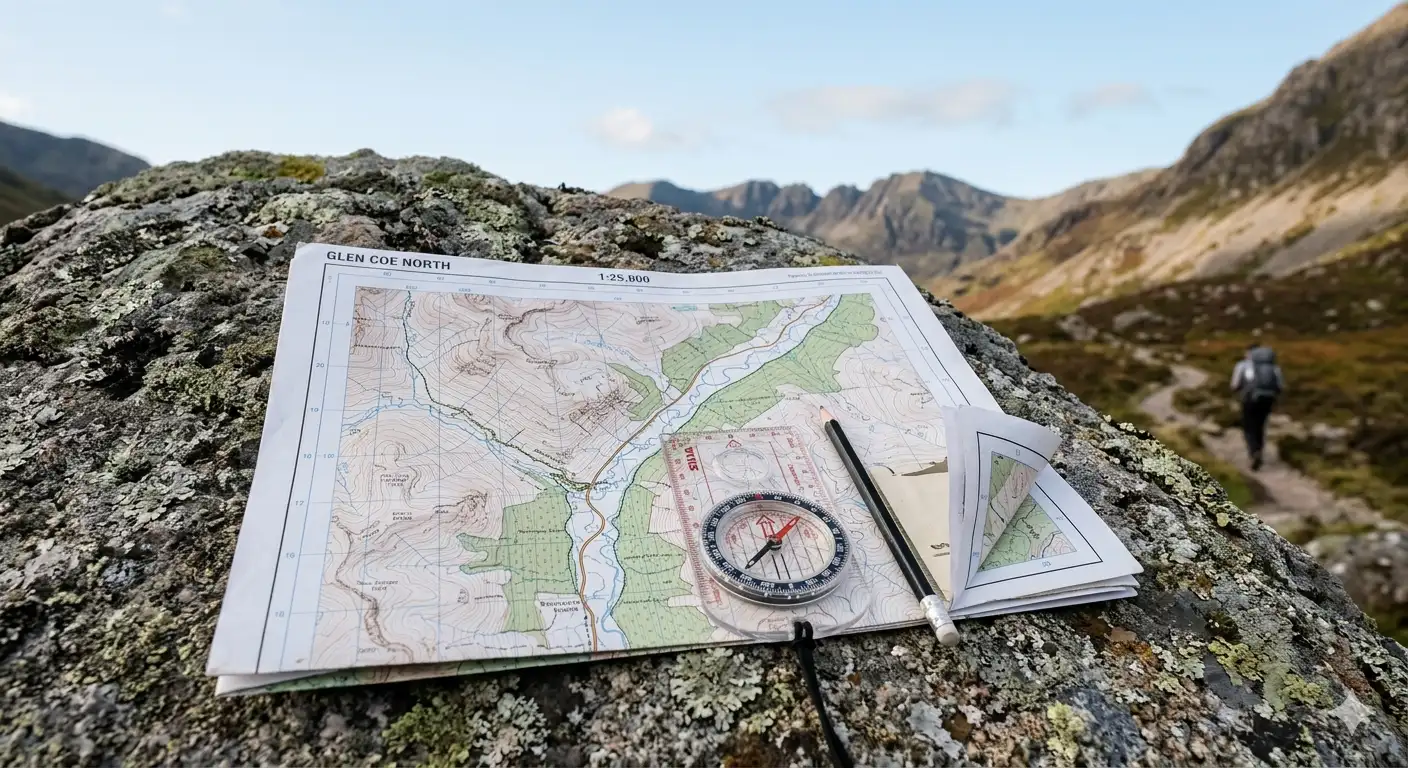
Pros of Using Map and Compass
- Works in any weather, with no batteries needed.
- Reliable in areas with no GPS signal or cell coverage.
- Helps you understand the landscape in a deeper way.
- Lightweight and durable hard to break.
- Teaches self-reliance and real outdoor skills.
Cons of Using Map and Compass
- Takes time and practice to learn properly.
- Maps can be hard to read in bad weather or low light.
- Paper maps can get wet, torn, or lost.
- You need to know how to interpret contour lines and symbols.
- Slower to use than a GPS when you need a quick location fix.
GPS vs Map & Compass: A Quick Comparison
| Feature | GPS Device | Map & Compass |
|---|---|---|
| Ease of Use | Beginner-friendly | Requires practice |
| Battery Needed | Yes | No |
| Signal Required | Sometimes (satellite) | No |
| Accuracy | Very high | Good with skill |
| Durability | Moderate | High |
| Cost | Medium to high | Low |
| Skill to Learn | Low | Medium to high |
When Should You Use GPS?
GPS is a great choice in several situations. Here are some good times to rely on it:
- You are hiking a new or complex trail for the first time.
- You are trekking in unfamiliar terrain or a foreign country.
- You want to track your distance, speed, or elevation in real time.
- You are leading a group and need to keep everyone on the right path.
- You are doing a multi-day trek and want to log your route each day.
Related: Best GPS Devices for Hiking: A Beginner’s Guide
When Should You Use Map and Compass?
Map and compass skills are valuable in many real scenarios. Consider relying on them when:
- Your GPS battery dies or your device stops working.
- You are hiking in a remote area with no cell or satellite signal.
- You want to develop your outdoor skills and independence.
- You are in an extreme weather condition that may affect electronics.
- You are crossing open land or off-trail terrain without marked paths.
The Best Answer: Use Both Together
Most experienced hikers and mountain guides agree on one thing. The smartest approach is to carry both tools. A GPS makes navigation quick and easy. A map and compass acts as your backup when technology fails.
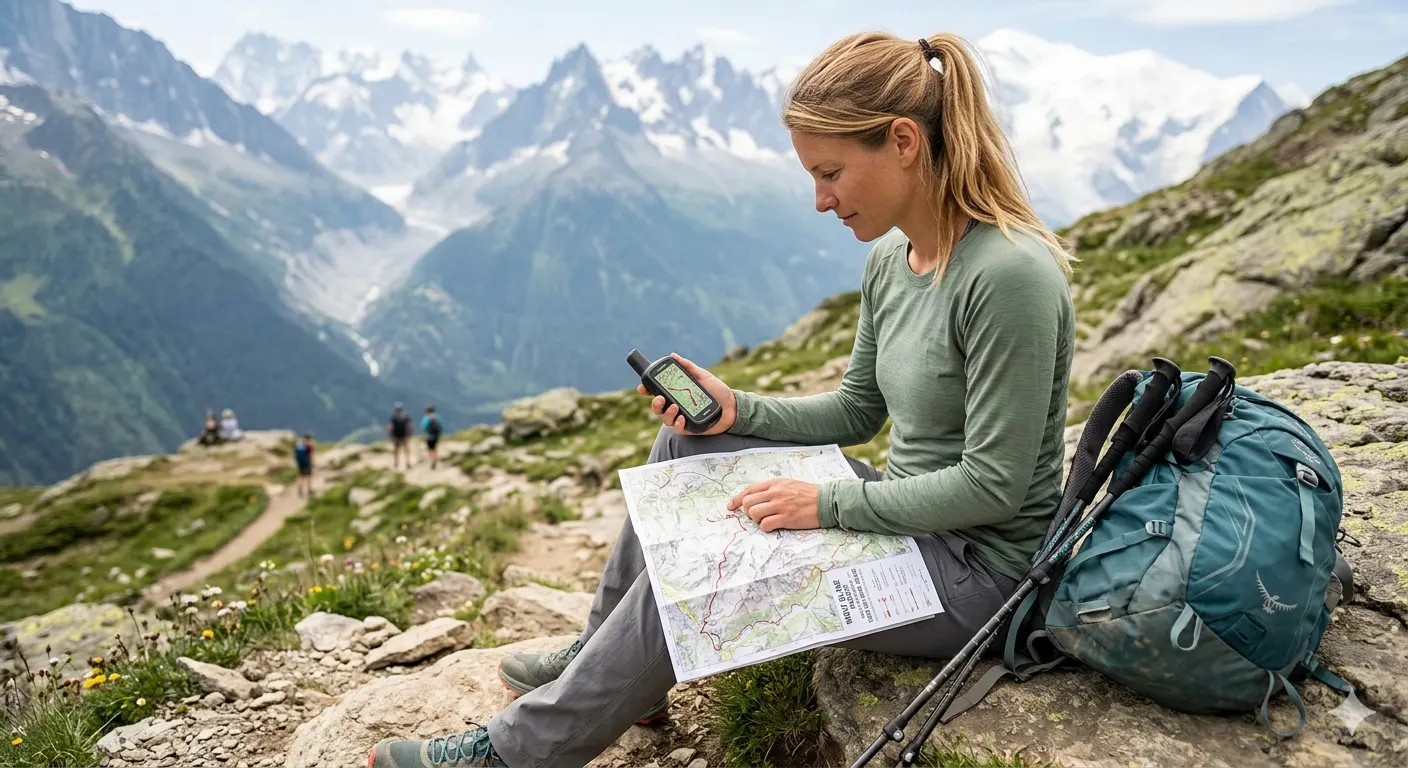
Think of it this way. Your GPS is your first tool. Your map and compass are your safety net. Together, they cover each other’s weaknesses.
A Simple Approach for Beginners
- Download an offline map to your phone or GPS device before leaving home.
- Carry a printed paper map of the trail as a backup.
- Bring a basic baseplate compass and learn how to orient your map.
- Practice using your compass at home before heading out.
- Charge your GPS device fully and bring spare batteries or a power bank.
Which One Is Right for You?
The answer depends on your experience level and type of hike. Here is a simple guide:
- Beginner hikers on marked trails: A GPS or smartphone app works well. A printed trail map is a helpful backup.
- Intermediate hikers on longer trips: Learn basic compass skills and carry both tools.
- Advanced hikers or off-trail trekkers: Strong map and compass skills are very important. GPS is a helpful extra tool.
Conclusion
GPS and map-and-compass are both useful tools. Neither one is perfect on its own. GPS is fast, easy, and accurate. Map and compass are reliable, lightweight, and skill-building. The best hikers carry both and know how to use each one.
Start with what feels comfortable for you. Then take time to learn the other skill too. Your safety on the trail is worth the effort.
Ready to hit the trail prepared? Check out our Hiking Navigation Basics guide to start building your skills today.
Frequently Asked Questions (FAQs)
Can I use my smartphone as a GPS for hiking?
Yes, your smartphone can work as a GPS for hiking. Apps like Gaia GPS, AllTrails, or Maps.me let you download offline maps. However, smartphone batteries drain quickly. Bring a portable charger and a paper map as a backup.
How hard is it to learn map and compass navigation?
It takes some time, but it is not too difficult. Most beginners can learn the basics in a few hours of practice. Start with reading contour lines on a topo map. Then practice orienting the map with your compass in a familiar area.
What happens if my GPS loses signal on the trail?
Most dedicated GPS devices use satellite signals, not mobile networks. They work in remote areas. Smartphone GPS apps may struggle without a downloaded offline map. This is why carrying a physical map is a smart habit.
Is a compass still useful if I have a GPS?
Absolutely. A compass does not need batteries or satellites. If your GPS fails, a compass and map can still get you home safely. Many experienced hikers call the compass their most trusted backup tool.


No comments yet. Be the first to share your thoughts.