
Hiking Food Planning: Complete Guide to Calories, Snacks & Trail Meals
This hiking food planning guide shows you exactly what food to bring hiking, how many calories you need per hour, and how to pack lightweight meals and snacks for steady energy on the trail.
In this step-by-step guide, you’ll learn how to calculate calories, choose the best hiking snacks, plan simple trail lunches, and fuel your body at the right times for maximum performance whether you’re heading out for a short day hike or a full-day trek.

Calculate Your Calorie Needs for Hiking Food Planning
Understanding how much food you need prevents both running out of energy and carrying excess weight.
Estimate Calories for Different Hike Intensities
- Easy hikes (flat terrain, slow pace): 200-300 calories per hour
- Moderate hikes (some elevation, steady pace): 300-400 calories per hour
- Strenuous hikes (steep climbs, challenging terrain): 400-600 calories per hour
- Add extra calories for cold weather (body burns more maintaining temperature)
- Your body weight and fitness level affect individual needs
To better estimate hiking duration and match your calorie needs, use our hiking time calculator.
Plan for Full-Day Hikes
A typical 6-8 hour moderate hike requires 2,000-3,000 calories beyond your normal daily intake.
- Start with a substantial breakfast before hiking
- Carry lunch providing 500-700 calories
- Pack snacks totaling 1,200-1,500 calories
- Add 20% extra food as safety margin
- Bring more food than you think you’ll need
For comprehensive planning that includes nutrition, read our guide on how to plan a full day hike.
Choose the Best Trail Foods and Snacks for Your Hike
Not all calories are equal on the trail. Weight, packability, and how your body processes different foods matter significantly.
Best High-Energy Trail Foods
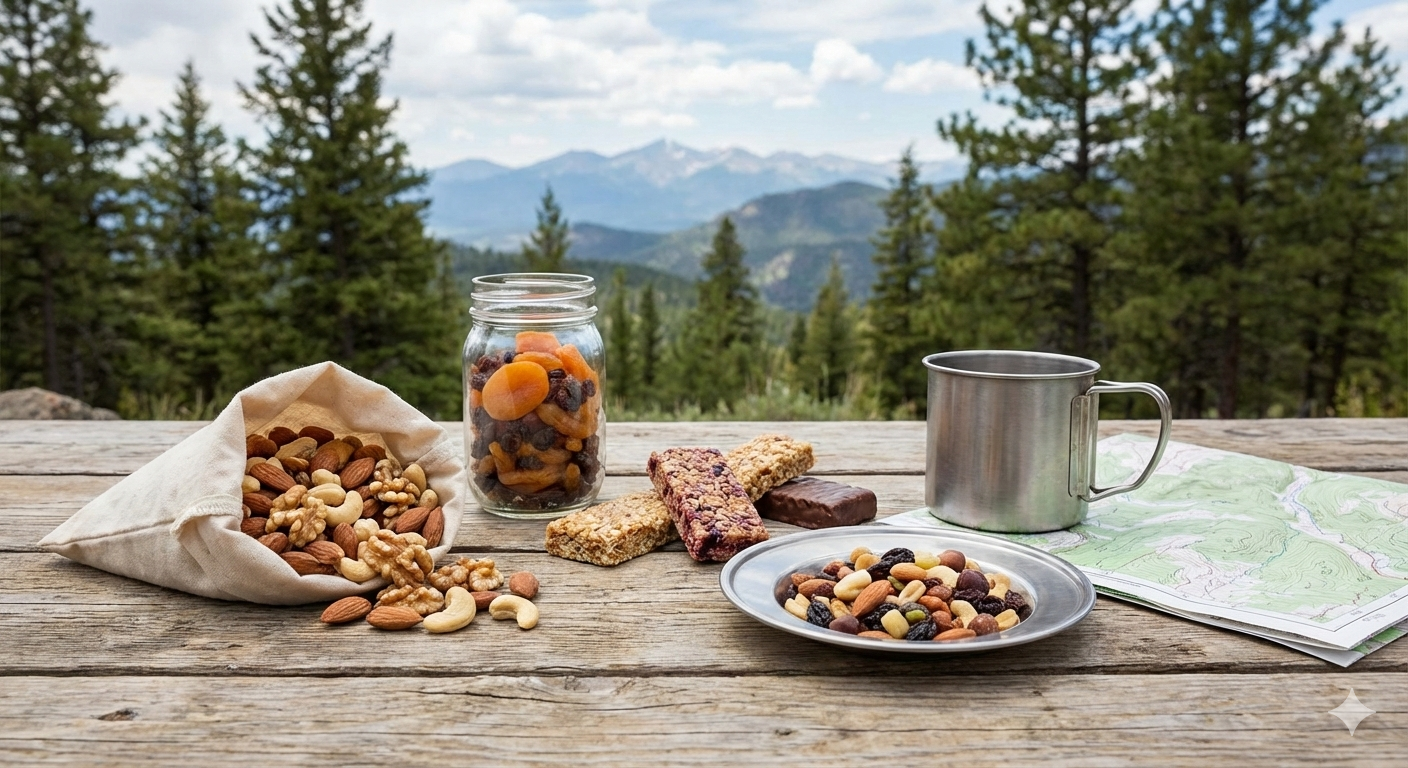
- Nuts and nut butter provide calories, protein, and healthy fats
- Dried fruit offers quick energy from natural sugars
- Energy bars combine convenience with balanced nutrition
- Trail mix delivers variety and sustained energy
- Jerky provides protein with minimal weight
- Dark chocolate boosts morale and provides quick energy
- Crackers or pretzels offer carbs and satisfy salt cravings
Calories vs Weight Comparison
| Food | Calories | Weight | Best Use |
|---|---|---|---|
| Trail Mix | 600 | 100g | All-day snacking |
| Nuts | 650 | 100g | High energy fuel |
| Jerky | 300 | 100g | Protein recovery |
| Energy Bar | 220-250 | 60g | Quick snack |
Foods to Generally Avoid
- Fresh fruits and vegetables (heavy and bruise easily)
- Canned goods (too heavy for the calories provided)
- Foods that melt easily in warm weather
- Items requiring refrigeration
- Anything with strong odors in bear country
- Foods you’ve never tried before (test at home first)
Balance Macronutrients
Your body needs different nutrients for sustained hiking energy.
- Carbohydrates provide quick energy for immediate use
- Proteins help with muscle recovery and sustained energy
- Fats offer concentrated calories and long-lasting fuel
- Aim for roughly 50-60% carbs, 20-30% fat, 15-20% protein
- Combine all three in meals for optimal energy
How to Pack Food Efficiently and Reduce Pack Weight
How you package and organize food affects both convenience and weight management.
Repackaging for Efficiency
- Remove bulky original packaging to save space and weight
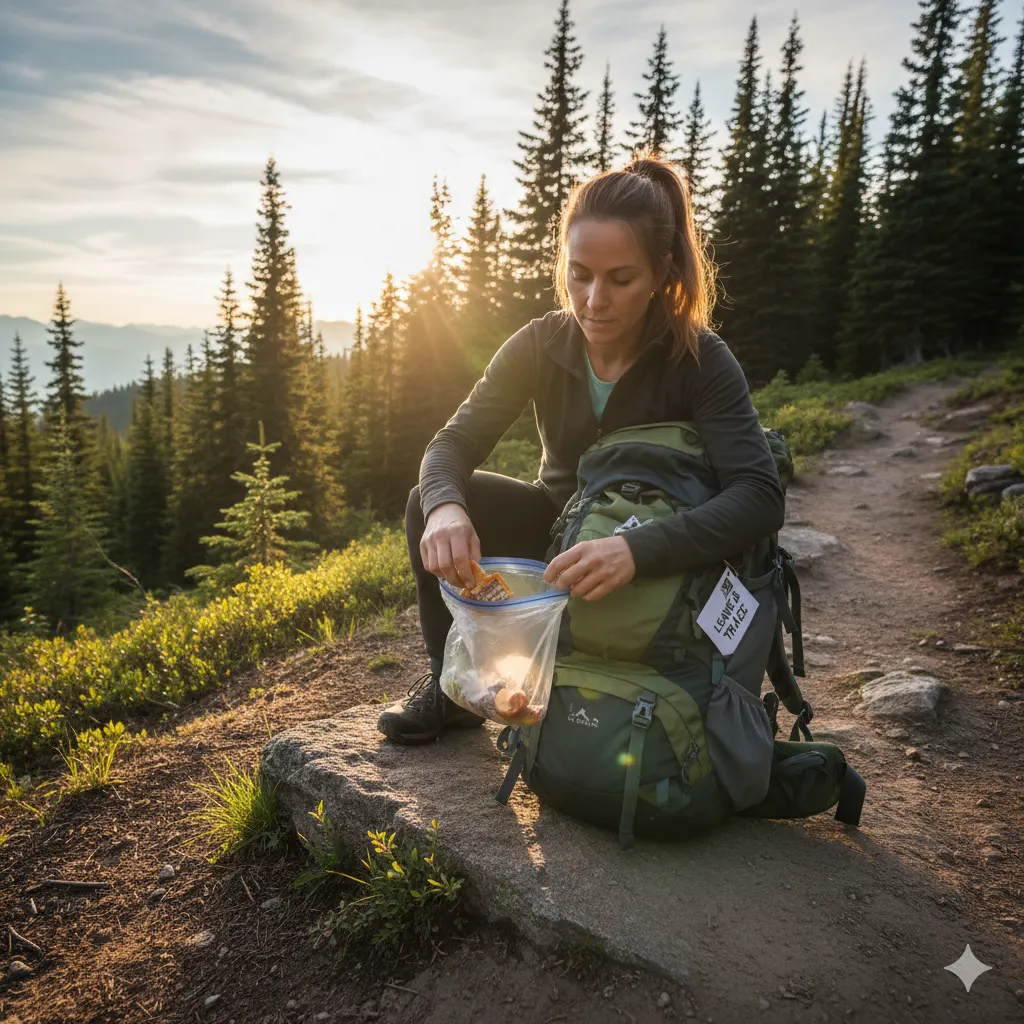
- Use resealable plastic bags for most items
- Label bags if contents aren’t obvious
- Pre-portion snacks into single servings
- Combine similar items to reduce number of containers
Organize by Timing
Accessibility matters when you need energy on the move.
- Keep first snacks in easily accessible pack pockets
- Place lunch in a separate bag you can grab at midday
- Store emergency food at the bottom (won’t need unless plans change)
- Distribute weight evenly throughout your pack
Protect Your Food
- Use hard containers for crushable items like crackers
- Separate wet and dry foods
- Double-bag anything that might leak
- Keep food away from gear you don’t want scented
- Consider bear-proof containers in bear country
Combine these tips with our backpack packing guide to distribute weight correctly and hike more comfortably.
When to Eat While Hiking for Steady Energy
Food timing matters just as much as food choice, so plan when to eat as carefully as what to pack.
Start Before You’re Hungry
- Eat a substantial breakfast 1-2 hours before hiking
- Begin snacking within the first hour of hiking
- Don’t wait until you feel hungry or tired
- Your body needs fuel before it runs low
Maintaining steady energy also improves alertness and safety, which we explain in our hiking safety checklist.
Maintain Regular Fueling
- Eat small amounts every 45-60 minutes
- Take a proper lunch break after 3-4 hours
- Continue snacking after lunch, not just before
- Increase frequency on strenuous sections
- Set reminders if you tend to forget eating
End-of-Hike Recovery
What you eat after hiking affects your recovery for the next day or hike.
- Eat within 30-60 minutes of finishing your hike
- Include both carbohydrates and protein
- Replenish sodium lost through sweating
- Continue hydrating after your hike ends

Plan for Different Conditions
Weather and season affect both your nutritional needs and which foods work best.
Hot Weather Considerations
- Avoid chocolate and foods that melt easily
- Increase salt intake to replace losses from sweating
- Choose foods with high water content when possible
- Pack frozen water bottles that double as cold packs
- Store sensitive items in insulated pouches
Cold Weather Adjustments
- Increase overall calorie intake (body burns more staying warm)
- Choose foods that won’t freeze solid
- Keep snacks inside jacket pockets to prevent freezing
- Hot meals provide comfort and warmth benefits
- Energy-dense fatty foods help maintain body temperature
For weather-specific planning guidance, visit our article on hiking in hot weather: safety tips.
Easy Hiking Food Planning: Meal Ideas and No-Cook Trail Lunches
Lunch on the trail should be easy to eat, satisfying, and provide sustained energy for afternoon hiking.
No-Cook Lunch Options
- Tortilla wraps with nut butter and honey
- Bagels with cream cheese and jerky
- Pre-made sandwiches in first few hours (before getting warm)
- Crackers with cheese and salami
- Hummus with pita bread and vegetables
Quick Energy Snack Combinations
- Apple slices with almond butter packets
- Dried mango with cashews
- Rice cakes with peanut butter
- Granola mixed with dried cranberries
- Pretzels with string cheese
Make Your Own Trail Mix
Custom trail mix lets you control ingredients and cater to your preferences.
- Start with base of mixed nuts (almonds, cashews, peanuts)
- Add dried fruit (raisins, cranberries, apricots)
- Include some chocolate chips or M&Ms
- Mix in something salty (pretzels or wasabi peas)
- Add seeds (pumpkin or sunflower) for extra nutrients
- Keep total serving to 1/4 to 1/3 cup per snack
Why Hiking Food Planning Matters for Energy and Safety
Proper hiking food planning prevents fatigue, improves endurance, and keeps your energy steady during long hikes.
Sample Hiking Food Plans
These examples show how a well-structured meal plan looks in real-world day hikes.
6-Hour Moderate Day Hike
- Breakfast: oatmeal + banana + peanut butter
- Snacks: 2 energy bars + trail mix
- Lunch: tortilla wrap with nut butter
- Total: ~2400 calories
8-Hour Strenuous Hike
- Breakfast: eggs + toast + fruit
- Snacks: nuts, jerky, chocolate, bars
- Lunch: bagel sandwich + cheese
- Total: ~3200 calories
Manage Food on Group Hikes
Hiking with others offers opportunities to share food responsibilities and reduce individual weight.
Coordinating Group Food
- Discuss dietary restrictions before planning
- Divide shared lunch items to distribute weight
- Coordinate to avoid everyone bringing the same snacks
- Plan shared meals if doing overnight trips
- Still carry personal emergency food
Sharing on the Trail
- Offer to share snacks with others
- Don’t expect others to feed you if you underpack
- Respect food preferences and dietary needs
- Pack out all trash from everyone’s food

Handle Special Dietary Needs
Many dietary restrictions are manageable on the trail with proper planning.
Vegetarian and Vegan Options
- Nut butters provide protein without animal products
- Dried beans or lentils work for overnight trips
- Energy bars come in many plant-based varieties
- Seeds and nuts offer complete proteins
- Dried edamame provides portable protein
Gluten-Free Hiking
- Rice cakes replace bread or crackers
- Corn tortillas provide wrap options
- Many energy bars are gluten-free (check labels)
- Fruits, nuts, and jerky are naturally gluten-free
Food Allergies
- Read all labels carefully when buying packaged foods
- Inform hiking partners of severe allergies
- Carry emergency medication (EpiPen if prescribed)
- Stick to whole foods you know are safe
Budget-Friendly Food Planning
Hiking food doesn’t require expensive specialty items. Simple, affordable options work excellently.
Cost-Effective Choices
- Buy nuts and dried fruit in bulk rather than pre-packaged
- Make your own energy bars or granola
- Use regular peanut butter instead of expensive nut butter packets
- Buy cheese in blocks and cut portions yourself
- Choose store-brand energy bars over name brands
- Dried pasta and instant rice are cheap and filling
Make-Ahead Options
- Bake homemade granola bars for multiple hikes
- Prepare trail mix in large batches
- Portion foods at home to save money over single-serve packages
- Freeze-dry your own meals if doing frequent overnight trips
Common Hiking Food Planning Mistakes to Avoid
Even experienced hikers sometimes overlook basic hiking food planning principles.
Avoiding these errors improves your hiking nutrition significantly.
Packing Errors
- Not bringing enough food (hunger ruins hikes)
- Packing only sweet foods (causes energy crashes)
- Bringing foods you’ve never tried (might not sit well)
- Overpacking perishable items for hot weather
- Forgetting to account for hiking partners’ needs
Timing Mistakes
- Waiting too long between snacks
- Eating only at designated break times
- Skipping breakfast before early hikes
- Not eating enough during the hike itself
For overall hiking preparation that includes food, check our guide on hiking safety checklist.
Food Storage and Leave No Trace
Proper food handling protects wildlife and preserves natural areas.
Pack Out All Trash
- Bring dedicated trash bags for wrappers and scraps
- Pack out all food waste, including peels and cores
- Don’t leave crumbs on rocks or ground
- Double-bag anything that might leak
Wildlife Considerations
- Never feed wildlife, even unintentionally
- Store food securely during breaks
- Use bear canisters where required
- Keep food smells contained in your pack
- Eat away from water sources and campsites
Recommended Hiking Food Gear
- Lightweight reusable food bags
- Insulated lunch containers
- Bear-proof food canisters
- Electrolyte drink mixes
- High-calorie energy bars
Conclusion
Effective hiking food planning balances calorie needs, weight, convenience, and personal preferences to keep you energized throughout your adventure. to keep you energized throughout your adventure. Calculate approximately 300-500 calories per hour based on hike intensity, choose high-energy foods that pack light and won’t spoil, and eat small amounts every 45-60 minutes rather than waiting until you’re hungry. Repackage foods to save weight, organize by accessibility, and adjust your choices for weather conditions. With proper planning, your food becomes fuel that enhances your hiking experience rather than a burden that weighs you down or leaves you exhausted.
Ready to plan your hiking menu? Calculate your calorie needs for your next full-day hike, make a shopping list of trail-friendly foods, and pack everything the night before to ensure you’re properly fueled for the trail.
Frequently Asked Questions
How much food should I bring for a full-day 8-hour hike?
For an 8-hour moderate hike, plan for 2,000-3,000 calories beyond your regular daily needs. This typically means one substantial lunch (500-700 calories), plus snacks totaling 1,200-1,500 calories spread throughout the day. Add 20% extra as a safety buffer. In practical terms, this might be: a bagel with nut butter for lunch, 4-5 energy bars or similar snacks, a handful of trail mix every hour, and some jerky or crackers. Adjust higher for strenuous terrain or cold weather, lower for easy, flat hikes in mild conditions.
Can I survive on just energy bars for a long hike?
While you could technically survive on only energy bars, it’s not ideal for enjoyment or nutrition. The monotony affects morale, and your body benefits from varied nutrients and textures. Energy bars work well as part of your food plan, but mix in nuts, dried fruit, jerky, and real lunch items for better satisfaction and more complete nutrition. Variety also helps if you develop temporary aversions to specific flavors during long hikes—having options prevents forcing down food you no longer want to eat.
What should I do if I run out of food during a hike?
If you run out of food, slow your pace to conserve energy, stay hydrated, and head back or to your destination via the shortest safe route. Don’t panic—your body has energy reserves for several hours of activity even without additional food. Avoid foraging for wild plants unless you’re absolutely certain of identification (poisonous plants are dangerous). This situation highlights why bringing 20% extra food is important. Learn from the experience and pack more generously next time. Most hikers underestimate their needs initially and adjust upward after a few trips.
Do I really need to eat every hour, or can I just eat when I’m hungry?
Regular eating every 45-60 minutes is genuinely better than waiting for hunger signals. By the time you feel hungry during physical activity, your energy levels have already dropped, affecting your performance, mood, and decision-making. Consistent fueling maintains steady blood sugar and prevents the exhaustion that comes from running low on fuel. Think of it like keeping your car’s gas tank above half rather than running it to empty. Your body performs better with consistent fuel input. Many hikers who switch from “eating when hungry” to scheduled eating notice significantly improved endurance and fewer energy crashes.


No comments yet. Be the first to share your thoughts.