
How to Choose the Right Boots for Your Terrain
Hiking boots are the most important piece of gear you carry on any trail. The right pair protects your feet and keeps you comfortable for hours. Choosing the wrong boots, however, can lead to blisters, injuries, or sore knees.
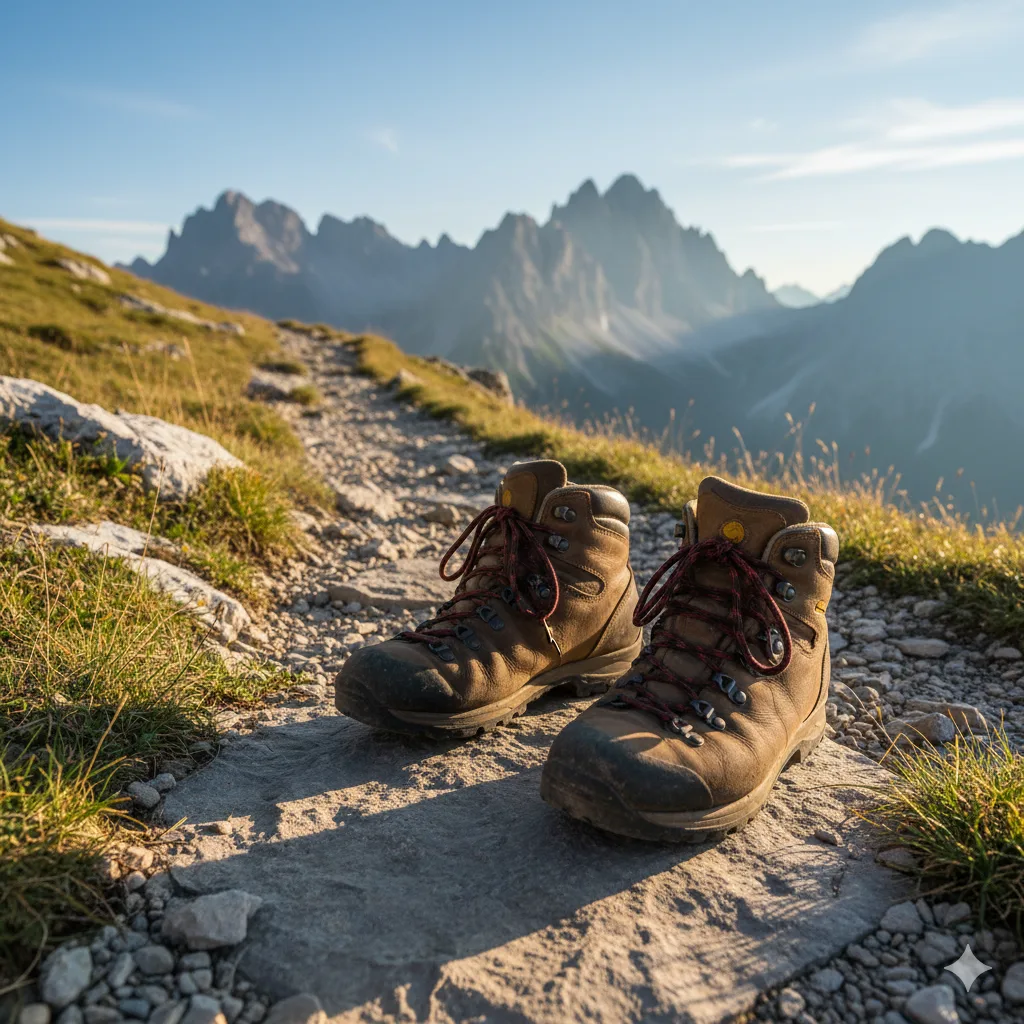
Why Boot Choice Matters for Your Terrain
Not all trails are the same. A flat forest path is very different from a steep rocky ridge. Your boots need to match the surface, the distance, and the conditions you will face.
Picking the wrong boot type is one of the most common beginner mistakes. This guide helps you avoid that.
The 3 Main Types of Hiking Boots
Hiking footwear is divided into three main categories. Each one suits a different type of hiker and terrain.
1. Trail Running Shoes / Light Hikers
These are low-cut, lightweight, and flexible. They work well on easy, well-maintained trails.
- Best for: Day hikes, flat terrain, dry conditions
- Pros: Light on your feet, dry quickly, comfortable from the start
- Cons: Low ankle support, less durable on rough ground
2. Mid-Cut Hiking Boots
These offer a balance between support and flexibility. They are the most popular choice for most hikers.
- Best for: Mixed terrain, moderate trails, weekend trips
- Pros: Good ankle support, versatile, suitable for light loads
- Cons: Slightly heavier than trail shoes, may need a short break-in period
3. High-Cut Backpacking Boots
These are stiff, tall, and built for heavy loads over long distances.
- Best for: Multi-day treks, rocky terrain, heavy backpacks
- Pros: Maximum ankle support, very durable, stable on uneven ground
- Cons: Heavier, require longer break-in time, less flexible
How to Match Boots to Your Terrain
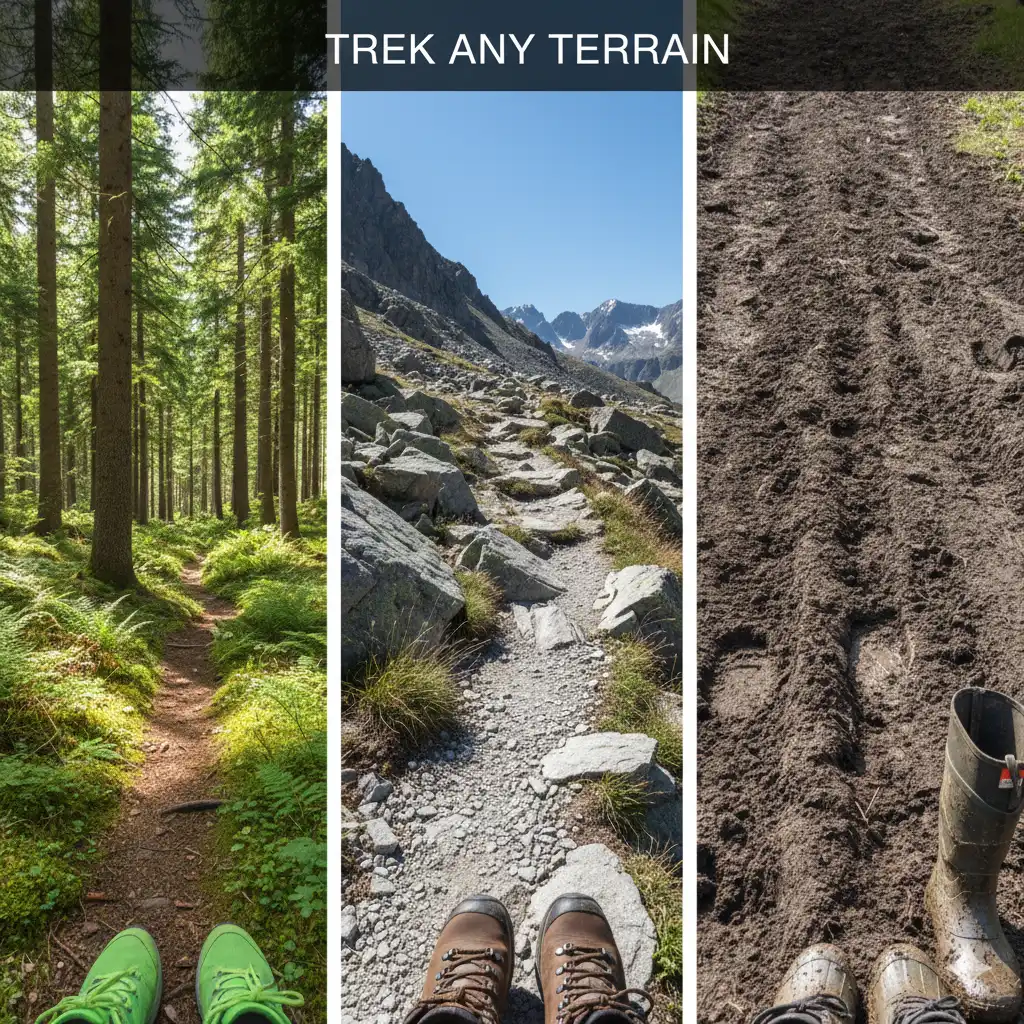
Think about where you hike most often. Then match your boot type to that environment.
Rocky and Technical Terrain
- Choose a stiff sole with a deep lug pattern
- Look for high-cut boots with ankle support
- A rand (rubber wrap around the boot toe) adds extra protection
Muddy or Wet Trails
- Look for a waterproof lining such as Gore-Tex
- Choose aggressive outsoles for better grip
- Gaiters paired with your boots give extra mud protection
Flat and Forest Trails
- Lightweight trail shoes or low-cut boots work well here
- Breathability matters more than waterproofing on dry days
- Comfort and cushioning are your top priorities
Snow or Alpine Terrain
- You may need boots compatible with crampons
- Insulated boots keep your feet warm in cold conditions
- Stiff soles help with crampon attachment and stability
Key Features to Look For
Once you know your terrain, look at these specific features when comparing boots.
Outsole (Bottom of the Boot)
- Vibram rubber is a trusted, grippy sole material
- Deep lugs (the raised bumps) grip loose or muddy ground better
- Shallow lugs are lighter and work on firm, dry surfaces
Midsole (Cushioning Layer)
- EVA foam is lighter and softer — good for day hikes
- Polyurethane is denser and more durable — better for long treks
- More cushioning reduces fatigue on hard surfaces
Upper Material
- Full-grain leather is very durable but heavy and needs break-in time
- Nubuck leather is lighter and still durable
- Synthetic uppers dry faster and are lighter, but may wear sooner
Waterproofing
- Gore-Tex lining keeps water out in wet conditions
- Waterproof boots can feel warmer in hot weather
- Non-waterproof boots breathe better on dry, warm trails
Quick Comparison: Boot Types at a Glance
| Boot Type | Best Terrain | Weight | Ankle Support | Ideal For |
|---|---|---|---|---|
| Trail Shoe / Low-Cut | Flat, maintained trails | Light | Low | Day hikers, beginners |
| Mid-Cut Boot | Mixed, moderate terrain | Medium | Medium | Most hikers |
| High-Cut Boot | Rocky, steep, long routes | Heavy | High | Backpackers, trekkers |
Fitting Tips Before You Buy
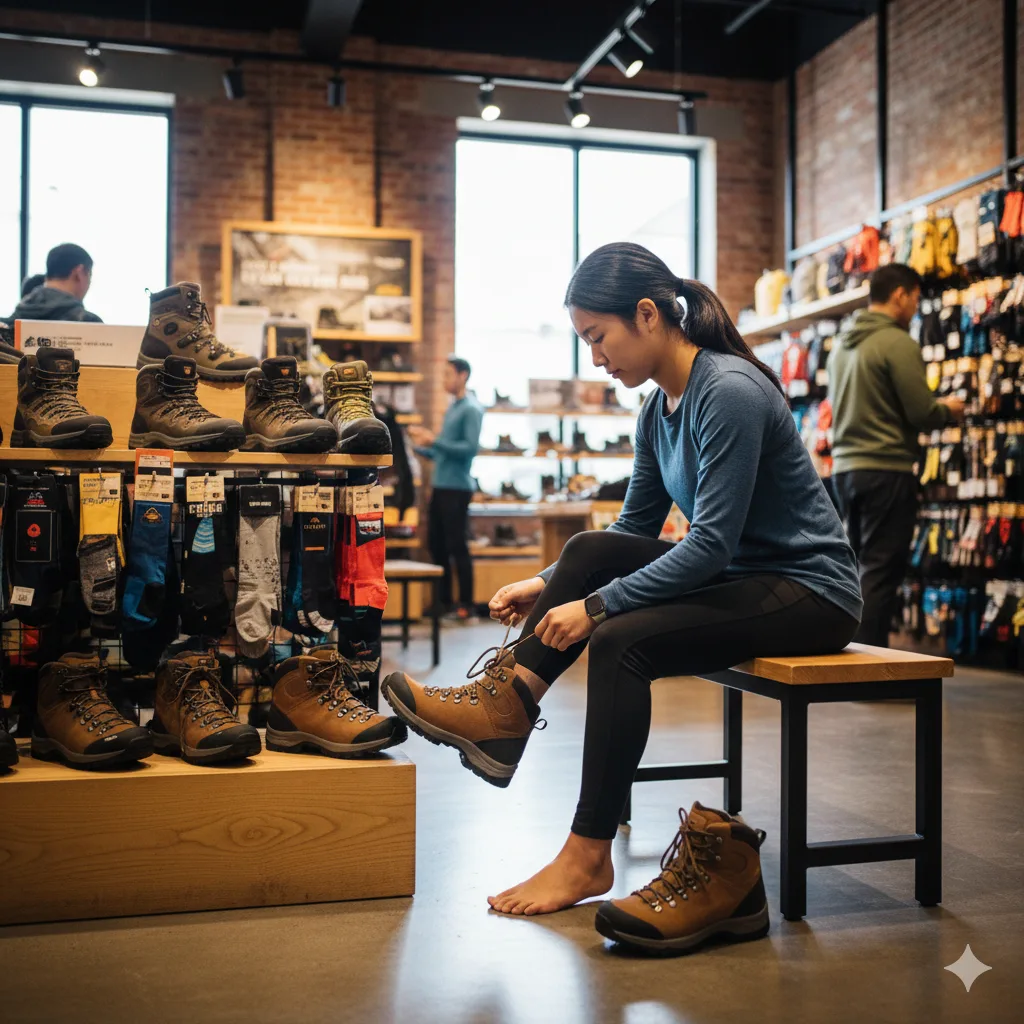
Even the best boot will fail if it does not fit your foot correctly. Here are some practical fitting tips.
- Try boots on in the afternoon — your feet swell slightly during the day
- Wear the hiking socks you plan to use on trail
- Leave about a thumb’s width of space at the toe
- Your heel should not slip when you walk
- Walk up a slope in the store to test toe pressure
- Wide-foot hikers should look for brands offering wide-fit options
Related Articles You May Find Helpful
- How to Break In Your Hiking Boots Before Your First Trail
- Best Hiking Socks: What to Wear Under Your Boots
- Essential Hiking Gear Checklist for Beginners
Conclusion
Choosing the right hiking boot does not need to be complicated. Start by thinking about your terrain and how long your hikes will be. Then match those needs to the right boot type and features.
A well-fitted boot on the right trail can make a huge difference in your comfort and safety. Take your time, try a few pairs, and trust what feels good on your foot.
Ready to gear up? Visit our Essential Hiking Gear Checklist to make sure your whole kit is trail-ready.
Frequently Asked Questions
Can I use trail running shoes for hiking?
Yes, you can. Trail running shoes work well on easy to moderate trails. They are lighter and more breathable than boots. However, they offer less ankle support and are not ideal for heavy loads or rough terrain.
Do I need waterproof hiking boots?
It depends on where you hike. If you often hike in rain, mud, or cross streams, waterproof boots are a smart choice. On dry, warm trails, non-waterproof boots breathe better and may feel more comfortable.
How long do hiking boots usually last?
A good pair of hiking boots can last between 500 and 1,000 miles of use. This depends on the terrain, how often you hike, and how well you care for your boots. Cleaning and drying them properly after each hike extends their life.
Should beginner hikers buy expensive boots?
Not necessarily. A mid-range boot that fits well is often better than an expensive boot that does not. Focus on fit and the right type for your terrain first. You can invest more as your hiking experience grows.


No comments yet. Be the first to share your thoughts.