
How to Prevent Blisters While Trekking: Expert Tips That Actually Work
Blisters are the silent saboteurs of great treks. I’ve seen experienced hikers abandon multi-week adventures because a small friction point on day two was ignored until it became an open wound by day five. The good news? Knowing how to prevent blisters while trekking is entirely learnable and almost completely achievable with the right footwear, smart sock choices, and a consistent daily foot care routine. This guide walks you through every layer of blister prevention, from gear selection weeks before departure to trail-side hot spot treatment the moment friction begins.
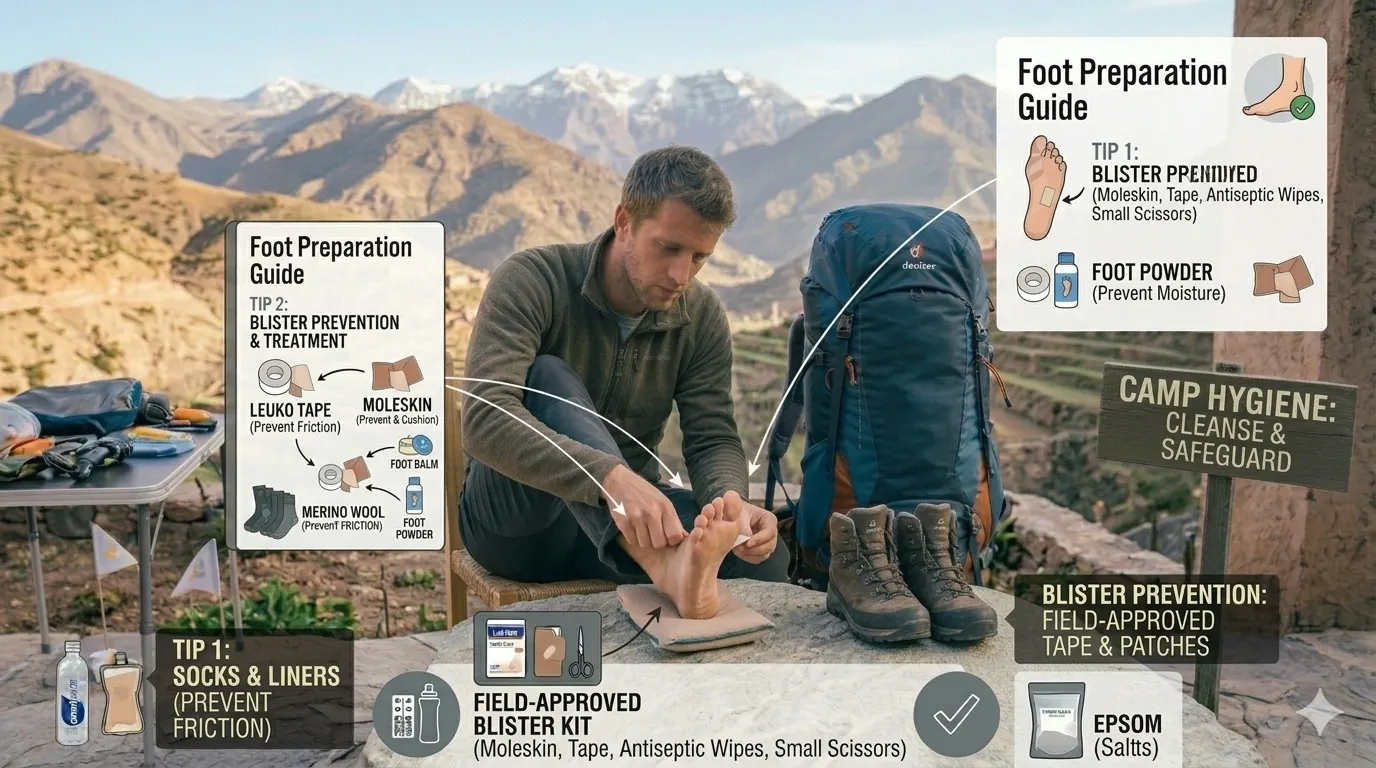
Why Preventing Blisters While Trekking Is Harder Than on Day Hikes
Trekking creates a uniquely punishing environment for your feet that a single day hike simply doesn’t replicate. When you carry a 30–40 pound pack for six to eight hours daily across consecutive days, cumulative friction and moisture overwhelm your skin’s defenses far faster than on a short outing. Your feet sweat constantly inside your boots, softening the skin and making it far more vulnerable to rubbing. Wet conditions from stream crossings or unexpected rain compound the problem further, and limited drying time between hiking days means problems compound rather than resolve overnight.
Multi-day trekking also changes where blisters form. Extra pack weight subtly shifts your gait, creating new pressure points that never appear on shorter hikes. As fatigue sets in over consecutive days, your stride changes further, and your feet swell more than your boots may comfortably accommodate. This is exactly why testing your full setup boots, socks, and pack weight on an overnight practice hike is non-negotiable preparation for any serious trek.
Choose the Right Boots to Prevent Blisters While Trekking
No amount of tape or powder can compensate for a poorly fitted boot. Getting footwear right is the single most important step to prevent blisters while trekking. Always shop in the afternoon when your feet are naturally slightly swollen, and wear the exact socks you plan to trek in. You need a thumb’s width of space at the toe box, a heel that stays firmly in place without slipping, and zero pressure points anywhere across the foot. Walk on an inclined surface in the shop to test how your toes behave on descents toe jamming on downhills is one of the most common causes of sub-toenail blisters and serious foot pain on trail.
Material matters too. Leather boots require a longer break-in period but eventually mold to the unique contours of your foot, offering exceptional fit over time. Synthetic boots break in faster but offer less long-term customization. Waterproof membranes keep external water out but can trap sweat inside a trade-off worth evaluating based on your specific trekking environment and climate.
How to Break In Hiking Boots Before Your Trek
Never wear brand new boots on a multi-day trek. This is the most common beginner mistake, and it nearly always ends in painful blisters by day two. Start by wearing your new boots around the house for several days, then progress to short day hikes on varied terrain, gradually increasing distance and elevation. Aim for at least 30–50 miles of use before your trek, with at least one overnight trial run carrying your full pack weight. Any hot spots that develop during break-in reveal exactly where to apply preventive tape on trek day they are valuable data, not bad luck. For a complete footwear guide, read our article on foot care tips for trekking.

Select the Right Socks: A Key Step to Prevent Blisters While Trekking
Your socks are just as critical as your boots when it comes to blister prevention on trail. The cardinal rule: never wear cotton. Cotton absorbs moisture and holds it against your skin, turning your socks into blister-creating wet sandpaper within a few hours of hiking. Choose merino wool or high-quality synthetic blends instead. Merino wool naturally wicks moisture, regulates temperature, and resists odor making it ideal for multi-day treks where you’re rotating two or three pairs. According to REI’s expert sock guide, medium-cushion hiking socks strike the best balance between comfort and moisture management for most trekkers.
Should You Use Liner Socks to Prevent Blisters While Trekking?
Liner socks are thin, close-fitting socks worn underneath your regular trekking socks. The principle is practical: friction occurs between the two sock layers rather than between the sock and your skin. They’re not essential for everyone, but if you have particularly sweaty feet or a history of heel blisters, they’re worth testing during your break-in hikes. Pack two to three pairs of trekking socks, plan to change into a fresh pair at lunchtime on long days, and always swap immediately after any water crossing to keep skin as dry as possible.
Prepare Your Feet in the Weeks Before Your Trek
Blister prevention starts weeks before you lace up your boots on day one. Regular training hikes in your trekking boots build natural calluses that genuinely protect your skin this is your body’s own armor, more effective than any tape. Trim your toenails straight across a few days before the trek and file down any rough edges that could snag your socks. Moisturize dry or cracked skin regularly with a quality foot cream to prevent skin that tears easily under friction. If you have any active fungal infections, treat them before your trip compromised skin blisters far more easily under load. Learn more about full trek preparation in our guide on how to prepare for your first trek.

Use Preventive Products on the Trail Every Day
Prevention beats treatment every single time on trail. Before you put your boots on each morning, apply a thin layer of Body Glide, Vaseline, or a dedicated anti-chafe balm to any area that has ever blistered or rubbed heels, the back of the ankle, the outside of the little toe, and across the ball of the foot are the most common culprits. Foot powder or a sports antiperspirant applied the night before reduces sweat output significantly, keeping skin drier throughout the day. If training hikes revealed a particular pressure spot, pre-tape it with Leukotape or moleskin before you even feel discomfort don’t wait for the hot spot warning to appear.
Manage Lacing and Moisture to Help Prevent Blisters While Trekking
Proper lacing technique is a surprisingly powerful blister prevention tool that most trekkers overlook. Tighten your laces slightly on steep descents to prevent your toes from jamming forward into the boot, then loosen them a touch on uphills for better circulation. Re-lace periodically as your feet swell during the day. During your lunch break, remove your boots entirely and let your feet air out for 10–15 minutes this single daily habit dramatically reduces moisture accumulation. Change your socks whenever they feel damp from sweat, and always swap to a dry pair immediately after any stream crossing.
Recognize Hot Spots and Act Before Blisters Form
A hot spot is your body sending you an urgent message: stop and deal with this now. It presents as a burning or stinging sensation at a specific point on your foot, sometimes accompanied by visible redness or localized warmth. The moment you feel it, stop hiking. Sit down, remove your boot and sock, dry the area completely, and apply moleskin, a blister bandage, or athletic tape over the affected spot. Cut your moleskin larger than the hot spot, round the corners so edges don’t peel, and press it firmly flat with no wrinkles. A two-minute stop now saves two days of painful hobbling later. According to the American Podiatric Medical Association, addressing friction points before a blister fully forms is the single most effective intervention available to hikers.
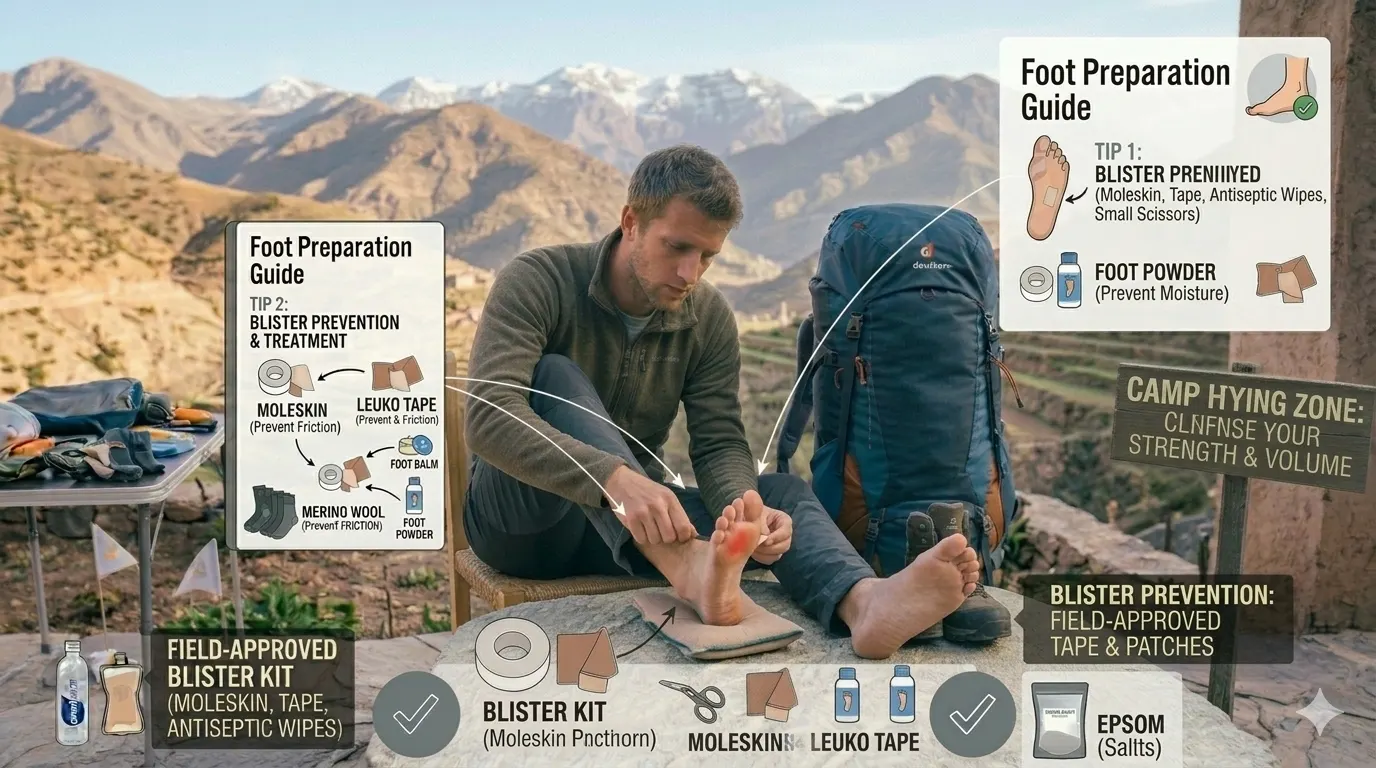
Pack a Blister Prevention Kit for Every Trek
Every trekker serious about preventing blisters while trekking should carry a compact blister kit in an easily accessible outer pocket never buried at the bottom of your pack. At minimum, include moleskin or Leukotape, Compeed blister bandages, athletic tape, small scissors, and alcohol wipes. Add Body Glide, foot powder, a sterilized needle, and antibiotic ointment for a comprehensive kit. The entire kit weighs under 100 grams and could be the difference between finishing your trek and limping back to the trailhead on day three. Keep a spare pair of socks accessible at all times too not packed away so you can swap quickly without unpacking your entire bag.
Your Daily Foot Care Routine on a Multi-Day Trek
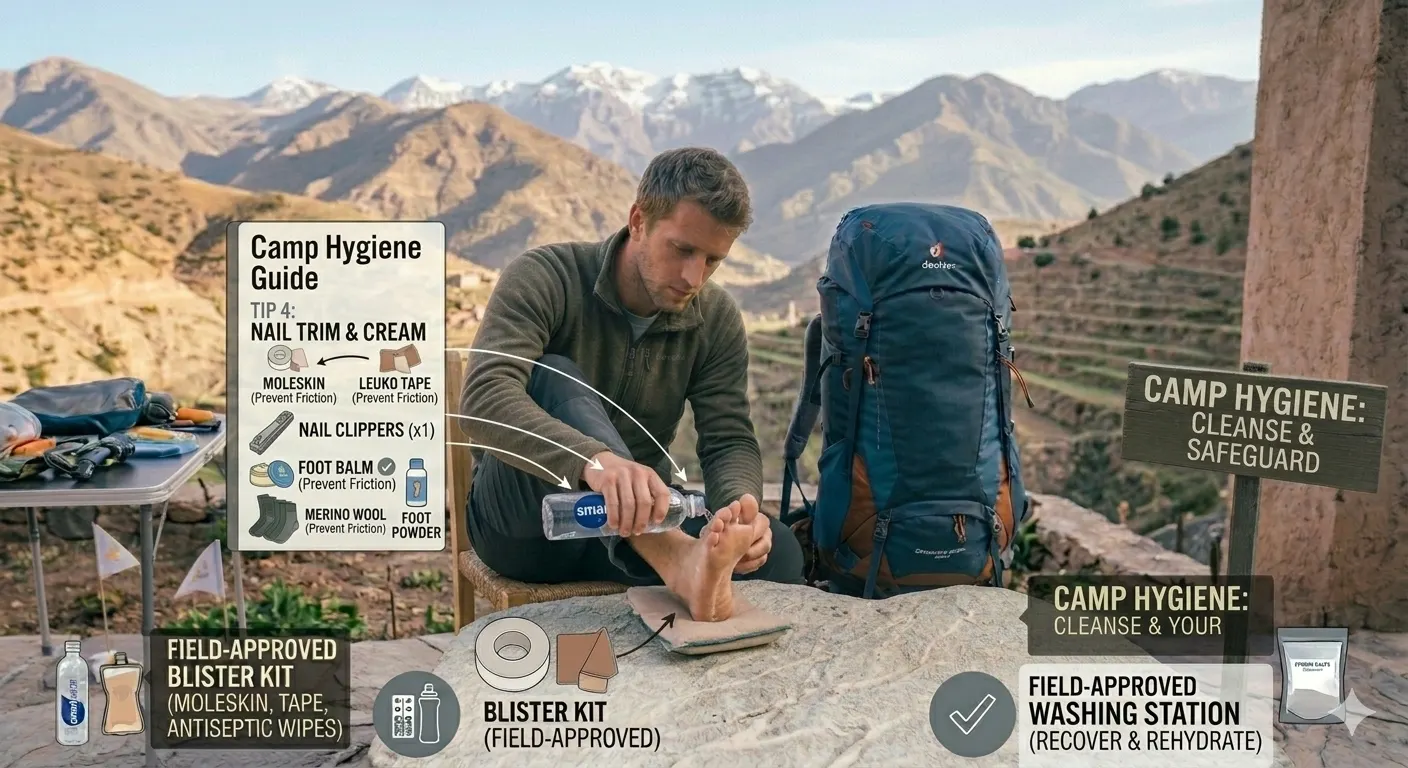
Consistency is the foundation of keeping your feet healthy on trail. Every morning before you put on your socks, inspect your feet carefully check between toes, around the heel, and across the ball of the foot. Apply preventive tape to known problem areas, dust with foot powder if needed, and put on clean, dry socks. Your boots should also be completely dry inside before you lace up; if they’re damp from the previous day, stuff them with newspaper overnight or position them near a heat source at camp. In the evening, take off your boots immediately upon arrival, wash your feet if water is available, and inspect thoroughly for any developing issues. Elevate your feet while resting to reduce end-of-day swelling, and wear camp sandals or clean camp socks to let skin breathe overnight.
Special Conditions That Increase Blister Risk on Trek
Wet weather demands more frequent sock changes and extra vigilance even waterproof boots allow internal moisture from sweat to accumulate over a long day. Waterproof socks worn as an additional layer and well-fitted gaiters that seal the boot top can make a meaningful difference in sustained wet conditions. In hot climates, feet swell considerably more than usual, so ensure adequate space in your boots and increase how often you air your feet out during breaks. For treks lasting several weeks, consider alternating between two pairs of well-broken-in boots to vary pressure points across your feet, and include fresh socks in any resupply boxes you mail ahead. Read more about the demands of extended trekking in our article on day hiking vs trekking explained.
When Blisters Do Form: How to Treat Them Correctly
Even with the best strategy to prevent blisters while trekking, occasional blisters happen especially on your first few multi-day adventures. Small, painless blisters that don’t impede walking are often best left intact: the fluid underneath protects the raw skin as it heals. Surround but don’t cover the blister with a donut-shaped moleskin pad to relieve pressure, keep the area clean and dry, and monitor it daily. Larger blisters that are painful and affecting your gait may need draining. Use a needle sterilized with alcohol, pierce at the edge, gently press the fluid out, but always leave the overlying skin fully intact it is your best natural bandage. Apply antibiotic ointment and a clean bandage, and change the dressing daily. If you notice pus, red streaking extending from the blister, or fever, seek medical attention promptly these are signs of infection requiring professional care.

Conclusion
Learning how to prevent blisters while trekking is one of the highest-return investments you can make in your trekking experience. It costs nothing beyond preparation time and a small kit that fits in your palm. Start breaking in your boots today, invest in quality merino wool socks, build your blister prevention kit, and commit to a consistent foot care routine from the very first day on trail. Your feet carry you through every summit, every river crossing, and every unforgettable mountain vista. Give them the attention they deserve and they will never let you down.
Frequently Asked Questions About Blister Prevention While Trekking
Should I pop a blister that forms during my trek?
Small, painless blisters are generally best left intact the fluid inside acts as a natural protective cushion while the skin heals underneath. If a blister is large, painful, or interfering with your ability to walk normally, you may need to drain it. Sterilize a needle with alcohol, pierce the edge of the blister, gently press out the fluid, and critically leave the overlying skin intact. Apply antibiotic ointment and a clean bandage, and change the dressing every day. Watch closely for infection signs: increasing redness, pus, warmth, or red streaking all require medical attention.
Can I prevent blisters while trekking if I have very sweaty feet?
Yes, but it requires extra diligence. Apply a clinical-strength antiperspirant to your feet the night before your hike to significantly reduce sweating. Use foot powder every morning and reapply during breaks. Change socks more frequently than average potentially twice during a full hiking day. Moisture-wicking liner socks under your regular trekking socks help transfer sweat away from the skin surface. Accept that moisture management will be an active, ongoing part of your routine rather than a one-time setup.
Why do I get blisters in different places on multi-day treks versus day hikes?
Multi-day trekking creates friction patterns that single-day hikes simply don’t replicate. Heavier pack weight changes how your feet press and move inside your boots. Fatigue gradually alters your gait. Accumulated moisture softens skin in areas that stay dry on shorter outings. Feet also swell incrementally over consecutive days, shifting where the boot makes contact. This is precisely why overnight practice treks are essential before any serious multi-day adventure.
Is moleskin or Compeed better to prevent blisters while trekking?
They serve different purposes and experienced trekkers carry both. Moleskin excels at prevention apply it to hot spots before a blister forms, and you can cut it to any shape or size you need. Compeed blister bandages are superior for treating existing blisters: they stay adhered better in wet conditions and create a moist healing environment that speeds recovery. Use moleskin for prevention and early intervention; use Compeed once a blister has already formed.
How many miles should I break in new boots before a trek?
Aim for a minimum of 30–50 miles of progressive use before any multi-day trek. Begin with short walks around your home or neighborhood, then progress to day hikes on varied terrain, and finish with at least one overnight practice run carrying your full pack weight. This sequence builds natural calluses, allows the boot to mold to your foot, and most importantly reveals any hot spots while you still have time to address them or switch footwear entirely.


No comments yet. Be the first to share your thoughts.