
High Altitude Trekking for Beginners: Safety, Acclimatization & Expert Tips
High altitude trekking is one of the most rewarding experiences in the outdoor world but it demands respect. Whether you’re planning your first trek in the Himalayas, the Andes, or the Rockies, understanding how altitude affects your body is the single most important thing you can do before you lace up your boots. After two decades of leading and guiding treks above 8,000 feet, I can tell you that the mountains don’t care how fit you are. What matters is how smart you are about going up.
What Happens to Your Body at High Altitude
As you gain elevation, atmospheric pressure drops and each breath delivers less oxygen to your lungs. Your body responds immediately: heart rate climbs, breathing deepens, and your blood works harder to compensate. Over days and weeks at altitude, your body begins producing more red blood cells a process called acclimatization to carry more oxygen through your system. But this adaptation takes time, and pushing too fast is where most trekkers go wrong.
Altitude is generally classified into three zones. High altitude spans 8,000–12,000 feet, where mild effects are possible. Very high altitude covers 12,000–18,000 feet, where altitude illness becomes common. Extreme altitude begins above 18,000 feet, where the body deteriorates even with acclimatization. The good news? Most beginner treks stay well below 12,000 feet, which is very manageable with the right approach.
Two effects that surprise many first-timers: dehydration accelerates dramatically at altitude due to faster breathing and lower humidity, and sleep quality often drops in the first few nights as your breathing becomes irregular. Both are normal and manageable but only if you know to expect them.
Understanding Altitude Sickness: Symptoms You Must Know
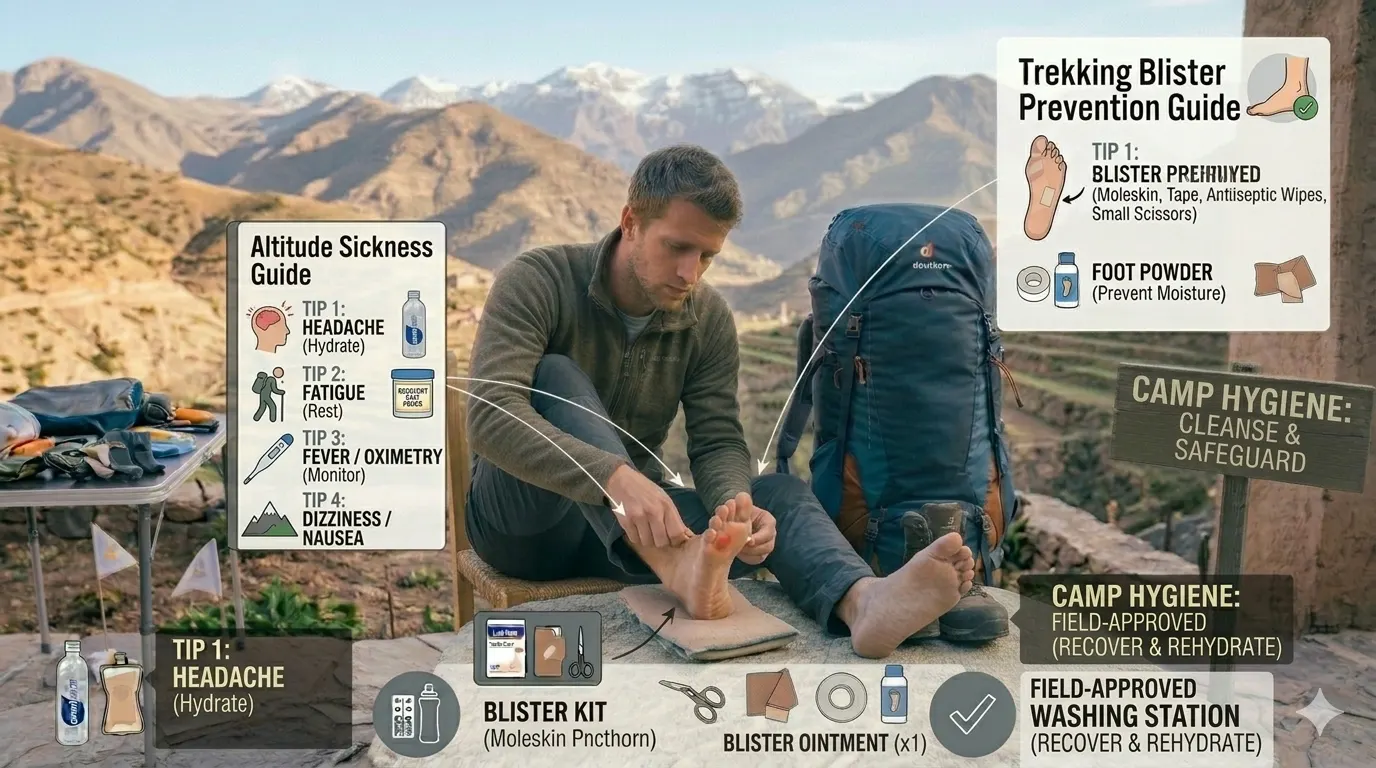
Altitude sickness occurs when your body ascends faster than it can adapt. The most common form is Acute Mountain Sickness (AMS), which typically develops 6–24 hours after arriving at a new elevation. The hallmark symptom is a headache often described as similar to a bad hangover combined with nausea, dizziness, fatigue, and disrupted sleep. According to the National Institutes of Health, AMS affects approximately 25% of people who travel above 8,000 feet.
The critical thing to understand about AMS is that it doesn’t discriminate. Elite athletes, marathon runners, and seasoned hikers can be just as vulnerable as sedentary beginners. Your susceptibility is largely genetic and can vary from one trip to the next. I’ve seen Olympic-level climbers turn back at 14,000 feet and watched 60-year-old first-timers waltz to 17,000 feet without a twitch. The mountain plays by its own rules.
Beyond AMS, two life-threatening conditions deserve serious attention. High Altitude Pulmonary Edema (HAPE) involves fluid accumulation in the lungs, causing severe breathlessness and a wet cough. High Altitude Cerebral Edema (HACE) involves swelling in the brain, producing confusion, loss of coordination, and extreme headache. Both are rare below 12,000 feet with proper acclimatization, but both require immediate descent no hesitation, no waiting to “see how it goes.”
Acclimatization Strategies That Actually Work
The golden principle of high altitude trekking is simple: “Climb high, sleep low.” You can hike to a higher elevation during the day, but always return to a lower elevation to sleep. This exposes your body to altitude stress while allowing it to recover overnight. Combined with a maximum sleeping elevation gain of 1,000 feet per day above 8,000 feet, this strategy dramatically reduces your risk of altitude illness. For a deeper look at preparing your body for multi-day treks, our guide on how to prepare for your first trek covers the full picture.
Rest days are not optional they are the foundation of a successful high altitude itinerary. Plan one every 3–4 days, and use them actively: take a short day hike 500–1,000 feet above your camp, then descend to sleep. This is far more effective than lying in your tent all day. Spend the afternoon exploring the local area, rehydrating, and eating well. Your legs rest while your blood adapts.
One piece of advice I give every beginner: don’t fly directly to a high-altitude trailhead and start walking. Spend at least one or two nights at an intermediate elevation around 7,000–9,000 feet before pushing higher. This single decision has saved more treks than any piece of gear or medication ever could.
Physical Preparation for High Altitude Trekking

Let me be clear about something that surprises most beginners: physical fitness does not prevent altitude sickness. It will not protect you from AMS, HAPE, or HACE. What good fitness does is make the trekking itself far more manageable your legs won’t fail you, your pack won’t crush you, and your cardiovascular system will handle the reduced oxygen more efficiently. That’s worth a great deal.
Start your training 8–12 weeks before departure. The most effective preparation combines aerobic endurance work running, cycling, or swimming three to four times weekly with stair climbing under load, which is the closest thing to uphill trekking you can do at sea level. Build up to back-to-back hiking days in the final weeks, always wearing the pack and boots you plan to use on the trek. Your body and your gear should both be tested before the mountain tests them. For detailed training progressions, our guide on how to build hiking endurance will take you through the process step by step.
Daily Habits That Support Acclimatization
How you live between hiking hours matters as much as how you hike. Hydration is your first priority at altitude: drink 3–4 liters of water daily, and check your urine pale yellow is your target. Avoid alcohol completely for the first 48 hours at any new elevation; it disrupts sleep, dehydrates you, and can mask early AMS symptoms. Limit caffeine as well, particularly if you’re already prone to dehydration.
Eat regularly even when your appetite fades and it will fade. Your digestive system slows at altitude, and carbohydrates are processed more efficiently than fats or proteins under these conditions. Opt for rice, pasta, bread, and soups over heavy meat-based meals. Forcing yourself to eat maintains your energy levels and supports the physiological work your body is doing around the clock.
On the trail, pace yourself more conservatively than feels necessary. Use the rest step technique a brief pause between steps that allows your leg muscles to recover momentarily and practice pressure breathing, which involves a forceful exhale to clear CO₂ more efficiently. Both techniques are used by high-altitude mountaineers worldwide and make a tangible difference above 10,000 feet.
Recognizing and Responding to Altitude Sickness
The moment you feel a headache at altitude, stop and assess. If it’s mild and isolated, rest at your current elevation, drink a full liter of water, and take ibuprofen or acetaminophen. Do not ascend further until the headache is completely gone. Most mild AMS symptoms resolve within 24–48 hours at the same elevation.
Descend immediately without debate if any of the following occur: symptoms worsen despite rest, you develop a wet cough or breathlessness at rest (possible HAPE), you experience confusion, stumbling, or cannot walk a straight line (possible HACE), or your headache becomes severe and unresponsive to medication. Descend at least 1,000–2,000 feet. This single action is the most effective treatment for serious altitude illness, often producing dramatic improvement within hours.
Regarding medication: Acetazolamide (Diamox) is commonly used to prevent and treat AMS by stimulating faster breathing and accelerating acclimatization. It is effective, but it must be prescribed by a doctor, it has side effects (tingling in extremities, increased urination), and it is never a substitute for smart acclimatization. The Altitude Research Centre provides excellent clinical guidance on its appropriate use.
Gear Essentials for High Altitude Conditions

Temperature drops roughly 3–5°F for every 1,000 feet of elevation gain, which means a 10,000-foot trek can be 30–50°F colder at the summit than at the trailhead. Dress in moisture-wicking base layers, insulating mid-layers, and a windproof outer shell. Your sleeping bag should be rated at least 10°F lower than the coldest temperature you expect.
UV radiation is a silent hazard at altitude it intensifies by approximately 10% per 3,000 feet. At 12,000 feet, you’re receiving roughly 40% more UV exposure than at sea level. Apply SPF 30+ sunscreen liberally, wear UV-protective sunglasses (glacier glasses if traveling on snow), and use lip balm with SPF. Sunburn and snow blindness can sideline a trek just as effectively as altitude sickness.
A pulse oximeter is a small, inexpensive device that clips to your finger and measures your blood oxygen saturation. It won’t replace your judgment, but tracking your SpO₂ levels over several days gives you objective data on how your acclimatization is progressing. A healthy reading at 10,000 feet typically falls between 90–95%; significant drops below 85% warrant attention and possible descent.
Choosing the Right First High Altitude Trek
For your first high altitude experience, prioritize routes with maximum elevations under 12,000 feet, gradual ascent profiles, and built-in acclimatization days. Well-established routes with reliable infrastructure teahouses, rescue stations, and regular guide presence offer far better safety margins than remote wilderness routes. Consider joining a guided group for your first time above 10,000 feet; experienced guides read altitude responses quickly and make sound decisions when trekkers cannot. Our article on day hiking vs trekking explained will help you understand exactly what level of experience and commitment different routes require.
Avoid itineraries that gain elevation too aggressively or begin above 10,000 feet without a prior acclimatization night. Treat your first high altitude trek as a learning expedition: note what elevation you first feel any symptoms, what helps you feel better, and how your sleep is affected. This self-knowledge becomes invaluable for every future trek you plan.
Emergency Preparedness at High Altitude

Before every high altitude trek, establish a clear emergency plan. Know the evacuation routes from each campsite, identify the nearest medical facility with altitude medicine experience, and carry comprehensive travel insurance that explicitly covers helicopter evacuation. Share your full itinerary including planned campsites and expected return date with a trusted contact at home.
Within your group, establish open communication from day one. Never hide symptoms to avoid slowing the group down. The “I’ll be fine” mindset has cost lives at altitude. Use a buddy system, check in with each other each morning, and agree in advance on clear criteria for turning back. The mountain will always be there your health may not be if you push through the wrong warning signs.
Common Myths About Altitude Sickness
Perhaps the most dangerous myth in altitude trekking is that only unfit or inexperienced people get altitude sickness. This belief causes fit, confident trekkers to dismiss early symptoms and push on sometimes with fatal consequences. Susceptibility to AMS is largely genetic and largely unpredictable. The second most harmful myth is that sea-level training can simulate or prevent altitude adaptation. It cannot. Only acclimatization at altitude acclimatizes you to altitude. Train hard for endurance and strength, but don’t mistake fitness for protection from the physiology of thin air.
Frequently Asked Questions About High Altitude Trekking
Can I prevent altitude sickness by training at sea level?
No. Physical fitness improves your endurance and makes trekking more comfortable, but it does not prevent altitude sickness. AMS results from lower oxygen levels at elevation, and your body can only adapt by spending actual time at altitude. Even elite athletes experience AMS. The only true prevention is gradual acclimatization ascending slowly, sleeping low, and including rest days in your itinerary.
How quickly can I safely gain elevation when trekking?
Above 8,000 feet, limit your sleeping elevation gain to a maximum of 1,000 feet per day. You may hike higher during the day, but your campsite elevation should not increase by more than 1,000 feet from the previous night. Include a rest day every 3–4 days. Below 8,000 feet, the effects of altitude are minimal and ascent can be faster. Conservative elevation gain dramatically reduces your risk of AMS.
What should I do if I get a headache at altitude?
Stop ascending immediately. Rest at your current elevation, drink at least one liter of water, and take ibuprofen or acetaminophen. If the headache is your only symptom and resolves within a few hours, you can continue cautiously the next day. If it persists, worsens, or is accompanied by nausea, dizziness, or fatigue, you have AMS. Stay at the same elevation until fully recovered. A severe, unresponsive headache requires immediate descent of at least 1,000–2,000 feet.
Is it safe to trek to high altitude if I’ve never been above 8,000 feet before?
Yes, with the right preparation and approach. Choose routes with maximum elevations under 12,000 feet and gradual ascent profiles. Add extra acclimatization days beyond the minimum, consider joining a guided group, and be genuinely prepared to descend if symptoms develop even if it means ending the trek early. Most people complete their first high altitude trek successfully by respecting the altitude and following proper protocols.
Does Diamox (Acetazolamide) actually work for altitude sickness?
Yes, Diamox is clinically proven to help prevent and treat AMS by stimulating faster breathing and accelerating the acclimatization process. However, it must be prescribed by a doctor, it has side effects including tingling in the hands and feet and increased urination, and it is not a substitute for proper acclimatization. Think of it as a safety net, not a shortcut smart ascent strategy remains your primary protection.


No comments yet. Be the first to share your thoughts.