
Trekking Sleeping System: The Complete Guide to Sleep Warm Outdoors
After 20 years of trekking across the Himalayas, Patagonia, and the Atlas Mountains, I’ve learned one undeniable truth: a bad night’s sleep can ruin even the most spectacular trek. Your trekking sleeping system the combination of sleeping bag, sleeping pad, and accessories that keeps you warm in the backcountry is the single most important gear investment you’ll make. A well-built trekking sleeping system means waking up refreshed and trail-ready. A poor one means every uphill mile feels twice as hard as it should.
In this complete guide, we break down every component of a trekking sleeping system, how to choose the right sleeping bag and pad for your season, and how to avoid the costly mistakes that beginners make. We also cover how to prepare for your first trek so nothing catches you off guard on the trail.
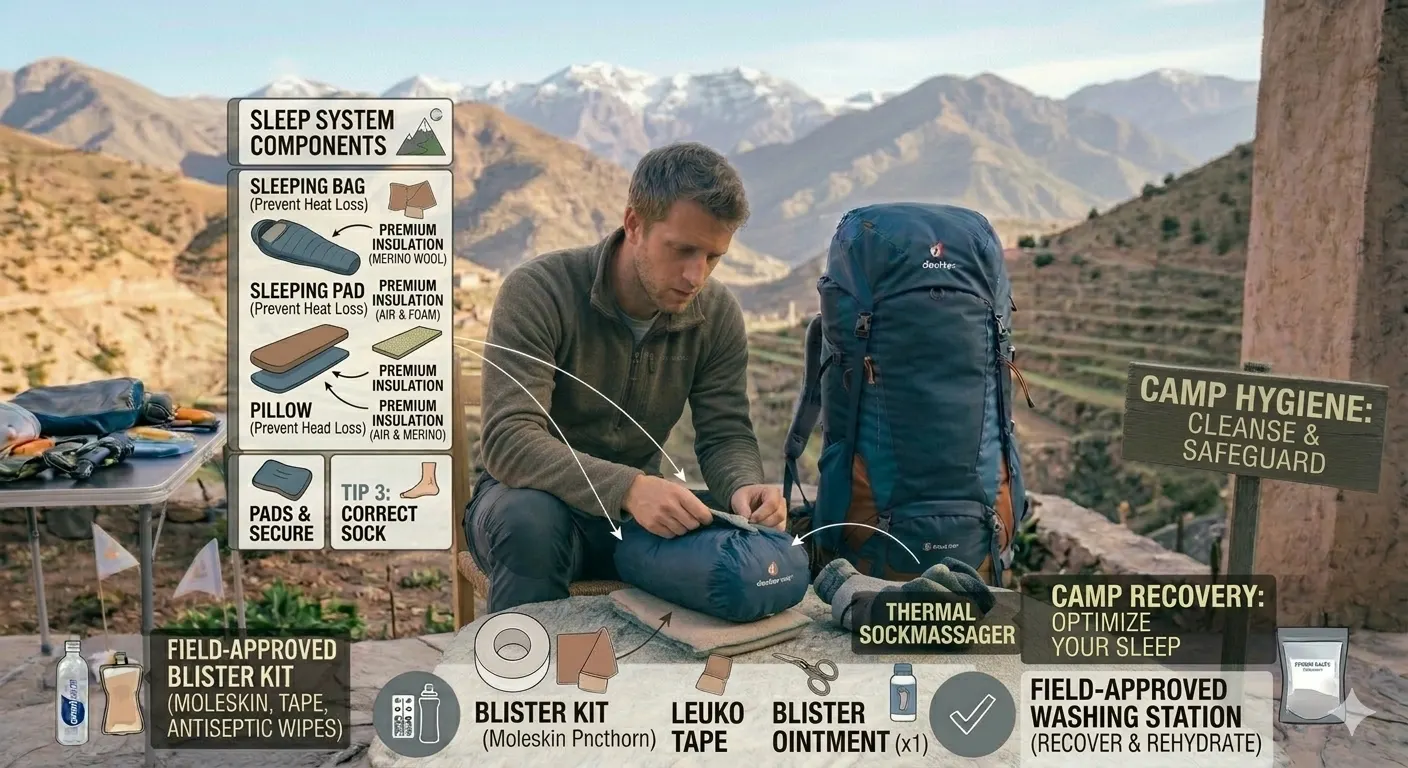
The Three Core Components of a Trekking Sleeping System
Every effective trekking sleeping system is built on three layers working in harmony. Think of it as a thermal envelope each piece plays a specific role, and skimping on any one of them compromises the entire system’s performance in the field.
Your sleeping bag is the primary insulator, trapping body heat around you through either down or synthetic fill. Your sleeping pad insulates you from the ground below — arguably the most critical component in the whole sleeping system for trekking, since cold ground pulls heat from your body through conduction far faster than cold air does. Rounding out the system are accessories like liners, camp pillows, and stuff sacks that add warmth, comfort, and gear protection across multi-day treks.
How to Choose the Right Sleeping Bag for Trekking
The sleeping bag is the heart of your trekking sleeping system. Choosing the right one starts with a single number: the coldest nighttime temperature you expect to face. Never shop for average conditions always plan for the worst night possible. I always recommend adding a 10–15°F safety buffer on top of that number. On a remote trek, being slightly warm is manageable. Being cold all night is miserable and at altitude, it can be genuinely dangerous.

Understanding Temperature Ratings for Your Sleeping System
Sleeping bags use a standardized EN/ISO rating system with three key numbers. The comfort rating is the temperature at which an average sleeper stays comfortable this is the most relevant number for building a reliable trekking sleeping system. The lower limit is the coldest temperature for an average male sleeper, and the extreme rating is a survival threshold only, not a comfortable sleep temperature. Always select your bag based on the comfort rating, and account for personal variation women and older trekkers typically sleep colder and should add an extra warmth buffer to their sleeping system. For a deeper technical reference, REI’s sleeping bag guide provides an excellent breakdown of EN/ISO testing standards.
Down vs. Synthetic Insulation: Which Is Right for Your Trekking Sleeping System?
This is the most debated choice when building a trekking sleeping system, and the honest answer is: it depends entirely on your conditions and budget. Down insulation wins on weight, packability, and longevity. A quality 800-fill down bag can compress to the size of a water bottle and last a decade with proper care. The trade-offs are cost ($300–$500+) and moisture vulnerability wet down loses most of its insulating power and takes a long time to dry in the field. Synthetic insulation maintains warmth even when damp, dries faster at camp, and costs significantly less ($100–$250 for comparable warmth ratings). It is heavier and bulkier, but for beginners building their first trekking sleeping system in variable or wet conditions, synthetic is the safer, smarter starting point. Many experienced trekkers own both down for dry alpine environments, synthetic for humid coastal trails.
Sleeping Bag Shape and Fit
Mummy bags are the gold standard for any serious trekking sleeping system. Their tapered shape minimizes dead air space your body has to heat, making them significantly more thermally efficient and lighter than rectangular alternatives. Rectangular bags offer more room to move but sacrifice warmth and add unnecessary weight better suited for car camping than the backcountry. Semi-rectangular bags offer a middle ground for trekkers who feel claustrophobic in a mummy cut. Women-specific bags are cut shorter, wider at the hips, and carry more insulation at the feet addressing real physiological differences in how women experience cold while sleeping.
Sleeping Pads: The Most Underrated Part of Your Trekking Sleeping System
I cannot emphasize this enough: your sleeping pad is equally important as your sleeping bag within the overall trekking sleeping system. Cold ground conducts heat away from your body up to 25 times faster than cold air. Even the warmest sleeping bag fails when your body weight compresses the insulation beneath you, destroying the loft that keeps you warm. A pad with adequate R-value is not optional — it is a foundational piece of your sleep system for trekking.

R-Value: The Key Metric for Your Sleeping System’s Ground Insulation
R-value measures a pad’s resistance to heat transfer on a scale from approximately 1 (minimal) to 7+ (expedition-level). Matching your pad’s R-value to your season is one of the most important decisions in building a balanced trekking sleeping system. For summer trekking above 40°F, an R-value of 1–2 is sufficient. Three-season trekking between 20–40°F requires R-value 3–4. Cold weather and winter camping below 20°F demands R-value 5 or higher. A useful field trick: you can stack two pads and add their R-values together pairing a thin foam pad under an inflatable is a popular cold-weather strategy that also adds puncture backup to your sleeping system.
Types of Sleeping Pads for Trekking
Inflatable air pads are the most popular choice for a lightweight trekking sleeping system. They pack down small, weigh as little as 12 ounces, and deliver excellent comfort on rocky or uneven backcountry terrain. Their weakness is puncture vulnerability always carry a repair kit and test your pad at home before the trek. Self-inflating pads combine open-cell foam with an air chamber, providing a reliable balance of comfort, insulation, and durability without the pure puncture risk of inflatables. Closed-cell foam pads are virtually indestructible and need zero setup time, but they are bulkier and less comfortable for multi-night use. Many experienced trekkers strap a thin foam pad outside their pack as a lightweight backup layer for their sleeping system. For detailed pad comparisons, Switchback Travel’s sleeping pad reviews offer thorough, up-to-date field-testing data.
Sizing Your Trekking Sleeping System for a Perfect Fit
Fit directly impacts how well your trekking sleeping system performs at night. A sleeping bag that’s too long wastes warmth because your body must heat excess air space at the foot end. One that’s too short compresses insulation at the shoulders and feet, creating cold spots that no amount of layering can fix. Standard “regular” sizing fits most people up to 6 feet; choose “long” if you’re taller. For sleeping pads, full-length options maximize comfort across the whole sleeping system, while three-quarter length pads reduce weight (you place your pack under your feet as insulation). Side sleepers should prioritize wide pads 25″ to 30″ to prevent rolling off the edge during the night, which repeatedly disrupts sleep quality on longer treks.
Seasonal Guide: Configuring Your Trekking Sleeping System by Condition
The ideal trekking sleeping system shifts with the seasons, and understanding those shifts helps you pack smarter. In summer above 40°F, a 30–40°F rated bag with an R-value 1–2 pad delivers warmth without unnecessary weight in your pack. For three-season trekking between 20–40°F the most widely used sleeping system configuration among regular trekkers a 15–20°F rated bag paired with an R-value 3–4 pad covers spring, summer, and fall with versatile reliability. Cold weather and winter trekking below 20°F demands a minimum 0–10°F rated bag, an R-value 5+ pad, and often a vapor barrier liner as part of the sleeping system. Winter configurations require specialized knowledge and prior experience build your skills progressively before committing to extreme cold expeditions. You can also explore our guide on choosing the right trekking backpack size to understand how your sleeping system affects overall pack volume and weight balance.

How to Maximize Warmth From Your Trekking Sleeping System
Even the best-spec’d trekking sleeping system underperforms if you don’t use it correctly. Eat a substantial snack before sleeping digestion generates body heat, which your sleeping bag then traps and amplifies. Use the bathroom before climbing in; your body burns meaningful energy keeping a full bladder warm through the night. If you feel cold when getting into your bag, do 20 jumping jacks first you warm a sleeping system with your own body heat, not the other way around. Cinch the hood and collar of your mummy bag tightly to seal in warmth around your head and neck. A sleeping bag liner adds 5–15°F of effective warmth to your sleeping system without significant weight penalty, making it one of the highest-value upgrades available. On bitterly cold nights, a hot-water bottle tucked into the foot of your bag is a simple trick that I’ve relied on repeatedly at high altitude.
Weight, Packability, and Budget for Your Trekking Sleeping System
A complete trekking sleeping system typically weighs between 2 and 5 pounds total, with ultralight configurations achievable under 2 pounds for those willing to invest at premium price points. Down sleeping bags run roughly 1.5–2 pounds for three-season use; synthetic equivalents weigh 2–3 pounds. Inflatable sleeping pads range from 0.5 to 1.5 pounds, while foam pads weigh 1–2 pounds but offer the reliability trade-off. Budget-wise, sleeping bags range from $50–$150 at entry level, $150–$350 mid-range, and $350–$600+ for premium down. Sleeping pads range from $20 for basic foam to $200 for premium inflatables. The core investment principle for any trekking sleeping system: prioritize your sleeping pad quality alongside your bag ground insulation is just as thermally critical as overhead insulation, and it’s the component most beginners undervalue. Quality sleeping systems last 5–10 years with proper care, making the cost-per-use remarkably low over time.
Care, Maintenance, and Storage of Your Trekking Sleeping System
Proper maintenance is what separates a trekking sleeping system that lasts 10 years from one that degrades after two seasons. In the field, air out your sleeping bag each morning overnight body moisture accumulates in the insulation and gradually reduces loft if left trapped. Keep your bag inside a waterproof stuff sack during the day to protect against rain and tent condensation. Wash your sleeping bag no more than 1–2 times per season using a front-loading washer on a gentle cycle; down bags require down-specific soap to preserve the natural oils in the fill. Dry thoroughly 2–3 hours on low heat with tennis balls in the dryer to break up clumped down and restore loft to your sleeping system. At home, never store your sleeping bag compressed in its stuff sack; compression permanently damages loft over time. Store it loosely in a large cotton storage sack in a cool, dry location. Wipe sleeping pads down after each trip, inspect inflatables for slow leaks, and store pads flat or loosely rolled. Read more about managing your complete gear kit in our article on the key differences between day hiking and trekking.
Common Mistakes That Compromise Your Trekking Sleeping System
The single most expensive mistake beginners make with their trekking sleeping system is selecting a sleeping bag based on average expected temperatures rather than the coldest realistic night. Backcountry weather is inherently unpredictable always plan for your worst-case scenario. The second most common error is investing heavily in a quality sleeping bag while pairing it with a thin, inadequate pad that provides almost no ground insulation a fundamentally unbalanced sleeping system that will leave you cold regardless of bag quality. Third, never bring an untested sleeping system on a major multi-day trek. Test your complete setup bag, pad, liner, and pillow together in your backyard or on a short overnight near a trailhead first. Small fit issues or equipment failures that are merely inconvenient at home become serious problems at altitude or in remote terrain.

Final Thoughts: Building the Right Trekking Sleeping System for You
A well-chosen trekking sleeping system is one of the best investments you’ll make across your entire outdoor life. Choose a temperature-appropriate sleeping bag with the right fit, pair it with a sleeping pad that delivers sufficient R-value for your target season, and test the complete sleeping system together before your first real expedition. Beginners should start with synthetic insulation and a reliable inflatable pad, then upgrade to a premium down sleeping system once they understand their typical conditions and personal comfort preferences. Sleep is not a luxury in the backcountry it is the foundation of every single day on the trail. Invest in your trekking sleeping system the way you’d invest in your boots: thoughtfully, with long-term performance in mind.

Frequently Asked Questions About Trekking Sleeping Systems
Can I use a regular blanket instead of a sleeping bag for trekking?
No. Regular blankets and comforters are far too heavy and bulky for a functional trekking sleeping system, and they don’t insulate efficiently when compressed by your body weight. A quality sleeping bag rated 15°F weighs 2–3 pounds and compresses to the size of a football. An equivalent blanket would weigh 8–10 pounds and fill most of your pack. Sleeping bags are engineered specifically to maximize warmth per ounce no household bedding performs comparably in a backcountry sleeping system.
Do I really need a sleeping pad, or can I use extra clothing underneath me?
A sleeping pad is absolutely essential to any trekking sleeping system it is not optional under any circumstances. Cold ground pulls heat from your body through conduction far faster than cold air does. Your body weight compresses any insulation beneath you, including piled clothing, eliminating its ability to trap warm air. Only a sleeping pad with appropriate R-value provides reliable ground insulation. Without it, even the warmest sleeping bag in your system will leave you cold through the night.
How do I know if I’m a warm or cold sleeper before investing in a sleeping system?
Sleep outdoors or in an unheated space and observe how many layers you need compared to others in the same conditions. Women and older adults typically run colder. If you consistently need extra blankets at home, build your trekking sleeping system around a bag rated 10–15°F below your expected lowest temperature. If you frequently kick off covers at night, a bag rated for your expected lows should be sufficient. When genuinely uncertain, always choose the warmer option you can vent a sleeping system, but you cannot add warmth that isn’t there.
Should my first sleeping bag be down or synthetic?
For most beginners assembling their first trekking sleeping system, synthetic insulation is the smarter starting choice. Synthetic bags cost significantly less than comparable down, perform reliably when damp something beginners encounter far more frequently and dry faster at camp. The additional weight (roughly 1 pound more than down) is manageable on shorter treks. Once you’ve completed several treks and understand your typical conditions, upgrading to a down sleeping system makes excellent long-term sense. Many experienced trekkers maintain both types for different environments.
What R-value sleeping pad do I need for three-season trekking?
For a three-season trekking sleeping system operating between 20°F and 40°F, an R-value of 3–4 is the standard recommendation. This provides reliable ground insulation across spring, summer, and fall conditions in most mountain environments. Cold sleepers or those regularly pushing into sub-freezing nights should consider R-value 4–5 for added security. You can also stack a thin foam pad beneath your inflatable their R-values combine, giving your sleeping system a stronger thermal barrier against cold ground.


No comments yet. Be the first to share your thoughts.