
Trekking Safety Checklist: Your Complete Guide to Safe Multi-Day Hiking
A solid trekking safety checklist is the single most important tool you can bring on a multi-day hiking trip and it weighs nothing. Unlike a short day hike where help is never far away, trekking takes you deep into remote terrain for days at a time, where small mistakes can quickly become serious emergencies. Whether you’re tackling your first overnight route or heading into serious backcountry, this guide covers every phase of preparation, from weeks before departure to the moment you walk back through your front door.

Before You Leave Home: First Steps on Your Trekking Safety Checklist
The most critical items on any trekking safety checklist are decided long before you lace up your boots. Proper pre-trek preparation reduces risk dramatically and gives you the mental confidence to handle unexpected situations on the trail. According to the National Park Service, most wilderness rescues involve hikers who skipped the planning stage entirely.
Research and Route Planning: The Core of Any Trekking Safety Checklist
Start by studying detailed topographic maps of your entire route and reading recent trip reports to understand current trail conditions. Check weather forecasts for the full duration of your trek not just the first day and research seasonal hazards specific to your destination. Identifying bailout points before you leave is one of the most underrated safety steps; knowing your exit options in advance keeps panic from driving bad decisions if things go wrong.
- Note locations of water sources and campsites along the route
- Understand wildlife in the area and recommended precautions
- Obtain all required permits and understand fire and camping regulations
- Check whether bear canisters are mandatory and if any areas are temporarily closed
- Print or screenshot all permit confirmations before departure
Physical Preparation
No checklist replaces fitness. Train with a weighted pack for at least six to eight weeks before your trek, progressively building cardiovascular endurance and testing your body on longer day hikes. If you have any existing medical conditions, consult your doctor before committing to a demanding route. Arriving physically underprepared is one of the most common reasons treks turn into emergencies.
Your Communication Plan
File a detailed trip plan with a trusted person before you leave. This plan should include your full route, planned campsites, expected return date, and emergency contact numbers. Most importantly, specify clearly when they should call authorities if they haven’t heard from you. This simple step has saved lives rescuers respond far faster when someone on the outside already knows you’re overdue. For more on preparing thoroughly, read our guide on how to prepare for your first trek.
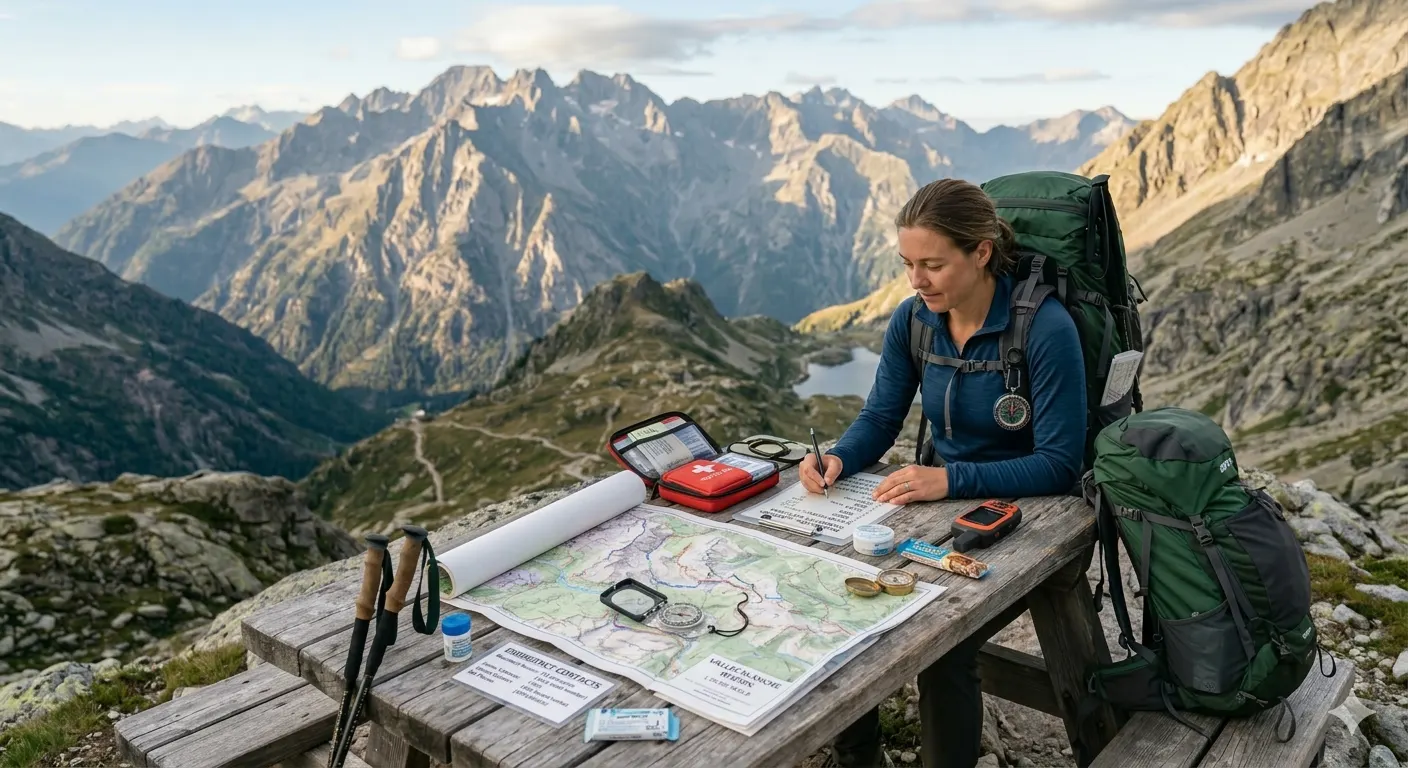
Essential Safety Gear: What Every Trekking Safety Checklist Must Include
Regardless of season, destination, or group size, certain categories of gear should be in every trekker’s pack. Think of these not as optional extras but as your personal insurance policy against worst-case scenarios.
Navigation Tools
Carry a waterproof topographic map and a compass and know how to use both without relying on a battery. GPS devices and offline smartphone maps are excellent backups, but electronics fail. Always bring extra batteries for all devices and have a secondary navigation method ready. The REI navigation guide offers excellent tutorials on map and compass fundamentals that every trekker should review before heading into the backcountry.
Emergency Communication
For remote treks, a satellite messenger or personal locator beacon (PLB) is one of the best investments you’ll ever make. Cell service is unreliable in most backcountry terrain. A whistle carried on your person, not buried in your pack is a simple, weight-free signaling tool; three short blasts is the universal distress signal. A signal mirror rounds out your emergency communication kit for attracting attention over long distances.
First Aid and Medical Supplies
Your first aid kit should be proportional to your trek length and distance from help. At a minimum, include blister prevention and treatment supplies, pain relievers, antihistamines, tweezers for tick removal, and bandages in multiple sizes. Carry all personal prescription medications with a buffer supply of extra doses. Understanding basic wilderness first aid principles gives you the knowledge to use these tools effectively when it matters most.
Emergency Shelter, Warmth, and Protection
- Emergency bivy or space blanket small, light, and potentially life-saving
- Waterproof fire-starting tools: matches, lighter, and a fire starter
- One extra warm layer beyond what you plan to wear
- Full rain gear, even when the forecast looks perfect
- Sunscreen (SPF 30+), UV-protective sunglasses, and a sun hat
- Water purification: a filter, tablets, or UV purifier plus a backup method
- At least one extra day of food and a minimum 2–3 liters of water carrying capacity
- Multi-tool or knife, duct tape, paracord, and a sleeping pad repair kit
For guidance on fitting all of this efficiently into the right bag, our trekking backpack size guide will help you choose the right pack for the load.

Daily Safety Routine: Living Your Trekking Safety Checklist on the Trail
A trekking safety checklist isn’t a one-time exercise it’s a daily practice that experienced hikers repeat every morning on the trail.Safety isn’t a one-time checklist it’s a daily practice. Experienced trekkers build consistent habits that help them catch problems early, before they escalate into emergencies.
Morning Routine Before You Step Out
Every morning before hiking, check weather conditions and review the day’s route on your map. Inspect gear for any overnight damage, confirm you have adequate water and food, apply sunscreen, and make sure emergency items are packed in an accessible outer pocket not buried at the bottom of your bag. These five minutes each morning are some of the highest-value time you’ll spend on any trek.
While Hiking: Stay Aware, Stay Alive
Track your position on the map roughly every thirty minutes. Drink water before thirst kicks in, eat small snacks regularly to maintain energy, and monitor the sky for weather changes throughout the day. Rest before exhaustion sets in tired trekkers make poor decisions and are far more prone to injury. If you’re trekking at altitude, watch for early signs of altitude sickness such as persistent headache, nausea, or unusual fatigue in yourself or anyone in your group.
Arriving at Camp Safely
Always aim to reach camp with enough daylight left to set up comfortably. Choose a campsite away from obvious hazards dead trees, flash flood channels, and exposed ridgelines. Store food properly to avoid attracting wildlife, purify your water for the following morning, and know exactly where your headlamp and first aid kit are before darkness falls.
Recognizing Trail Hazards: A Key Part of Your Trekking Safety Checklist
No matter how well you prepare, hazards will appear on the trail. Knowing how to identify and respond to them calmly is what separates experienced trekkers from those who end up needing rescue.
Weather Hazards
Lightning is one of the most dangerous and unpredictable mountain hazards. If a storm approaches, descend from any exposed peak or ridge immediately, avoid lone trees, and seek lower shelter. Hypothermia can develop faster than most trekkers expect watch for persistent shivering, confusion, or unusual fatigue in yourself and your hiking partners. Heat exhaustion announces itself through headache, nausea, and dizziness. The golden rule: never push on through genuinely dangerous conditions. Make camp early, stay dry, and live to hike another day.
Wildlife Encounters
- Make noise while hiking to avoid startling animals at close range
- Carry bear spray in bear country and know how to deploy it quickly
- Store all food and scented items in bear canisters or hang them properly
- Never approach or feed wildlife under any circumstances
- Keep camp clean crumbs and food scraps attract animals as effectively as full meals
Injuries and Getting Lost
Address blisters immediately a small hot spot becomes a trail-ending wound if ignored for hours. For more serious injuries, know when the right decision is to turn back rather than push forward. If you become disoriented, stop moving immediately, stay calm, and try to retrace your steps to your last confirmed position. Use your map and compass to orient yourself. If you are genuinely lost, stay put, make yourself as visible as possible, and use your whistle and signal mirror to attract attention. Rescuers can find a stationary person far more easily than a moving one.

Group vs. Solo Trekking Safety
Your trekking safety checklist should look different depending on whether you’re hiking with a group or heading out alone. Both are valid approaches, but each demands a different mindset and a different set of precautions.
Group Trekking Safety
In a group, the slowest hiker always sets the pace this isn’t a social courtesy, it’s a safety rule. Establish check-in points along the route and agree on a clear meeting spot in case anyone becomes separated. Share navigation responsibility, communicate openly about energy levels and any health concerns, and never let the group spread so far apart that members lose sight of each other on technical terrain.
Solo Trekking Safety
Solo trekking demands a higher level of preparation and more conservative decision-making across the board. Choose well-traveled routes until you’ve built significant experience, always carry a satellite communication device, and file a detailed trip plan with someone who takes it seriously. Carry a more comprehensive emergency kit than you would in a group, because in a solo emergency, you are your only first responder. For a deeper look at this topic, read our article on trekking with a guide vs solo.
Decision-Making Framework for Wilderness Safety
Good judgment is arguably your most important safety tool, and no trekking safety checklist can replace it. Before making any significant decision on the trail crossing a swollen river, pushing on through darkening skies, or continuing with a nagging injury run through this quick mental risk assessment.
Key Risk Assessment Questions
- What is the realistic worst-case outcome if this goes wrong?
- Do I have the skills, gear, and energy to handle that outcome?
- Is there a safer alternative approach I haven’t considered?
- Am I making this decision based on logic or on ego and summit fever?
When to Turn Back
Turn back if weather becomes dangerous, if injury or illness compromises your ability to move safely, if trail conditions exceed your skill level, or if you’re running significantly behind schedule with darkness approaching. Trust your gut if something feels genuinely wrong in the wilderness, that instinct is usually based on real information your conscious mind hasn’t fully processed yet. The mountain will still be there next season. You only get one body.
Emergency Response Plan: The Final Layer of Your Trekking Safety Checklist
Even with perfect preparation, true emergencies can occur. Knowing how to respond quickly and methodically is what limits a bad situation from becoming a fatal one.
For Medical Emergencies
Stop, breathe, and assess calmly. Provide first aid within your training level never attempt procedures you haven’t learned. Decide early whether self-evacuation is possible or whether the situation requires external rescue. Use your satellite device or any available cell signal to call for help, mark your GPS coordinates, and make the patient as comfortable and stable as possible. If you’re in a group, send at least one person for help while others remain with the patient.
If You Need Rescue
- Activate your emergency beacon if you have one this is exactly what it’s for
- Call emergency services if cell signal is available and provide your exact GPS coordinates
- Stay put once rescue has been contacted moving makes you harder to find
- Make yourself visible: three fires in a triangle, mirror flashes, and three whistle blasts are universal distress signals
- Document the incident: photograph injuries, note the time, and record what you’ve communicated to rescuers

Seasonal Safety Considerations: Adapting Your Trekking Safety Checklist
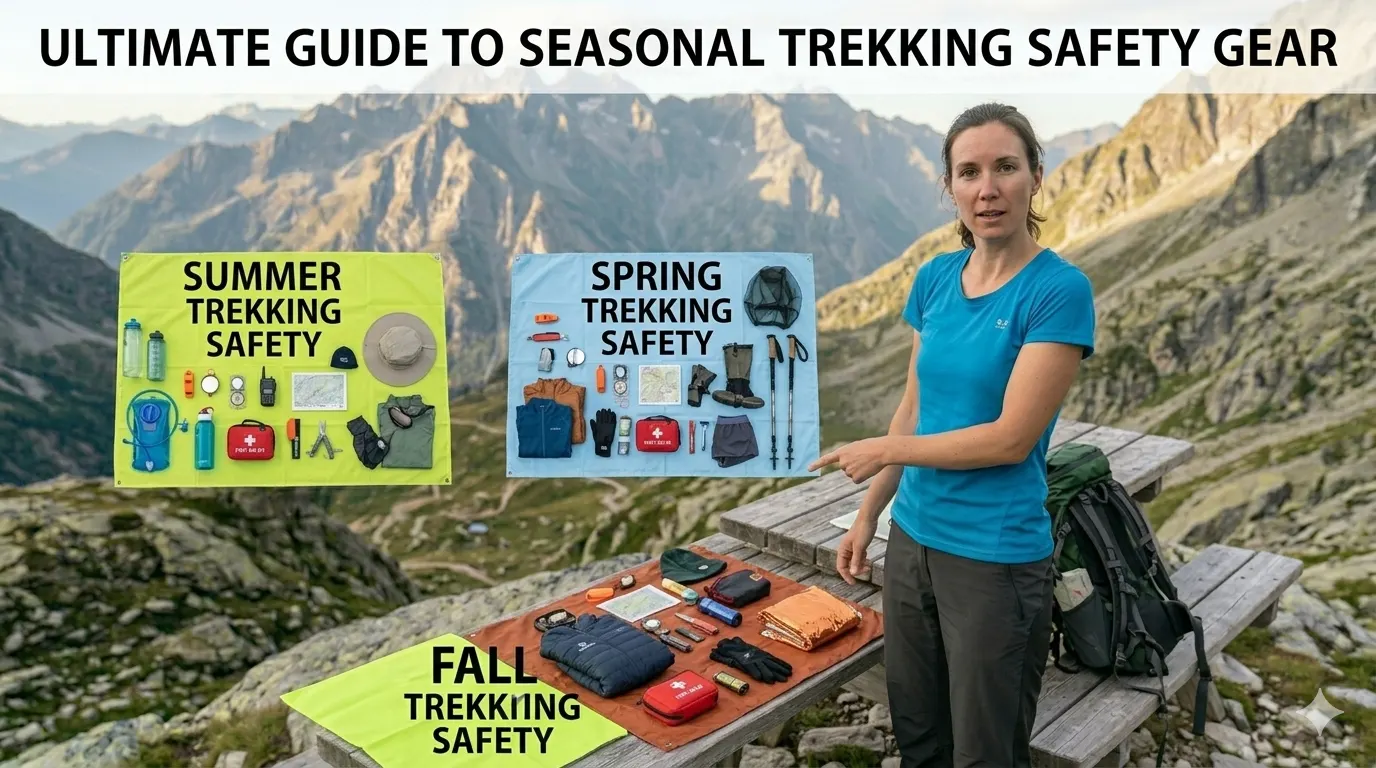
Every season brings its own set of hazards, and your trekking safety checklist should adapt accordingly. Understanding what each season demands before you go is as important as any item in your pack.
Summer Trekking
Summer heat demands more water carry at least three liters in exposed terrain and drink consistently, not just when you’re thirsty. Start hiking early in the morning to move during cooler hours and reach your destination before afternoon thunderstorms develop, which are common in mountain environments. UV exposure is intense at altitude; protect your skin and eyes vigilantly every single day.
Spring and Fall Challenges
Shoulder seasons offer some of the most beautiful trekking conditions but demand genuine flexibility. Temperatures can swing dramatically between day and night, weather is less predictable, and trail conditions can vary widely from dry dust to snow-covered passes within the same day. Shorter daylight hours require earlier camp times, and water sources may be less reliable than in peak summer.
Winter and Snow Safety
Winter trekking in snowy terrain requires a completely different trekking safety checklist one that includes advanced skills and specialized gear well beyond a standard backpacking kit.
Avalanche awareness is essential, hypothermia and frostbite risks rise sharply, and usable daylight can be extremely limited. Winter mountain travel is not recommended for beginners build a strong foundation of warm-season experience before considering it.
Post-Trek Safety Review: Completing Your Trekking Safety Checklist
The final section of your trekking safety checklist kicks in the moment you return home the post-trek review. Contact your emergency contact immediately upon returning to confirm you’re safe and update them on any plan changes made during the trip. Inspect all gear for damage or wear, restock your first aid kit, refill emergency supplies, and replace any spent batteries. Then take fifteen minutes to write down what worked, what didn’t, and any close calls or concerning moments. This reflection habit, applied consistently after every trek, is how good trekkers become great ones.
Conclusion
Following a comprehensive trekking safety checklist is one of the most effective ways to protect yourself in the wilderness not by eliminating risk, but by managing it intelligently. Preparation starts weeks before you leave home, continues with smart daily habits on the trail, and finishes with a proper post-trek review. Pack the right gear, file your trip plan, know your limits, and always err on the side of caution when conditions deteriorate. The wilderness rewards trekkers who respect it, and with the right preparation in place, you can explore it confidently for decades to come.
Ready to prepare for your next adventure? Print this checklist, review it during your planning phase, and keep it accessible on the trail for quick reference whenever you need it.
Frequently Asked Questions About Trekking Safety
Do I really need a satellite messenger for trekking?
For remote routes where cell service is unreliable, a satellite messenger or personal locator beacon is strongly recommended. These devices allow you to call for help in genuine emergencies when you’re days from civilization. While trekkers on well-traveled trails sometimes manage without one, it becomes essential for solo trips and truly remote terrain. Consider it the cost of worst-case-scenario insurance typically under $300 plus a modest annual subscription.
What should I do if I see another hiker in trouble on the trail?
Approach carefully and assess the situation before acting. Provide first aid within your training level and never put yourself in danger in the process. If the emergency exceeds your capabilities, stay with the person, keep them calm and comfortable, mark the GPS location, and send for professional help as quickly as possible. Wilderness ethics call for helping others, but your own safety must remain a priority throughout.
How do I know when weather is too dangerous to keep hiking?
Turn back or make camp immediately if you observe rapidly darkening skies, lightning near your location especially above treeline heavy rain making trails dangerously slippery, strong winds threatening your stability, or rapidly dropping temperatures without adequate clothing. Always trust your instincts. Mountain weather changes fast; camping early is always safer than pushing through dangerous conditions.
Is it safe to do my first multi-day trek alone?
No solo trekking is not advisable for your first multi-day trip. Start with a guided group or experienced friends who can mentor you through navigation, camp setup, and on-trail problem-solving. After completing 5 to 10 multi-day treks and building solid wilderness skills, you can carefully consider solo routes on well-traveled trails. Solo trekking requires proficient navigation, wilderness first aid knowledge, and mature judgment that only comes with accumulated experience.



No comments yet. Be the first to share your thoughts.