
Lightweight vs Traditional Hiking Gear
Choosing between lightweight and traditional hiking gear is one of the first real decisions every hiker faces. Lightweight gear helps you move faster and feel less tired on the trail. Traditional gear tends to be more durable and often more affordable.
What Is Lightweight Hiking Gear?
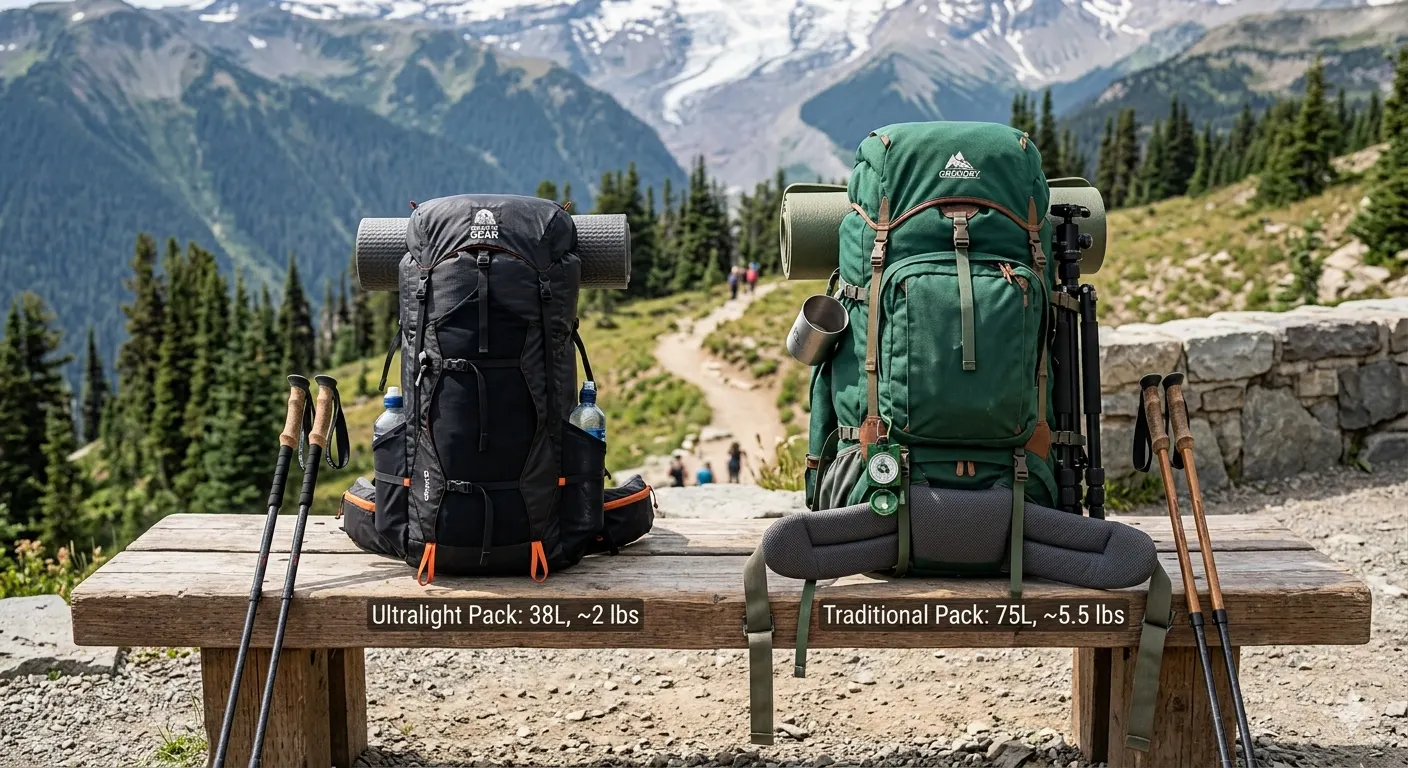
Lightweight hiking gear is designed to reduce the total weight you carry. Manufacturers use advanced materials like Dyneema, carbon fiber, and ultralight fabrics. Your pack, tent, sleeping bag, and clothing all come in lighter versions.
Many hikers aim for a base weight under 4.5 kg (10 lbs). This is called “ultralight” backpacking. You do not have to go ultralight to enjoy the benefits of lighter gear.
Common Lightweight Gear Examples
- Trekking poles made from carbon fiber
- Single-wall or ultralight tents (under 1 kg)
- Down sleeping bags with high fill power
- Frameless or minimalist backpacks (30–50 L)
- Trail runners instead of heavy boots
What Is Traditional Hiking Gear?
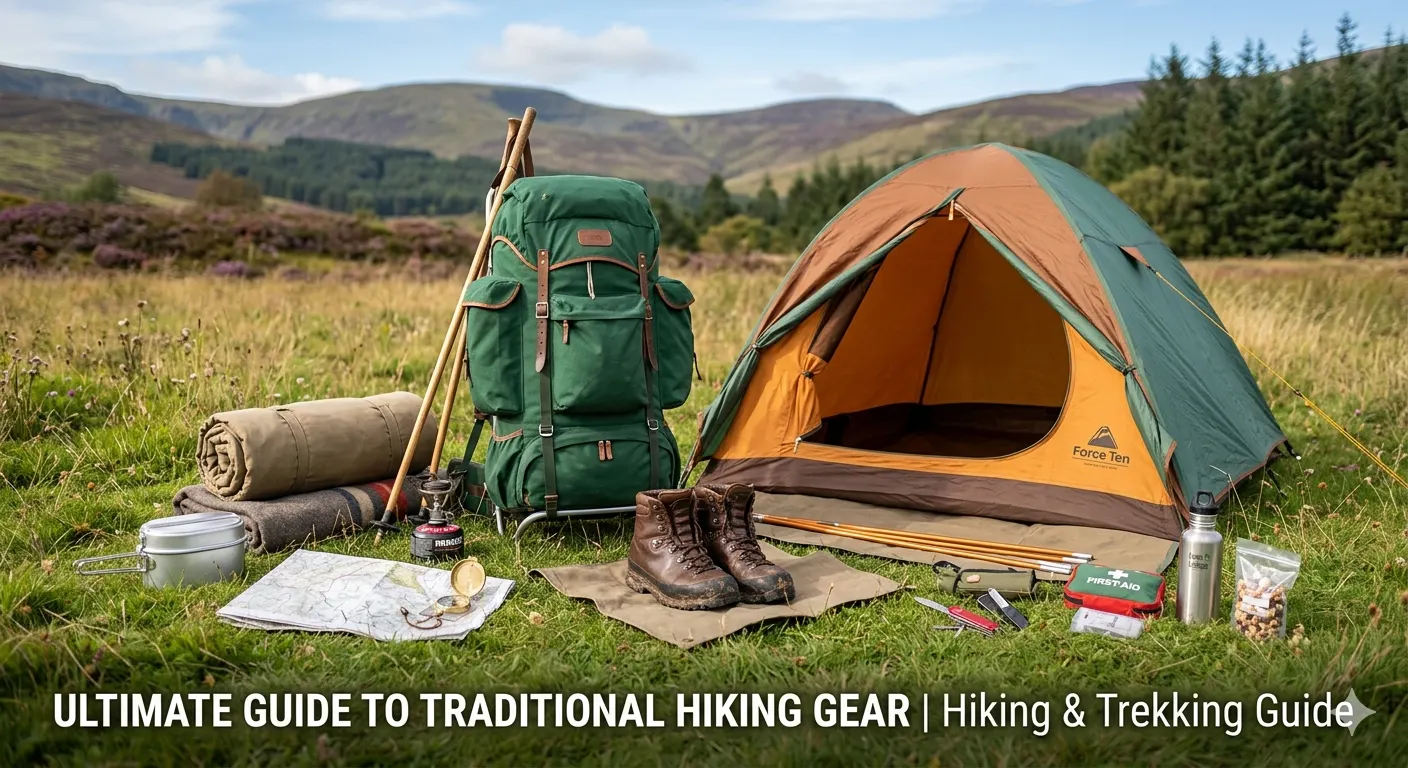
Traditional hiking gear prioritizes durability, protection, and comfort. It is made with thicker, heavier materials that handle rough conditions well. Most beginner hikers start with traditional gear.
Common Traditional Gear Examples
- Leather or thick synthetic hiking boots with ankle support
- Double-wall three-season tents (2–3 kg)
- Synthetic sleeping bags rated for cold weather
- Large framed backpacks (60–80 L) with hip belts
- Heavy-duty rain jackets and pants
Lightweight vs Traditional Gear: Quick Comparison
Here is a side-by-side look at the key differences between both systems.
| Feature | Lightweight Gear | Traditional Gear |
|---|---|---|
| Average base weight | Under 4.5 kg | 7–15 kg |
| Cost | Higher upfront | More budget-friendly |
| Durability | Moderate (depends on brand) | Generally more durable |
| Comfort on long trips | Less strain on body | More padding and support |
| Best for | Long-distance, experienced hikers | Beginners, family trips, rough terrain |
Pros and Cons of Lightweight Hiking Gear
Pros
- Less strain on your knees, hips, and back
- You can cover more distance each day
- Faster setup and pack-down times
- Great for multi-day and long-distance trails
Cons
- Usually costs more than traditional options
- Some items are less durable with heavy daily use
- Offers less protection in extreme weather
- Takes time to learn how to pack efficiently
Pros and Cons of Traditional Hiking Gear
Pros
- More affordable for beginners
- Offers better protection in harsh conditions
- Easier to find in local outdoor stores
- Often more comfortable for heavy loads
Cons
- Heavier packs lead to faster fatigue
- More stress on your joints over long distances
- Slower hiking speed on technical terrain
- Bulkier to transport to the trailhead

Which Type of Gear Is Right for You?
The best choice depends on your experience level, trail type, and budget. There is no single answer that fits every hiker.
Choose Lightweight Gear If You:
- Plan multi-day or thru-hikes (3+ days on trail)
- Have some hiking experience already
- Want to reduce body fatigue and joint pain
- Are comfortable spending more upfront
Choose Traditional Gear If You:
- Are just starting out with hiking
- Hike in wet, cold, or unpredictable weather
- Prefer to borrow or rent gear first
- Are hiking with children or beginners in your group
A Middle-Ground Option
Many hikers combine both types of gear. You could use a lightweight tent but keep a durable traditional boot. Start with what you have and upgrade one piece at a time.
Tips for Transitioning to Lighter Gear
You do not need to replace everything at once.
Small changes make a real difference on the trail.
- Start by lightening your shelter — it is often the heaviest item
- Replace your sleeping bag with a down option when your budget allows
- Switch to trail runners if your trail does not require ankle support
- Use a smaller pack — it forces you to pack only what you need
- Weigh your current gear before buying replacements
Related Articles You Might Find Helpful
- How to Pack a Backpack for Hiking: A Step-by-Step Guide
- Best Hiking Boots for Beginners: What to Look For
- How to Plan Your First Hiking Trip from Scratch
Conclusion
Both lightweight and traditional hiking gear have real advantages. Lightweight gear helps you go farther with less effort. Traditional gear gives you more protection and costs less upfront.
The right choice depends on where you hike, how long you go, and what your budget allows. Start with what you have, then upgrade gradually as you learn what works for you.
Ready to gear up? Browse our full Hiking Gear Guide to find beginner-friendly recommendations for every budget.
Frequently Asked Questions
Is lightweight hiking gear worth the extra cost?
It depends on how often you hike.
If you go on multi-day trips several times a year, lighter gear reduces fatigue and protects your joints.
For occasional day hikes, traditional gear may be a better value.
Can beginners use lightweight hiking gear?
Yes, beginners can use lightweight gear.
However, some ultralight items require more skill to use properly.
It is a good idea to start with one or two lightweight pieces rather than switching everything at once.
How much weight difference is there between lightweight and traditional gear?
A traditional full kit can weigh 12–18 kg with food and water.
A lightweight setup can bring that down to 6–9 kg for the same trip.
That difference is significant over long distances.
What is the most important piece of gear to lighten first?
Most experienced hikers suggest starting with your shelter (tent) and sleeping system.
These are usually the heaviest items in your pack.
Lightening them has the biggest impact on your overall pack weight.



No comments yet. Be the first to share your thoughts.