
Trekking Food Planning Guide: What to Eat on Multi-Day Hikes
Planning trekking food for multi-day hikes is one of the most important steps in trail preparation. Unlike day hikes, trekking means carrying every meal, snack, and drink for several days so every gram counts. This guide helps you calculate daily calorie needs, choose the best lightweight foods, and organize your meals so you stay energized from the first step to the last summit.
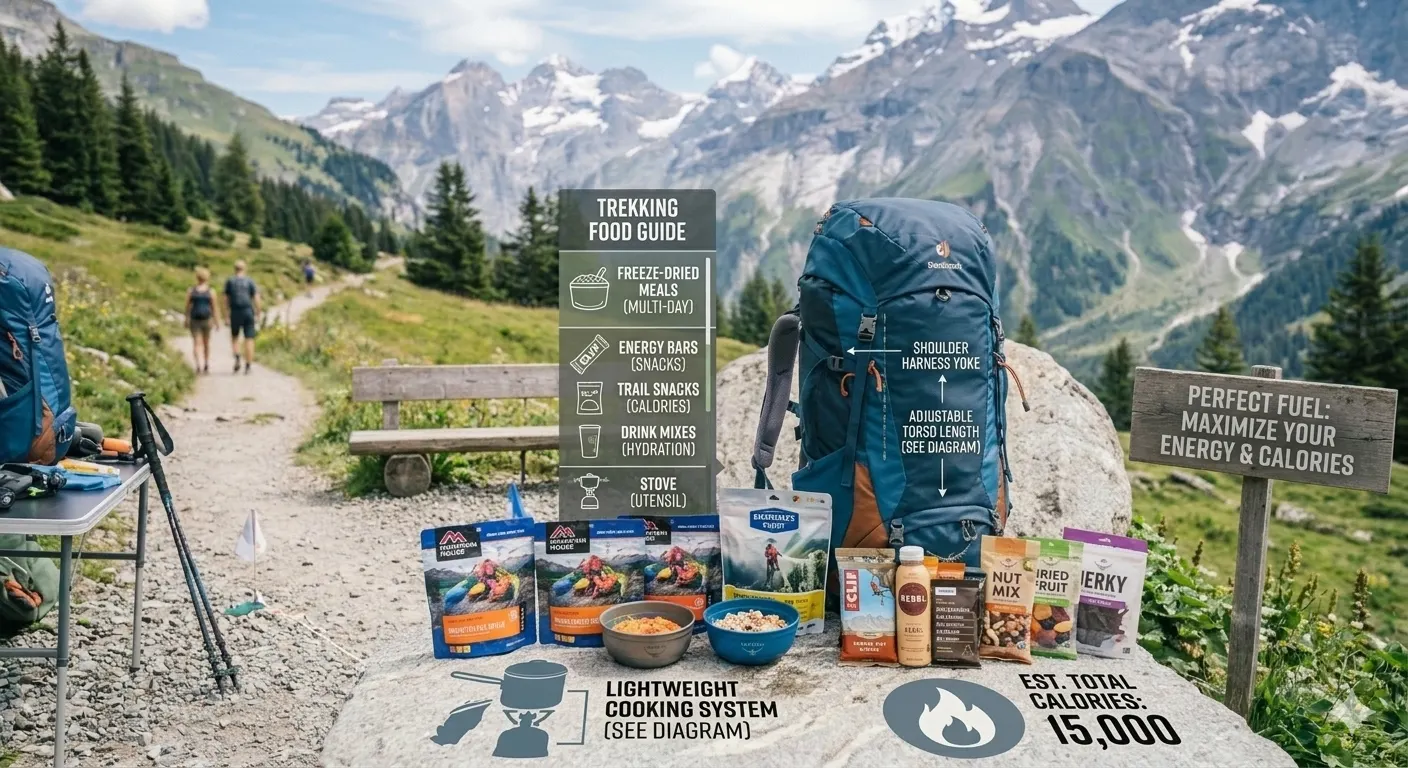
How Much Trekking Food Do You Need? (Calories & Weight Guide)
Calculating the right amount of trekking food prevents running out of energy mid-hike or carrying unnecessary weight. On a moderate trek you need between 2,500 and 3,500 calories per day, while strenuous high-altitude days push that to 4,500 calories or more. Cold weather adds at least 500 extra calories on top of that estimate.
For weight, target 1.5 to 2 pounds of food per person per day roughly 2,500 to 3,000 calories. Three days of trekking food will weigh between 4.5 and 6 pounds. Always pack 10 to 15 percent more than your estimate, since appetite is hard to predict on trail.
Planning Trekking Food by Meal
A practical way to plan is by meal slot: breakfast should deliver 500 to 700 calories, lunch and trail snacks together around 1,000 to 1,500, dinner 700 to 900, and an evening snack another 200 to 400. Adjust all targets up or down based on your trek intensity and fitness level.
For complete trek preparation guidance, check our article on how to prepare for your first trek.

Best Trekking Foods for Multi-Day Hikes: Breakfast, Lunch & Dinner
The best trekking food provides maximum energy at minimum weight, requires no refrigeration, and still tastes good after a long day on the trail.
Breakfast Options
Instant oatmeal with dried fruit and nuts is a reliable first choice lightweight, fast to prepare, and easy on digestion before a big day. Granola with powdered milk, breakfast bars, and instant grits all work well too. Bagels with nut butter are ideal for the first one or two mornings before they go stale.
Best Lunch and Snack Trekking Food
Lunch on a trek is rarely a sit-down meal. Trail mix built from nuts, dried fruit, seeds, and chocolate gives steady energy without stopping. Jerky, crackers with hard cheese or nut butter, tortillas, and summer sausage are all reliable options that need no refrigeration and hold up well in a pack.
Best Dinner Choices for Multi-Day Treks
After a full day of hiking, simplicity matters. Freeze-dried backpacking meals that need only hot water are the most convenient trekking food for dinner. Instant rice or pasta with a sauce packet, ramen with added protein and dehydrated vegetables, and couscous which cooks in minutes on minimal fuel are all solid choices.
Trekking Foods to Avoid
Fresh fruits and vegetables are too heavy and bruise too easily for most multi-day treks. Canned goods have a poor calorie-to-weight ratio. Anything requiring refrigeration is off the table entirely. Never pack a food you have not tested at home first, and avoid meals with long cooking times that drain your fuel supply.
How to Pack and Organize Trekking Food for the Trail
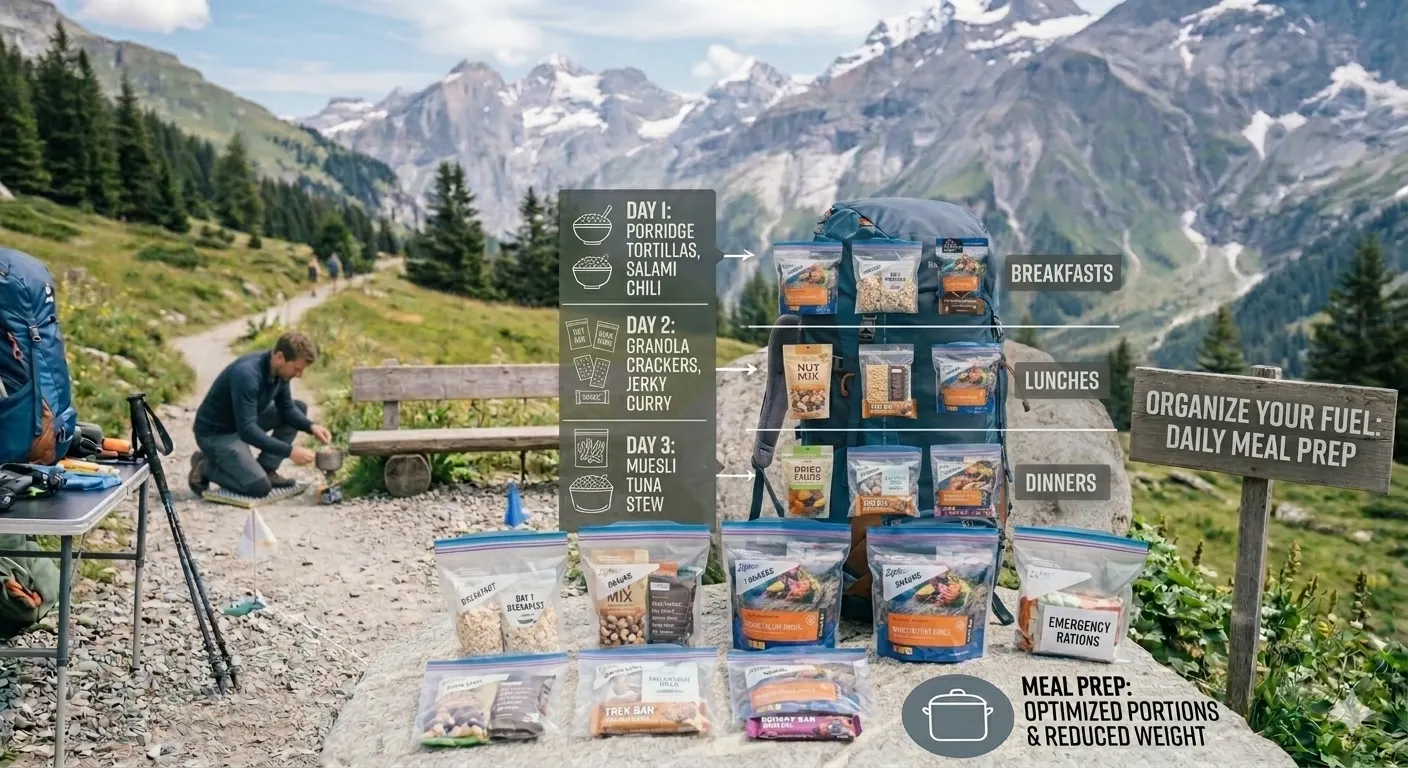
Smart organization makes a real difference on trail. Remove all original packaging before leaving home the boxes and wrappers are dead weight. Transfer everything into resealable bags and label each one with its contents and the day it belongs to.
The most effective system is to pack each day’s trekking food into one bag: breakfast, snacks, lunch, and dinner together. This makes it easy to track what you have left, distribute weight as you eat, and avoid the mistake of consuming tomorrow’s rations today.
Protecting Your Trekking Food from Wildlife
In bear country, use scent-proof bags and store all food at least 200 feet from your sleeping area. Use bear canisters where regulations require them. Pack out every wrapper and scrap leave absolutely nothing behind.

Trekking Hydration Guide: Water Needs and Drink Mix Options
Hydration is just as important as calorie intake when planning your trekking food and nutrition strategy. Aim for 3 to 4 liters of water per day at minimum, and more in hot weather or at high elevation. Carry 2 to 3 liters between water sources and always treat or filter natural water before drinking even water that looks crystal clear can carry Giardia or E. coli from animal waste upstream.
Electrolyte powder is worth packing for hot days when you are sweating heavily. Coffee, tea, and hot chocolate add warmth, morale, and a few extra calories at camp without much weight penalty.
Essential Cooking Gear for Backpacking and Trekking
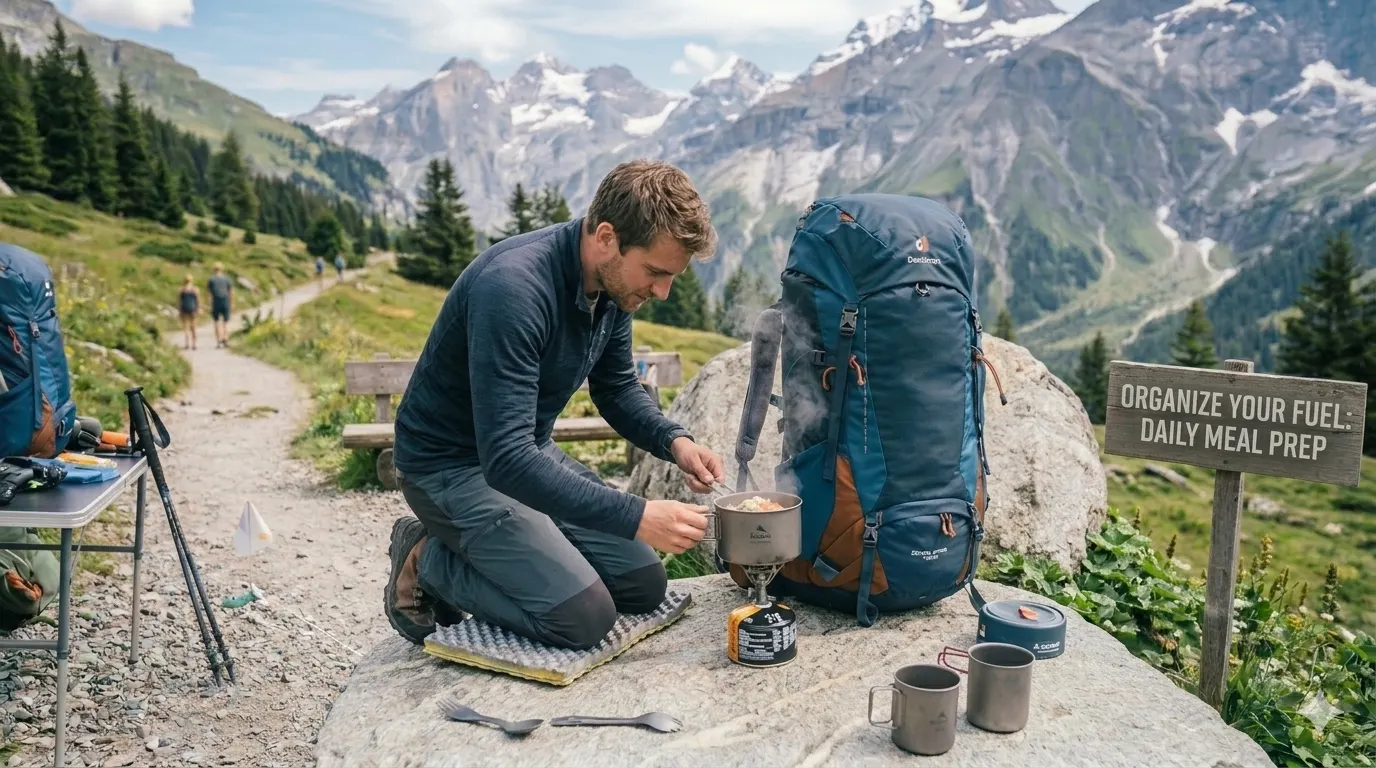
You need very little equipment to prepare hot trekking food on the trail. A lightweight backpacking stove, enough fuel (plan one ounce per person per day, more in cold conditions), a 1 to 2 liter pot, and a long-handled spoon or spork cover the basics. Always carry two fire sources a lighter and waterproof matches.
A pot cozy is a small addition worth considering: it lets food finish cooking off the heat, saving significant fuel on longer treks. Test your stove at home before every trip and bring slightly more fuel than your calculation suggests.
Learn more about essential gear in our guide on day hiking vs trekking explained.
Trekking Meal Planning by Trip Length
Your trekking food strategy changes significantly based on how many days you will be out.
2-3 Day Weekend Trek
A short weekend trek is the easiest starting point. You can bring some fresh food for day one, total pack weight is only 3 to 6 pounds, and there is room to experiment with different foods and recipes without high stakes.
4-6 Day Trek
Weight reduction becomes a priority here. Focus on calorie-dense, lightweight trekking food and keep meals simple to save preparation energy. Total food weight will be 6 to 12 pounds. If the route allows, one resupply point can significantly lighten the load.
Week-Long or Longer Trek
Resupply points become necessary on long treks. Mail food boxes to trail towns in advance, or plan stops at stores along the route. Every food choice should prioritize calories per ounce, and variety planning is critical to prevent appetite fatigue over many consecutive days.
Special Dietary Considerations for Trekking
Trekking with dietary restrictions is completely manageable with extra planning. Vegetarians and vegans should lean on nut butters, dried legumes, and plant-based freeze-dried trekking meals, and add nutritional yeast for B vitamins. For gluten-free trekkers, rice, quinoa, corn tortillas, and certified gluten-free oats replace wheat-based staples without any compromise on weight or calories. Whatever your restriction, read every ingredient label carefully, test every item at home first, and inform your trekking partners before departure.
Sample 3-Day Trekking Meal Plan
Here is a practical example of what to pack as trekking food for a weekend multi-day hike.
Day 1
- Breakfast: Instant oatmeal with dried fruit
- Snacks: Trail mix, energy bar, cheese and crackers
- Dinner: Freeze-dried pasta meal
- Evening: Hot chocolate and cookies
Day 2
- Breakfast: Granola with powdered milk
- Snacks: Jerky, dried fruit, protein bar, chocolate
- Dinner: Instant rice with sauce packet and dried vegetables
- Evening: Tea and energy bar
Day 3
- Breakfast: Breakfast bars and instant coffee
- Snacks: Nut butter on tortilla, trail mix
- Lunch: Crackers with summer sausage
- Keep dinner simple or eat at home
Trekking Food Safety: Storage, Wildlife Protection & Leave No Trace
Most trekking foods need no refrigeration, but a few rules still apply. Hard cheese lasts 3 to 4 days unrefrigerated; soft cheese should be eaten on day one. Keep food out of direct sunlight when resting and stick to dried or cured meat products only.
Never feed wildlife or leave trekking food unattended. Store everything at least 200 feet from your sleeping area and use bear canisters in designated areas. When cleaning up, strain dishwater and scatter it 200 feet from any water source never wash directly in streams or lakes. Pack out every wrapper, scrap, and leftover without exception.
Budget Trekking Food: How to Plan Trail Meals Without Overspending
Quality trekking food does not require expensive outdoor retailer prices. Making your own trail mix in bulk, buying instant meals at grocery stores instead of gear shops, and dehydrating your own fruits and vegetables at home can cut costs significantly without sacrificing nutrition or weight. DIY energy bars made from oats, honey, nuts, and dried fruit are cheap, calorie-dense, and easy to prepare in large batches before a trip.
How to Test Your Trekking Food Plan Before You Go
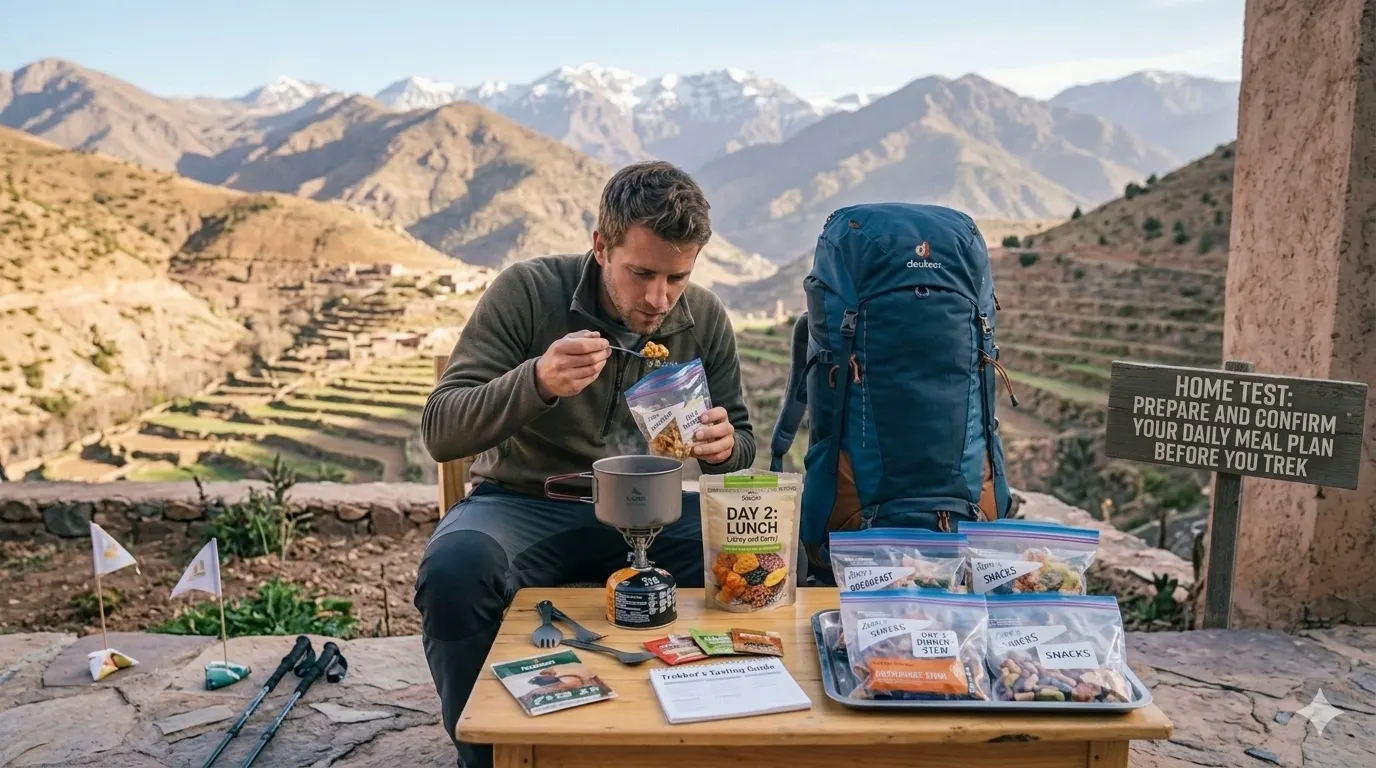
Always test your trekking food strategy before heading out. Cook and taste every new meal at home some freeze-dried options are far better than others and you should know before you are on trail. Test your stove and time how long each meal takes from setup to eating. Then do a short overnight trip using your full food plan, note what you craved and what you left unfinished, and adjust quantities before a longer or more remote trek.
Get more preparation tips in our article on how long should your first trek be.
Conclusion
Successful trekking food planning balances nutrition, weight, and taste to keep you energized for every day on the trail. Aim for 1.5 to 2 pounds of food per day delivering 2,500 to 3,500 calories through calorie-dense, lightweight options that need no refrigeration. Organize meals by day, test everything at home, and pack a 10 to 15 percent surplus. Your strategy will improve with every trip start simple, stay curious, and refine as you go.
Ready to plan your trek menu? Create your trekking food list, calculate the total weight, and test-cook at least two dinners at home before departure.
Frequently Asked Questions About Trekking Food
Can I bring fresh food on a multi-day trek?
Yes, but with limitations. Fresh trekking food works best for the first day or two before it gets heavy, bruised, or spoiled. Hard cheeses, carrots, apples, and citrus fruits travel better than delicate items. After day two, stick to dried, freeze-dried, or shelf-stable foods. In cool weather fresh food lasts longer than in summer heat, but most experienced trekkers reserve it for the very start of a trip and rely on lightweight dried food for everything after.
How do I prevent getting tired of eating the same trekking food for days?
Plan variety into your menu by rotating different meals each day and mixing sweet and salty snacks throughout. Bring a small spice kit or a bottle of hot sauce it transforms basic instant meals into something much more satisfying. For longer treks, resupply points are the most effective way to refresh your trekking food selection. Pack only foods you genuinely enjoy eating.
What if I don’t finish all my trekking food during the trek?
Leftover trekking food is always better than running short. Pack out everything you do not eat never leave or bury food on the trail. Non-perishable leftovers go straight into your kit for the next trip. Most experienced trekkers carry 10 to 15 percent extra as a standard safety margin and track what remained after each outing to improve their planning over time.
Do I really need to filter all water from natural sources?
Yes, always treat or filter every drop from streams, lakes, and springs, even crystal-clear sources. Waterborne parasites like Giardia and bacteria like E. coli are invisible to the naked eye and can cause severe illness that ends a trek and requires medical treatment. Filtering, UV purifiers, chemical tablets, and boiling for one minute are all effective methods. The small weight of a water filter is a negligible trade-off against days of digestive illness on a remote trail.


No comments yet. Be the first to share your thoughts.