
Camping vs Hut Trekking: Which One Is Right for You?
When planning a multi-day trek, one of the first decisions you face is where to sleep. You can carry your tent and camp in the wild, or you can stay in mountain huts along the trail. Both styles have their own appeal, and the right choice depends on your goals, budget, and experience.
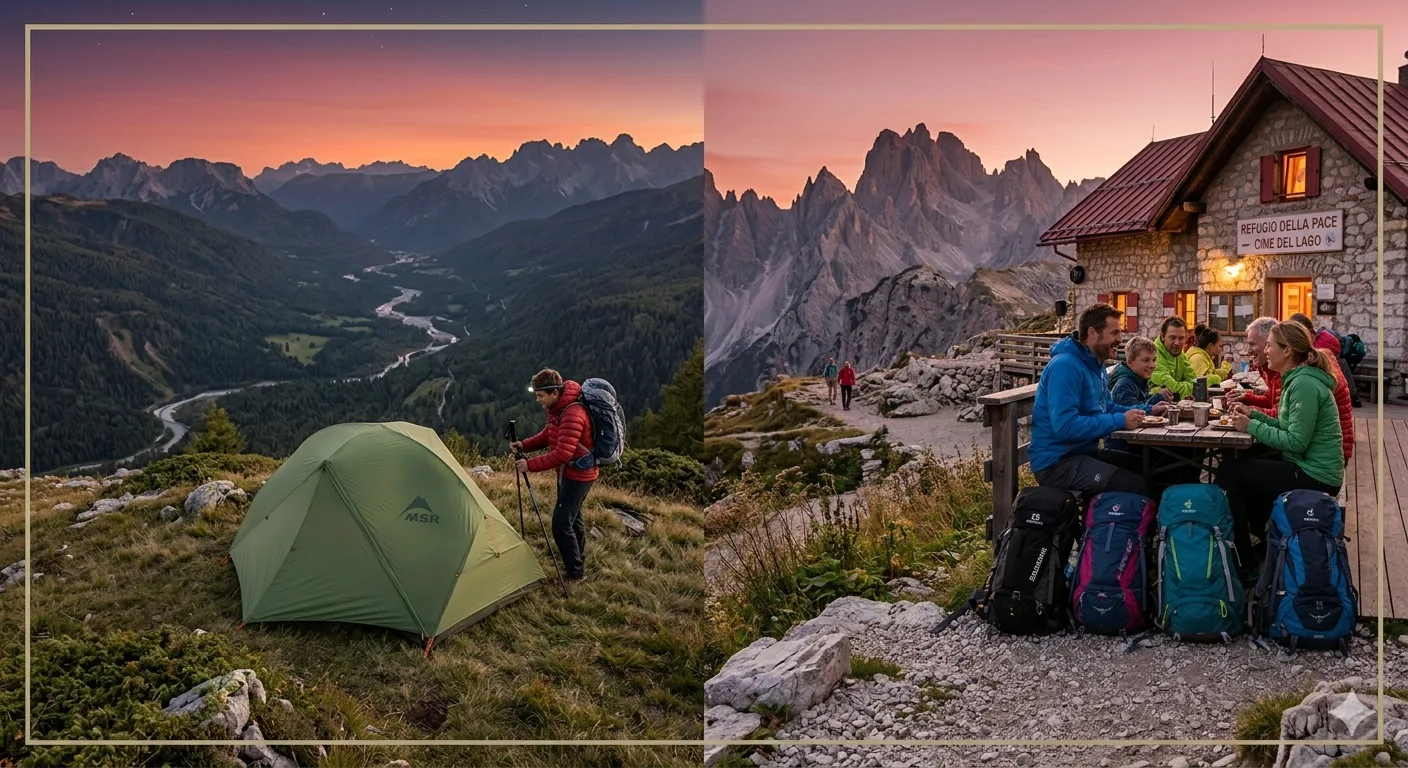
What Is Camping Trekking?
Camping trekking means you carry everything you need on your back. Your tent, sleeping bag, food, and cooking gear all travel with you. This style gives you a lot of freedom on the trail.
Pros of Camping Trekking
- You can stop wherever you like (where permitted).
- It often costs less overall, especially on long routes.
- You feel closer to nature and more self-sufficient.
- It suits remote areas where huts do not exist.
- You develop real outdoor skills over time.
Cons of Camping Trekking
- Your backpack gets heavy often 12–18 kg or more.
- Setting up camp takes time and energy after a long day.
- Bad weather can make camp life uncomfortable.
- You need to carry and filter your own water.
- Some national parks restrict or ban wild camping.
What Is Hut Trekking?
Hut trekking means you walk between mountain refuges or lodges each day. You sleep in a shared dormitory or private room, and meals are usually available. This style is popular in the Alps, Nepal, and New Zealand.

Pros of Hut Trekking
- Your pack is much lighter just clothes and personal items.
- You enjoy a warm bed and hot meals every evening.
- Huts let you meet other hikers from around the world.
- No need to worry about weather ruining your night.
- Beginners find it much easier to start with huts.
Cons of Hut Trekking
- Hut fees can add up, especially in Europe.
- You must book in advance during peak season.
- Shared dorms mean less privacy and possible noise.
- Your route is fixed to hut locations.
- Some huts have limited availability or close in winter.
Camping vs Hut Trekking: A Quick Comparison
| Factor | Camping Trekking | Hut Trekking |
|---|---|---|
| Pack Weight | Heavy (12–18 kg+) | Light (6–10 kg) |
| Cost | Lower (gear investment upfront) | Higher per night |
| Flexibility | High | Lower (fixed hut locations) |
| Comfort | Basic | Moderate to good |
| Skills needed | More experience helpful | Beginner-friendly |
| Social | Solitary or small group | Very social |
| Booking required | Sometimes (campsites) | Yes, especially in summer |
What Gear Do You Need for Each Style?
Essential Camping Trekking Gear
- Lightweight backpacking tent
- Sleeping bag rated for the season
- Sleeping pad for insulation
- Portable stove and fuel
- Water filter or purification tablets
- Food for the full duration
- Trekking poles (recommended)
- First aid kit
Essential Hut Trekking Gear
- Hut sleeping liner (required in most alpine huts)
- Day pack with layers and rain gear
- Snacks for the trail
- Trekking poles
- Headlamp (for early starts)
- Cash or card (some huts do not accept cards)
Want more detail on what to pack?
Read our full guide: What to Pack for a Multi-Day Trek.
Which Option Is Better for Beginners?
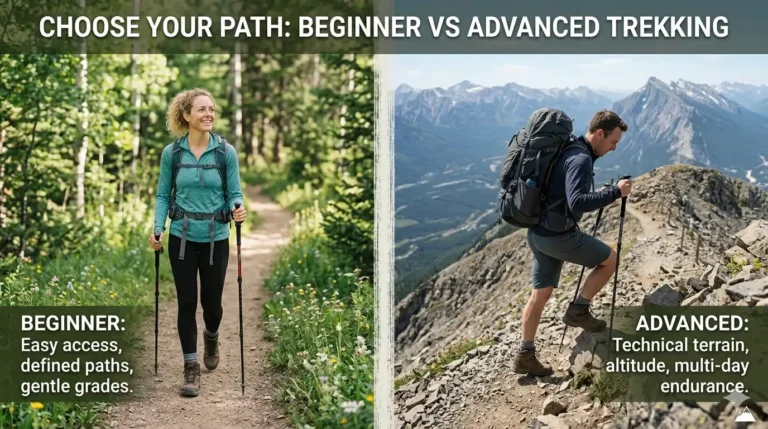
If this is your first multi-day trek, hut trekking is generally the easier starting point. You carry less weight, sleep comfortably, and do not need to manage camp logistics. It lets you focus on the walking itself.
Camping trekking is a great next step once you feel confident on the trail. Learning to manage your gear, food, and campsite adds a new layer of satisfaction.

Which One Should You Choose?
Here is a simple way to decide:
- Choose camping if you want freedom, lower daily costs, and a more wild experience.
- Choose hut trekking if you prefer comfort, lighter packs, and social evenings.
- Mix both on longer routes where some nights have huts and others do not.
Many seasoned trekkers actually combine both styles depending on the region and season.
There is no single right answer only what works best for your trip.
Not sure which trail to start with? Check out our article: Best Beginner Multi-Day Treks for First-Timers.
Popular Routes for Each Style
Great Camping Trekking Routes
- John Muir Trail – California, USA (wild camping permitted)
- Overland Track – Tasmania, Australia
- Snowman Trek – Bhutan (full expedition camping)
Great Hut Trekking Routes
- Tour du Mont Blanc – France, Italy, Switzerland
- Everest Base Camp Trek – Nepal (teahouse-style huts)
- Dolomites Alta Via 1 – Italy
- Routeburn Track – New Zealand
Learn more about planning your first alpine adventure in our guide: How to Plan a Multi-Day Trek Step by Step.
Conclusion
Both camping and hut trekking offer rewarding ways to explore the mountains. Camping gives you freedom and immersion in nature. Hut trekking gives you comfort and a lighter load.
Start with the style that fits your current experience and comfort level. You can always try the other approach on your next adventure. The most important thing is to get out on the trail and enjoy the journey.
Ready to start planning? Browse our trail guides and choose your next adventure today!
Frequently Asked Questions
Is hut trekking suitable for beginners?
Yes. Hut trekking is one of the most beginner-friendly ways to do a multi-day trek. You carry a lighter pack and sleep in a warm, safe environment each night. It lets you focus on the trail without managing a campsite.
Is camping trekking cheaper than hut trekking?
Camping can cost less per night once you own the gear. However, the initial investment in a tent, sleeping bag, and stove can be significant. Hut trekking has daily fees but requires less gear upfront.
Can I combine camping and hut trekking on the same route?
Yes, on many long-distance routes you can mix both styles. Some nights you stay in a hut; others you camp where huts are not available. This hybrid approach offers the best of both worlds.
Do I need to book mountain huts in advance?
During peak season (June to September in the Alps, for example), booking in advance is strongly recommended. Popular huts on famous routes like the Tour du Mont Blanc can fill up months ahead. Always check the hut’s booking policy before your trip.

No comments yet. Be the first to share your thoughts.