
Trekking vs Hiking: Which Activity Is Right for You? (2026 Guide)
The trekking vs hiking question is one of the most common dilemmas for outdoor beginners. Choosing between them depends on your experience level, available time, fitness, and adventure goals. While both activities involve walking in nature, they differ significantly in duration, difficulty, commitment, and what you’ll experience. This guide helps you understand which activity suits your current situation and aspirations best.

Understanding Your Current Situation
Before choosing between hiking and trekking, assess your personal circumstances honestly. Several factors influence which activity makes sense for you right now.
Experience and Skills
- Complete beginner: Start with hiking
- Regular day hiker: Consider transitioning to trekking
- Outdoor skills matter: Hiking requires basic skills; trekking needs advanced abilities
- Navigation confidence: Hiking follows marked trails; trekking may involve route-finding
- Camping experience: Trekking requires comfortable outdoor living skills
Physical Fitness Level
- Building fitness: Hiking provides excellent conditioning
- Moderate fitness: Both activities are possible with appropriate routes
- Strong endurance: Trekking becomes more enjoyable and accessible
- Fitness benchmarks: The WHO physical activity guidelines recommend 150 minutes weekly as a baseline
- Recovery ability: Trekking demands consecutive day performance
- Injury concerns: Hiking offers easier bailout options
Time Availability
- Busy schedule: Hiking fits into weekends and evenings
- Limited vacation: Multi-day treks need extended time off
- Flexible schedule: Trekking becomes more feasible
- Weekend warriors: Overnight backpacking bridges both activities
Start your outdoor journey with our complete hiking for beginners guide.
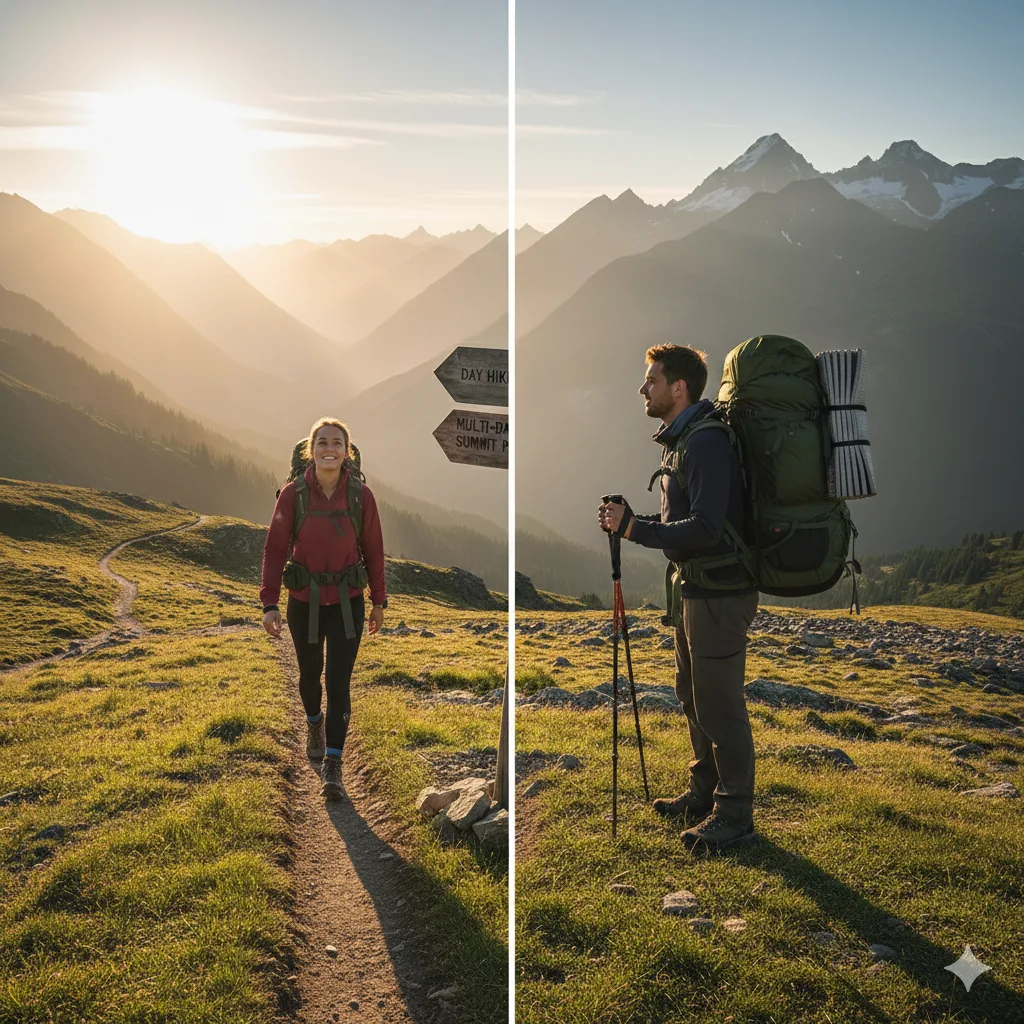
Lifestyle and Practical Considerations
Your lifestyle circumstances significantly influence which activity fits better. Consider these practical aspects when making your choice.
Budget Factors
-
- Hiking startup costs: $150-400 for basics
- Trekking gear investment: $800-2,500+ for complete setup
- Ongoing expenses: Hiking has minimal costs per trip
- Trekking permits: Can range from $20-200+
- Trekking permits: Can range from $20-200+ — check the National Park Service trails guide for details
- Budget-conscious: Hiking is more financially accessible initially
Family and Social Dynamics
- Young children: Day hiking accommodates families better
- Teenagers: Can handle moderate treks with preparation
- Partner interest: Match activity to shared enthusiasm
- Social preferences: Both offer group opportunities
- Solo comfort: Trekking alone requires more experience
Geographic Location
- Urban areas: Day hikes readily available nearby
- Remote locations: Trekking opportunities may be closer
- Travel access: Consider how far you’ll travel for activities
- Local terrain: Mountains offer both; flat areas favor hiking
What You Want from the Experience
Your personal goals and preferences should guide your trekking vs hiking choice. Different people seek different things from outdoor activities.
Choose Hiking If You Want
- Quick nature escapes that fit your schedule
- Regular exercise and outdoor time
- To explore many different locations
- Social activities with friends or family
- Low-commitment outdoor experiences
- To build fitness and skills gradually
- Convenience and accessibility
- Return home each evening
Choose Trekking If You Want
- Deep immersion in wilderness
- Multi-day adventures and challenges
- Extended disconnection from daily life
- Self-sufficiency experiences
- Remote locations far from crowds
- Time to fully unwind mentally
- Serious physical challenges
- Camping and outdoor living skills development
Starting Points for Each Activity
Both trekking vs hiking activities have appropriate entry points. Starting correctly sets you up for long-term enjoyment and success.
Beginning with Hiking
- Start with 1-3 mile trails near home
- Choose easy, well-marked routes initially
- Hike 2-3 times monthly to build consistency
- Gradually increase distance and elevation
- Test different terrain and conditions
- Progress at your own comfortable pace
Beginning with Trekking
- Build 6-12 months of hiking experience first
- Complete several overnight backpacking trips
- Start with 2-3 day treks on established routes
- Join guided treks for first experiences
- Acquire and test all necessary gear beforehand
- Choose popular, well-supported routes initially
Learn about the key differences in our hiking vs trekking comparison article.
Can You Do Both?
You don’t have to choose exclusively. Many outdoor enthusiasts enjoy both hiking and trekking for different reasons and situations.
Combining Both Activities
- Regular hiking maintains fitness for occasional treks
- Day hikes provide convenient outdoor time between treks
- Different seasons suit different activities
- Weekend hiking, vacation trekking works well
- Both activities teach transferable skills
- Variety prevents boredom and burnout
Progression Path
- Start with day hiking regularly
- Add overnight backpacking trips
- Attempt short 2-3 day treks
- Continue day hiking for fitness
- Gradually extend trek duration
- Maintain both activities long-term

Trekking vs Hiking: Making Your Decision
Use these decision-making frameworks to determine which activity suits you best right now. Remember your choice can evolve over time.
Choose Hiking Right Now If
- You’re completely new to outdoor activities
- You have limited time for outdoor pursuits
- Budget constraints limit gear investment
- You want to test your interest first
- Family or work commitments require flexibility
- You prefer familiar territory and easy access
- Building fitness is your primary goal
Choose Trekking Right Now If
- You have solid hiking experience already
- You can commit extended time to trips
- You’re ready to invest in proper gear
- Remote wilderness appeals strongly to you
- You possess good outdoor skills
- Physical challenges excite rather than intimidate you
- You’re comfortable with uncertainty and self-reliance
Testing the Waters
If you’re unsure which activity suits you, try these approaches to explore both without full commitment.
Low-Risk Testing Methods
- Join organized group hikes to try the activity
- Book a guided trek to experience it with support
- Rent trekking gear before buying
- Complete several overnight backpacking trips
- Talk with people who do both activities
- Start with hiking and evaluate your interest
Common Misconceptions
Several myths exist about the trekking vs hiking debate. Understanding the reality helps you make informed decisions.
About Hiking
- Myth: Hiking is too easy to be worthwhile
- Reality: Challenging day hikes exist at all levels
- Myth: You can’t have adventures while day hiking
- Reality: Many epic experiences happen on day hikes
About Trekking
- Myth: Trekking requires extreme fitness
- Reality: Many treks suit moderate fitness with preparation
- Myth: Trekking is only for expert outdoors people
- Reality: Beginners can trek with proper preparation and guidance
Evolving Your Choice Over Time
Your preference may change as you gain experience and your life circumstances evolve. This is completely normal and expected.
Signs You’re Ready to Progress
- Day hikes feel too easy or short
- You want more challenge and adventure
- You’re curious about overnight experiences
- You have time and budget for longer trips
- Your fitness level has improved significantly
Signs to Maintain Current Activity
- You’re thoroughly enjoying what you’re doing
- Current activity fits your life perfectly
- You haven’t explored all possibilities yet
- No compelling reason to change exists
Prepare for either activity with our fitness preparation guide
Conclusion
The trekking vs hiking decision depends on your experience, time availability, fitness, budget, and personal goals. Hiking offers accessible outdoor experiences with minimal commitment, perfect for beginners and busy schedules. Trekking provides immersive wilderness adventures requiring more preparation, time, and investment. Most people benefit from starting with regular day hiking, then progressing to trekking if the interest and capability develop. Remember that you can enjoy both activities throughout your outdoor journey, choosing what fits your current life situation and adventure desires.
Ready to start your outdoor adventure? Begin with the activity that matches your current situation and interests, knowing you can always explore the other as you grow!
Related Posts
Frequently Asked Questions
Q: I’m a complete beginner. Should I try trekking or stick with hiking?
As a complete beginner, start with day hiking. Build experience, fitness, and outdoor skills through regular day hikes over 6-12 months before considering trekking. This progression ensures you actually enjoy extended time outdoors, understand your capabilities, and develop necessary skills safely. Many people discover they love day hiking and never feel compelled to trek, which is perfectly fine.
Q: Will I get bored with just hiking if I don’t do multi-day treks?
No, hiking offers endless variety through different locations, terrains, seasons, distances, and difficulty levels. Many lifelong hikers never trek and remain completely satisfied. You can continually challenge yourself with longer day hikes, more difficult terrain, faster paces, or exploring new areas. Hiking provides as much adventure as you want without multi-day commitment.
Q: How much money should I budget for getting started with either activity?
For hiking, budget $150-400 for essential gear (footwear, daypack, clothing, safety items). For trekking, expect $800-2,500+ for complete gear including backpack, tent, sleeping system, cooking equipment, and clothing. You can start hiking immediately with minimal investment, while trekking requires more financial commitment upfront. Both have minimal ongoing costs once you have gear.
Q: Can I do both hiking and trekking, or should I focus on one?
Absolutely do both if you enjoy each activity. Many outdoor enthusiasts hike regularly for fitness and convenient outdoor time, then do occasional multi-day treks for bigger adventures. This combination works well because regular hiking maintains the fitness trekking requires, while trekking provides the extended wilderness immersion hiking doesn’t offer. Let your lifestyle, schedule, and interests guide how you balance both.


No comments yet. Be the first to share your thoughts.